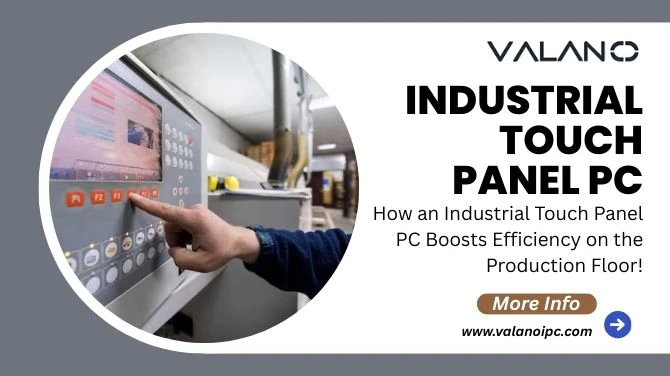
In today’s fast-paced industrial environment, increasing workflow efficiency is paramount for businesses aiming to maintain a competitive edge. From manufacturing floors to logistics centers, the ability to access real-time data, communicate instantly, and perform tasks with precision drives productivity and cost-effectiveness. One of the most significant technological advancements enabling such improvements is the widespread adoption of industrial tablets.
Unlike traditional consumer tablets, industrial tablets are purpose-built to withstand harsh environments, provide reliable performance, and integrate seamlessly with complex industrial systems. They are revolutionizing operations by empowering frontline workers with powerful, mobile computing devices that streamline data collection, improve decision-making, and foster collaboration on the go.
At ValanoIPC, a leader in rugged industrial computing solutions, we recognize the transformative potential of industrial tablets. Our commitment to innovation and quality means we develop devices that not only meet the demanding physical requirements of industrial settings but also incorporate the latest technological features that enhance workflow efficiency.

This comprehensive guide explores the many ways industrial tablets are reshaping workflows across a variety of industries. We will discuss use cases, key benefits, integration strategies, and future trends that highlight the importance of incorporating industrial tablets into your operational infrastructure. Additionally, a detailed FAQ section will address common questions, helping decision-makers confidently select and deploy these devices for maximum impact.
Why Industrial Tablets Are Essential for Modern Workflows?
Traditionally, many industrial workflows relied heavily on stationary computers, paper documentation, or outdated handheld devices that often failed under rigorous working conditions. These limitations resulted in delays, errors, and reduced overall productivity. However, with the advent of industrial tablets, workers are now equipped with mobile, rugged devices that combine the versatility of consumer tablets with industrial-grade durability and advanced connectivity options.
Furthermore, industrial tablets support various software applications tailored to specific sectors—ranging from manufacturing execution systems (MES) and enterprise resource planning (ERP) software to inventory management and field service apps. This compatibility enhances workflow automation, reduces manual input, and ensures accurate, timely data availability.
Consequently, industries can enjoy improved operational visibility, better resource allocation, and faster response times to issues—all of which translate into significant workflow efficiencies and cost savings.
What This Article Will Cover?
- Understanding the unique features of industrial tablets that support workflow enhancements
- Industry-specific examples of industrial tablet applications
- The role of ruggedness and reliability in demanding environments
- Connectivity and integration with existing industrial systems
- Benefits related to mobility, data accuracy, and real-time communication
- Challenges in deployment and how to overcome them
- Emerging trends shaping the future of industrial tablets
- Frequently asked questions to guide selection and implementation
By the end of this article, you will gain a thorough understanding of how industrial tablets can be leveraged to streamline workflows, reduce operational costs, and ultimately elevate your business performance.
Expanded Blog Outline (to reach 2000+ words)
1. Introduction to Industrial Tablets: Definition and Core Features
Rugged design principles
Operating system choices and software compatibility
Portability and connectivity options
2. Enhancing Workflow Efficiency: Key Advantages
Mobility and real-time data input
Elimination of paper-based processes
Improved accuracy and error reduction
Faster communication across teams
Data-driven decision-making capabilities
3. Industry Use Cases: How Industrial Tablets Drive Efficiency
Manufacturing: production monitoring, quality control, and predictive maintenance
Logistics and warehousing: inventory management, barcode/RFID scanning, shipping/receiving
Field service and maintenance: remote diagnostics, repair guidance, and reporting
Healthcare: patient data management and secure communications
Energy and utilities: asset inspections, compliance checks, and operational analytics
4. Reliability and Ruggedness: Meeting Industrial Demands
IP ratings, MIL-STD certifications
Battery life and power management
Shock, vibration, dust, and water resistance
5. Integration With Enterprise Systems
Connectivity protocols (Wi-Fi, LTE/5G, Bluetooth)
Integration with IoT, SCADA, MES, ERP platforms
Cloud connectivity and edge computing applications
6. Challenges and Best Practices in Deployment
Device management and security concerns
Employee training and user acceptance
Maintenance and lifecycle support
7. Emerging Trends in Industrial Tablets
Enhanced biometric security
AI-powered applications and analytics
Improved screen technologies for harsh conditions
Sustainable design and energy efficiency
8. How ValanoIPC Supports Your Transition to Industrial Tablets
Product portfolio overview
Customization and support services
Success stories and case studies
9. FAQ Section (see below)
FAQ Section: Industrial Tablets and Workflow Efficiency
Q1: What are industrial tablets, and how do they differ from regular tablets?
A1: Industrial tablets are designed for use in harsh environments with enhanced durability, longer battery life, and specialized ports, unlike consumer tablets which lack rugged features and enterprise software support.
Q2: Can industrial tablets integrate with existing enterprise software systems?
A2: Yes, most industrial tablets are compatible with industry-standard platforms such as ERP, MES, and IoT systems, facilitating seamless workflows.
Q3: How do industrial tablets improve data accuracy and reduce errors?
A3: By allowing real-time data entry and automated data capture (e.g., scanning barcodes), industrial tablets minimize manual errors associated with paperwork.
Q4: What certifications should I look for to ensure the tablet’s ruggedness?
A4: Key certifications include IP ratings (water/dust resistance), MIL-STD-810 for shock and vibration tolerance, and others depending on specific industrial requirements.
Q5: How long do industrial tablets typically operate on a single charge?
A5: Battery life varies but is typically designed to last at least a full standard shift (8–12 hours), with options available for hot-swappable batteries for extended use.
Q6: Are industrial tablets adaptable to different industry needs?
A6: Absolutely. Industrial tablets often feature modular designs and customizable software options tailored for diverse industry workflows.
Q7: What security features are included to protect sensitive data?
A7: Many include hardware-level encryption, biometric access controls, secure boot, and support enterprise mobile device management (MDM) solutions.
Q8: What are the common challenges when implementing industrial tablets?
A8: Challenges include upfront costs, user training, device management complexities, and ensuring secure, reliable connectivity.

Conclusion
The integration of industrial tablets into workflows across industries is more than a technological upgrade—it is a fundamental shift toward more agile, accurate, and connected operations. By choosing the right devices and leveraging their full capabilities, organizations can unlock new levels of efficiency, responsiveness, and competitiveness.
At ValanoIPC, we provide industry-leading rugged tablets designed to meet the unique demands of today’s industrial environments while supporting tomorrow’s innovations. Reach out to our experts today to learn how ValanoIPC’s industrial tablets can help transform your workflows and drive sustained business success.























Sign in to leave a comment.