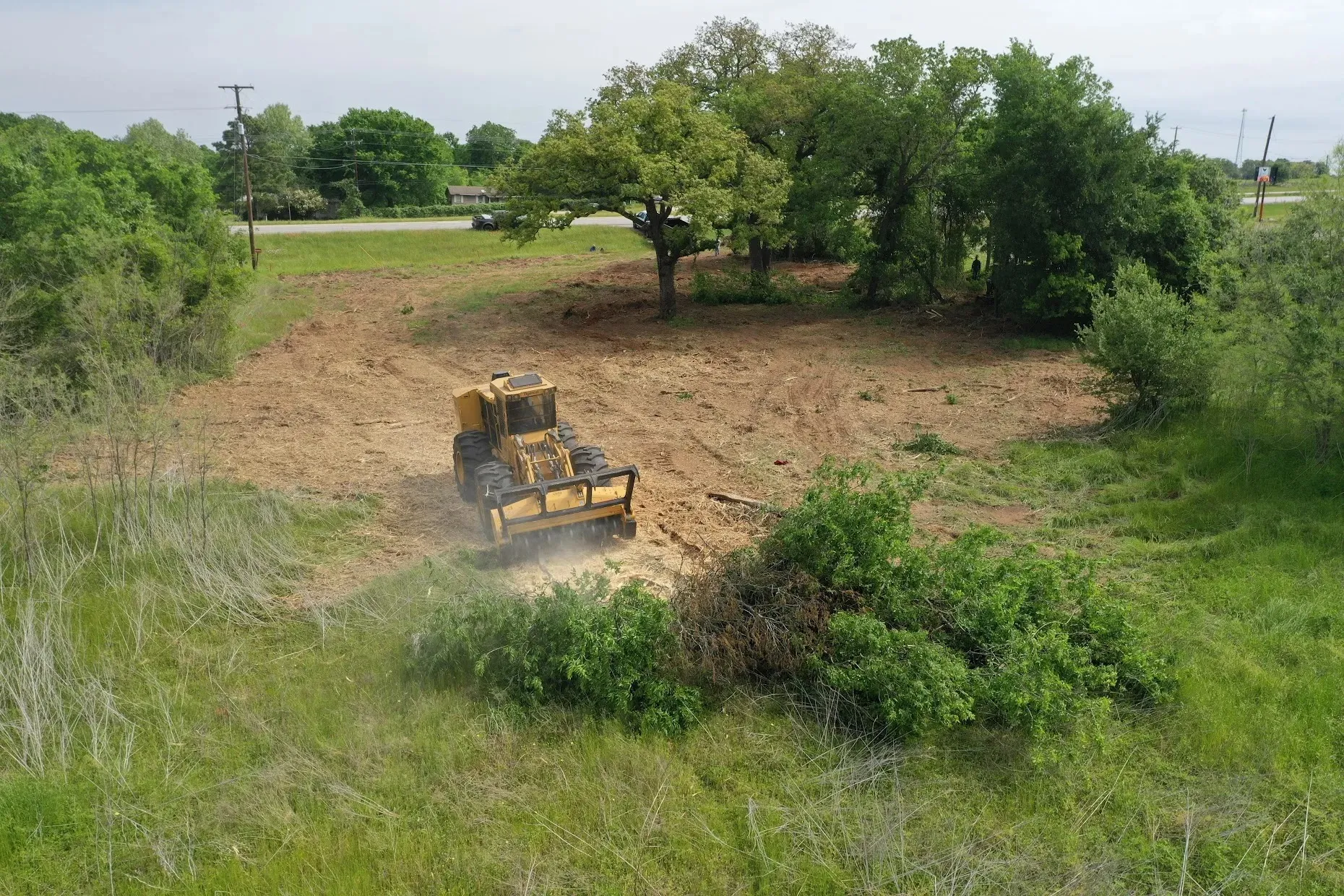

When property owners in Hilo and across the Big Island think about clearing overgrown land, the first images that come to mind are usually bulldozers tearing through vegetation, burning piles of debris, and truckloads of material hauled off-site. These conventional methods have been around for decades, and while they do clear land, they come at a serious cost to the soil, the surrounding ecosystem, and the budget. There is a better option available today, one that clears land efficiently, protects the ground beneath it, and recycles everything in place without creating a single debris pile.
Land mulching is a modern land preparation method that is gaining significant traction among homeowners, farmers, and developers across Hawaii. It delivers the same result as traditional clearing but without the environmental damage, the excessive labor costs, or the weeks of cleanup that typically follow a conventional clearing job. Understanding how it works, what it does for your soil, and why it has become the preferred choice for Big Island properties can help you make a well-informed decision before your next project.
How Land Mulching Works and Why It Is Different
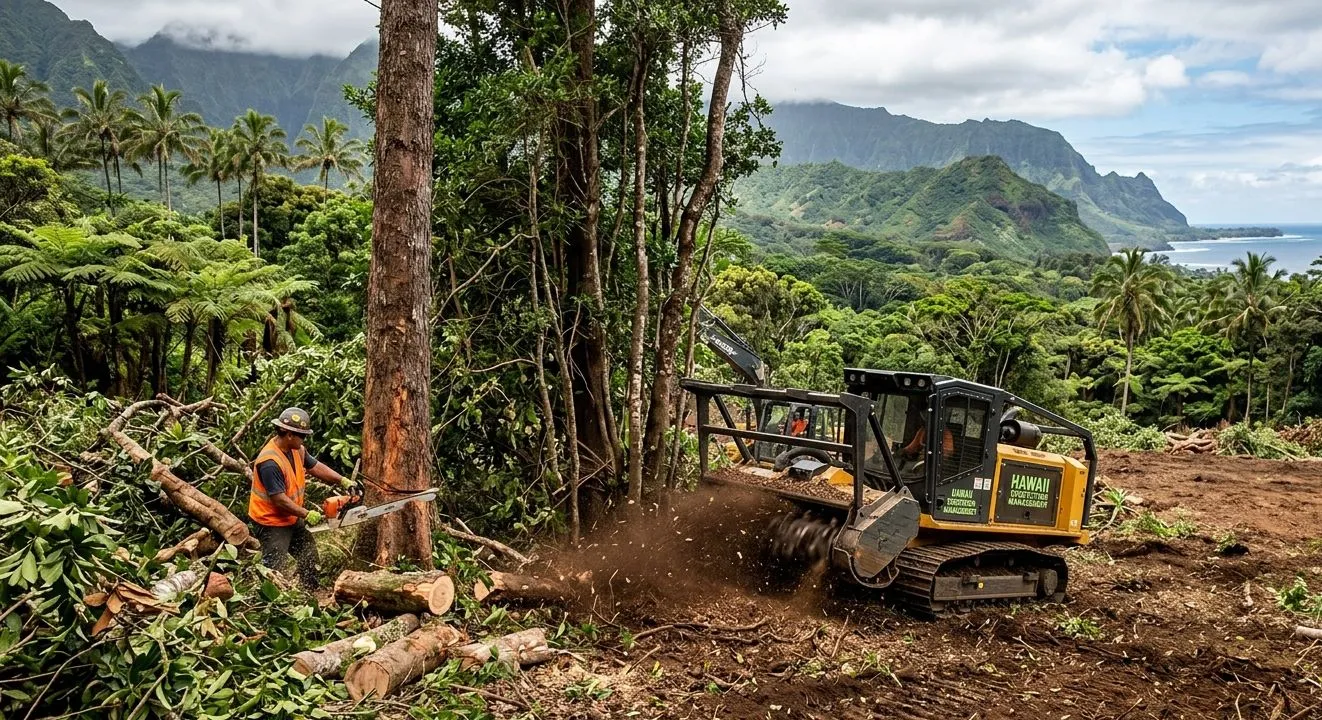
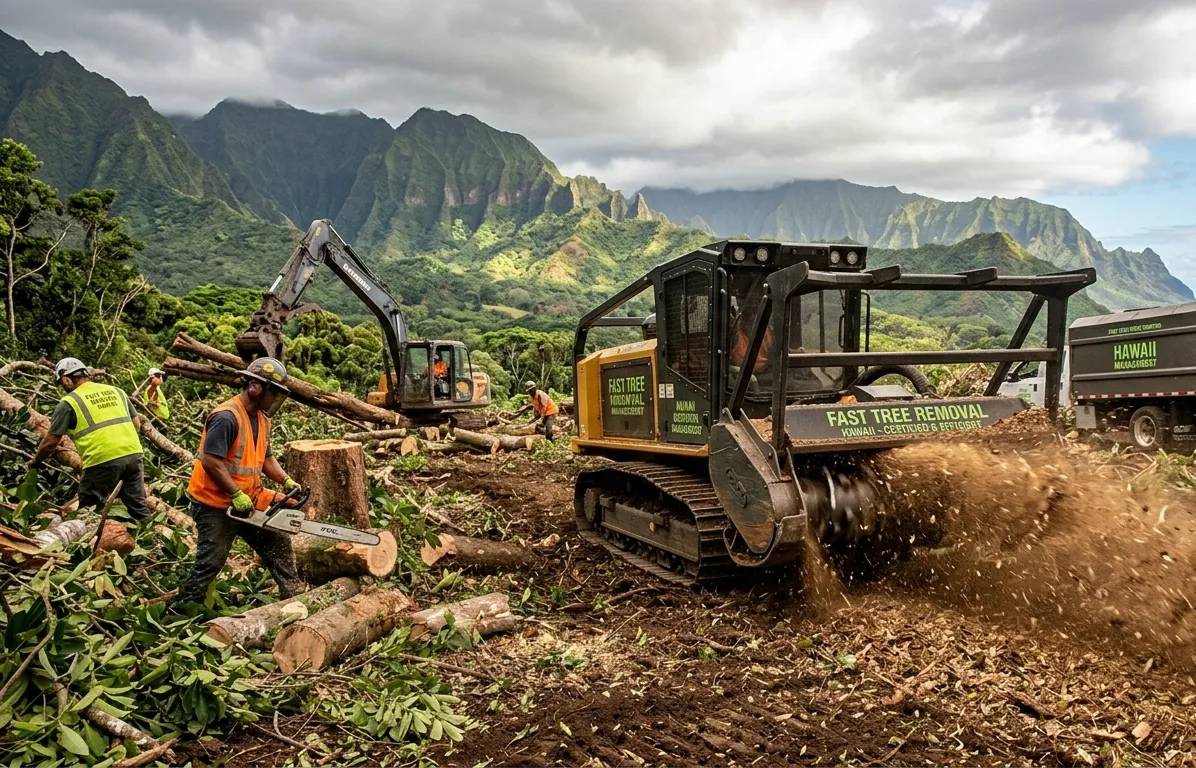
The process is straightforward but remarkably effective. A single piece of specialized forestry mulching equipment moves across the property, cutting through trees, brush, bamboo, invasive vines, and dense undergrowth. As the machine advances, it simultaneously grinds all of that vegetation into fine organic mulch and spreads it evenly across the cleared surface. The entire operation happens in one continuous pass, which means no separate cutting crew, no hauling trucks, and no secondary cleanup required after the job is done.
This is what separates land mulching from every other clearing method. Bulldozing strips the topsoil away along with the vegetation, leaving exposed dirt that is highly vulnerable to erosion and rainfall runoff. Burning clears surface material but does nothing for root systems and releases carbon emissions into the air. Hauling requires multiple machines, multiple crews, and significant disposal costs that add up quickly on larger parcels. Mulching eliminates all of these problems by keeping everything on-site and converting cleared vegetation into something the land can actually use.
The organic layer left behind after mulching serves multiple purposes. It acts as a natural ground cover that retains soil moisture, stabilizes ground temperature, and slows the regrowth of invasive weeds by blocking sunlight at the surface. Over time, as the mulch decomposes, it releases nutrients back into the soil, improving fertility and creating a healthier growing environment for native plant recovery and future agricultural or landscaping use.
For properties in Hilo specifically, where Hawaii's heavy annual rainfall makes exposed, bare soil a serious erosion risk, the protective mulch layer provides immediate and long-term stabilization that bare ground simply cannot offer after traditional clearing.
The Benefits That Make It the Right Choice for Big Island Properties
Hawaii presents a unique set of land management challenges that most states do not face to the same degree. Invasive species like Albizia trees and bamboo spread at an aggressive pace, overtaking residential lots, agricultural parcels, and forested acreage within a single growing season. Volcanic soil types vary widely across the Big Island, and steep slopes are common across both rural and semi-rural areas near Hilo. Conventional clearing methods were not designed with these conditions in mind.
Land mulching addresses each of these challenges directly. The equipment handles bamboo, Albizia, dense brush, and mixed vegetation without difficulty, grinding even thick stalks and woody material into manageable mulch. On sloped terrain, the mulch layer that remains after clearing reduces the risk of soil sliding or washing away during heavy rainfall events, which are frequent on the Hilo side of the island. On flat agricultural land, the improved soil condition following mulching often means that the ground is ready for planting far sooner than it would be after bulldozing.
Vegetation management is another important application. Property owners who need to keep invasive growth under control on a seasonal basis benefit from mulching because the process can be repeated without causing cumulative soil damage. Each session leaves the land in better condition than conventional clearing would, rather than progressively worse.
Cost efficiency is also a major advantage. Because land mulching consolidates what would otherwise be a multi-machine, multi-crew operation into a single piece of equipment and a streamlined workflow, the overall project cost is typically lower than traditional clearing. The elimination of debris hauling and disposal fees alone can represent a substantial saving on medium to large-scale projects.
Firebreak creation is another practical use that is especially relevant across the Big Island. Dry brush and accumulated deadwood are significant wildfire fuel sources. Mulching clears this material efficiently and converts it into a ground layer that does not carry fire the same way loose debris does, reducing wildfire risk around homes and structures without leaving land exposed and unprotected.
Who Uses Land Mulching in Hilo and Across the Big Island
The range of property owners who benefit from this method is broad. Residential homeowners with overgrown backyards, side lots, or rural acreage use it to reclaim usable space without tearing up the landscape. Farmers preparing pastures, orchards, or crop fields rely on it to clear land quickly while preserving the soil quality that their agricultural operations depend on. Commercial developers use it for large-scale site preparation before construction begins, and conservation project managers use it to remove invasive species while encouraging the return of native Hawaiian vegetation.
Even smaller projects benefit. A single overgrown residential lot in Hilo can be cleared and mulched in a fraction of the time that chainsaw crews and hauling trucks would take, and the result is a cleaner, more stable property ready for whatever comes next.
Conclusion
Land mulching is not just a trend in sustainable land management. It is a proven, practical solution that delivers better results than conventional clearing while protecting the soil, reducing project costs, and supporting the long-term health of Hawaii's ecosystems. Whether you are preparing land for development, reclaiming overgrown agricultural parcels, or simply trying to make your property safe and usable again, this method is worth serious consideration.
If your property in Hilo or anywhere on the Big Island needs clearing, contact Arborist Services at (808) 895-6537 or visit to schedule a consultation with an experienced crew.





















Sign in to leave a comment.