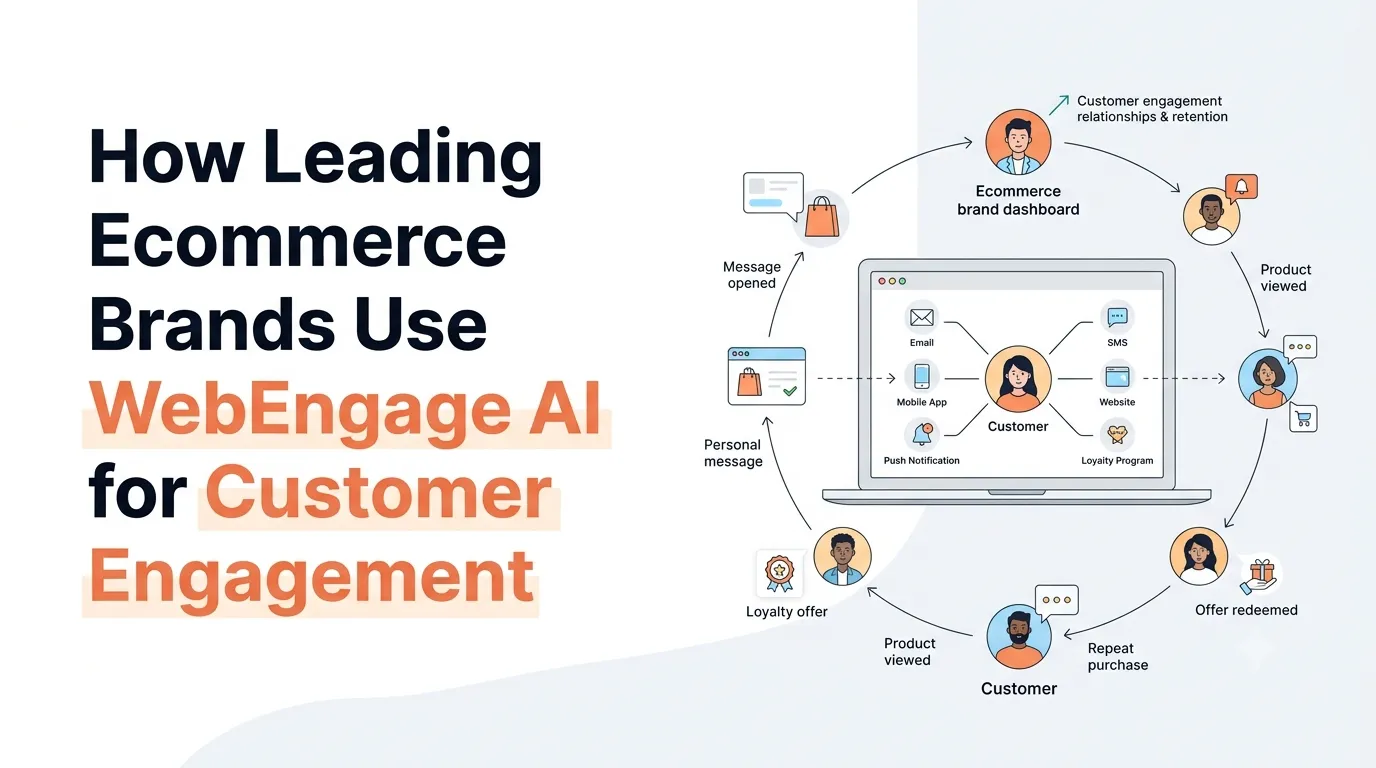

Ecommerce brands running WebEngage largely use it as a broadcast tool. Scheduled emails go out. Cart abandonment sequences fire. Demographic filters slice the list. The AI use cases in WebEngage that actually shift revenue, predictive churn models, real-time intent triggers, dynamic lifecycle scoring, intelligent channel routing, stay configured but inactive. The platform supports all of it. The gap is not capability. The gap is how teams choose to operate the tool they already pay for.
Why the Gap Exists in the First Place
Campaign culture drives the problem. Marketing teams measure what is easy to count: sends, opens, clicks, and coupon deployments. That measurement frame creates a strong pull toward activity and a weak pull toward intelligence.
AI features that require instrumented event data, suppression architecture, or feedback loops sit outside what the campaign calendar demands. They get postponed quarter after quarter. Meanwhile, brands that build the data foundation first and activate these features systematically accumulate a compounding advantage that becomes harder to close with each passing cycle.
The 10 AI Use Cases in WebEngage That Drive Real Results
1. Next-Best-Product Recommendations
Rule-based recommendation logic, recently viewed, frequently bought together, category trending, works well enough to justify keeping it. It does not work well enough to justify stopping there.
AI recommendation models read purchase history, browsing sequences, price sensitivity, category affinity, and lifecycle stage as a unified behavioral signal. The output is not a list of plausible products. It is the specific product this customer is most likely to purchase right now, at this point in their journey.
The categories where AI recommendations generate the clearest lift:
- Personal care and skincare brands sequencing customers through routine-building purchases
- Electronics retailers focused on improving accessory attachment rates per order
- Fashion brands applying cross-category and outfit-completion logic
- Any product line with predictable replenishment timing built into the category
One requirement consistently skipped: recommendation outcomes need to return to the model after every campaign cycle. Without that feedback loop, the system runs its initial predictions indefinitely. It does not learn what worked. It does not adjust. It calcifies.
2. Predictive Churn Detection
Waiting for 60 or 90 days of inactivity before triggering a win-back campaign means accepting a much harder recovery task than early intervention requires. By that threshold, the customer has already found alternatives and built new habits around them.
AI churn models read the behavioral shifts that appear well before a customer goes formally inactive:
- Session frequency declining across consecutive visits
- Email engagement thinning across multiple consecutive sends
- Purchase intervals stretching beyond each customer's established norm
- Browsing depth and category exploration progressively narrowing
- Loyalty or rewards engagement quietly dropping off
These patterns surface weeks before inactivity becomes the official label. Acting at that stage, with a relevant product nudge or a well-targeted loyalty incentive, costs less and converts at a higher rate than any win-back campaign. Tracking the right ecommerce metrics makes these early signals readable before they harden into confirmed churn.
Assign a specific intervention to each risk tier. Detecting at-risk customers without a mapped response only improves reporting. It does not change what happens to those customers.
3. Send-Time Optimization
Segment-level send-time logic identifies the best average window across a cohort. Individual-level AI optimization identifies the best window for each specific customer, and those two numbers are rarely the same.
One customer opens email reliably after 9pm on weekdays. Another responds on Sunday mornings. A third engages almost exclusively at midday. A broadcast schedule built on the cohort average misses the optimal window for the majority of the list most of the time.
Brands that shift to individual-level send-time optimization see open rate improvement with zero changes to creative or offer structure. The message performs better entirely because it reaches the customer when they are actually present and ready to engage.
4. Frequency Optimization
List fatigue builds quietly and reverses slowly. Open rates slide by small fractions across consecutive sends. Unsubscribe rates tick upward in numbers that look manageable until they compound. Push notification permissions disappear without any visible trigger event. Teams notice the pattern only after list health has already eroded significantly.
AI frequency optimization matches send cadence to each customer's demonstrated engagement tolerance rather than to the campaign calendar's demands:
- High-engagement customers absorb frequent contact without disengaging and often benefit from it
- Low-engagement customers disengage faster with higher volume and respond better to less frequent, more precisely targeted sends
Applying one universal cadence across the entire list because it simplifies scheduling actively damages the segment that needs different treatment. The damage accumulates over months and proves difficult to reverse once it takes hold.
5. Predictive Cohort Creation
Descriptive segmentation groups customers by what they have already done. Predictive cohorts group customers by what they are statistically likely to do next. That forward-looking frame changes which campaigns you build, when you send them, and what results they produce.
Predictive cohorts that consistently improve performance metrics:
- Customers with high purchase probability concentrated in the next 14 days
- Customers displaying early churn signals before formal inactivity begins
- High-intent visitors who have returned repeatedly without completing a transaction
- Price-sensitive customers who convert specifically under urgency or scarcity framing
- High-value customers who disengage when campaign messaging feels generic or broadcast-scale
Cohort membership updates automatically as behavioral signals shift. Conversion triggers exit from the high-intent cohort. Engagement decline triggers entry into the at-risk cohort. Propensity Q generates and sustains exactly this kind of dynamic, behavior-driven segmentation, so the audiences your campaigns target always reflect what customers are doing now rather than what they did last month.
Build exit logic into every cohort from the start. A customer who purchased three days ago should not continue receiving purchase-driving messaging. Dynamic entry requires equally dynamic suppression.
6. Intelligent Channel Selection
Every customer has a channel they respond to most reliably. Most brands either guess at that preference or apply the same channel hierarchy to everyone regardless of individual behavior history.
AI channel selection identifies each customer's most responsive channel from historical engagement data and builds an automatic escalation path for when that primary channel does not generate a response.
WebEngage analyzes engagement patterns across push notifications, email, SMS, WhatsApp, and onsite messaging, then routes each communication through the path most likely to convert for that specific customer.
Push notification ignored → escalate to WhatsApp. Email unopened past a defined window → trigger onsite messaging at next session. The routing logic adapts to individual behavior rather than defaulting to a fixed sequence applied uniformly across the list.
Clean, complete cross-channel engagement data is the prerequisite. Multichannel personalization built correctly gives channel selection AI a meaningful signal to optimize against. Incomplete data produces optimized routing toward the wrong destinations.
7. Product Affinity Modeling
Purchase records document what a customer bought. Behavioral data reveals what a customer actually wants, and the gap between those two data sets frequently contains the most actionable commercial signal available to the brand.
Affinity modeling captures the implicit patterns that purchase history alone cannot surface:
- Categories a customer returns to repeatedly across multiple sessions without completing a purchase
- Price tiers they consistently engage with regardless of what they ultimately buy
- Product attributes, material, format, brand tier, aesthetic style, that appear persistently throughout their browsing history
A customer who browses premium products repeatedly but converts at mid-tier pricing is not simply price-constrained. They may need a more compelling trigger, a better product match, or a well-timed offer that closes the gap between aspiration and action. Affinity modeling surfaces that pattern and applies it across recommendation slots, campaign creatives, and offer targeting in high-intent moments.
8. Dynamic Customer Lifecycle Scoring
Lifecycle classifications assigned at a point in time go stale quickly in a category with active purchase cycles. A high-value customer from last quarter may show disengagement signals today that no active campaign currently addresses. A one-time buyer written off as transactional may display behavioral patterns this week that strongly predict repeat purchase. Static labels miss both movements entirely.
AI-driven lifecycle scoring evaluates each customer continuously, across engagement depth, purchase probability, churn risk, loyalty strength, and revenue potential, and updates their position as signals evolve in real time.
The payoff is precision in how marketing effort and budget distribute:
- High-value customers showing early churn signals receive aggressive, high-investment retention treatment immediately rather than after 90 days
- Low-intent customers receive efficient, lower-cost engagement that preserves budget for higher-opportunity segments
- Customers with rising commercial potential receive investment that reflects where they are heading rather than where they started
Spend follows actual opportunity rather than spreading uniformly across a list with dramatically different revenue potential sitting inside it.
9. Automated Experimentation
Manual A/B testing processes one variable at a time through a sequential cycle: hypothesis, test, wait for significance, review, implement, repeat. Across a real campaign program spanning multiple segments, channels, offer types, and creative variants simultaneously, that sequential process generates a testing backlog that compounds faster than any team can clear.
AI-assisted experimentation runs concurrent tests across subject lines, send times, creative formats, channel combinations, and offer structures in parallel. Traffic shifts toward better-performing variants based on live behavioral data automatically, without a manual review gate at each stage of the cycle.
The harder requirement is cultural rather than technical. Acting on what the system finds, including findings that contradict what performed well previously or challenge team assumptions, is what makes the program valuable. An experimentation system that the team overrides whenever results feel counterintuitive does not generate learning. It generates expensive confirmation of prior beliefs at higher operational cost. Disciplined CRO and A/B testing practice keeps the process grounded in behavioral evidence and prevents intuition from overwriting valid data.
10. Real-Time Intent Detection
Every other use case on this list improves on historical data. Real-time intent detection acts on what a customer does in this session, right now, and that timing difference is what separates a conversion that happens today from a customer who leaves and does not return.
High-intent behavioral signals appear in specific, short windows:
- Viewing the same product multiple times within a single browsing session
- Moving rapidly between closely matched alternatives in an active comparison pattern
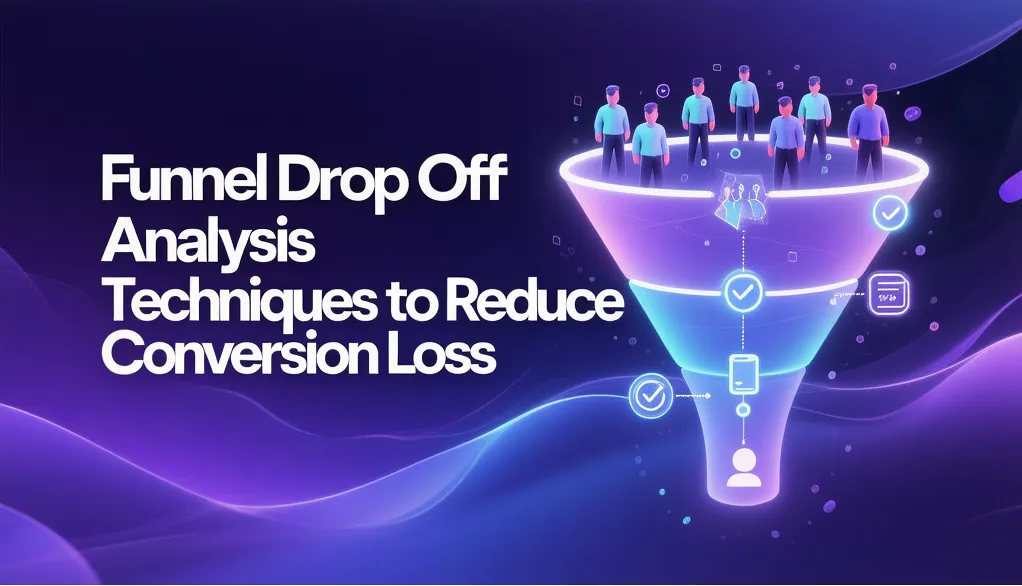
- Entering the checkout flow and then pausing, scrolling back, or exiting without completing
- Adding high-margin products to a wishlist without initiating a purchase
- Returning to a product page first visited in an earlier session days before
Each signal indicates an active decision in progress. The customer is not browsing without purpose. They are evaluating. A message that arrives in that window, a limited inventory alert, a friction-reducing offer, a prompt that addresses the specific hesitation the behavior reveals, converts at rates a scheduled campaign sent the following morning cannot reach.
AisleAI is purpose-built to deliver real-time, intent-driven engagement at the speed and precision this use case demands. Most brands are not running real-time intent detection because it requires event streaming infrastructure and trigger architecture that fires in seconds rather than batch cycles. That infrastructure gap is the real barrier, not the absence of the feature inside the platform.
Three Conditions That Determine Whether AI Delivers
All ten use cases above depend on the same underlying conditions. These are not optional enhancements that improve performance at the margins. They determine whether AI features produce their potential or simply run in the background generating costs without proportional returns.
Data quality sets the ceiling on every model. AI systems generate useful outputs when they process clean, comprehensive behavioral data. Gaps in event tracking, disconnected catalog data, and unresolved customer identity across channels all limit what the model can actually see and act on. The AI capability is not the primary investment. The data foundation that feeds it is, and most brands underinvest at the foundation level while concentrating budget and attention on the tools built on top of it.
Feedback loops convert AI into a learning system. Recommendation click-through rates, churn intervention outcomes, channel response data, and send-time lift measurements all need to return to the models that generated them. AI systems running without outcome feedback repeat their initial logic at scale. They do not adapt. The gap between model assumptions and actual customer behavior grows quietly until it becomes both visible and expensive to address.
Suppression logic preserves the customer experience. Every use case above triggers on a behavioral condition. The investment most teams consistently underbuild is the architecture for removing customers from those triggers once the condition changes. A customer who converted yesterday should not receive conversion messaging today. A customer who reactivated last week should not keep flowing through a win-back sequence. Without suppression architecture, AI-powered campaigns produce exactly the poorly timed, irrelevant experience they were designed to eliminate.
The complete breakdown of how these use cases apply across real ecommerce environments lives in the full guide to AI use cases in WebEngage for ecommerce brands.
WebEngage already supports everything on this list. What most ecommerce brands still need to build is not access to features, it is the data infrastructure, the campaign architecture, and the team measurement frame that converts platform capability into consistent, compounding commercial advantage.
The brands closing that gap now are building a lead that grows harder to overcome with every campaign cycle that passes without addressing it.


























Sign in to leave a comment.