How Long Does VHS to Digital Conversion Take and What Happens to Your Tapes?

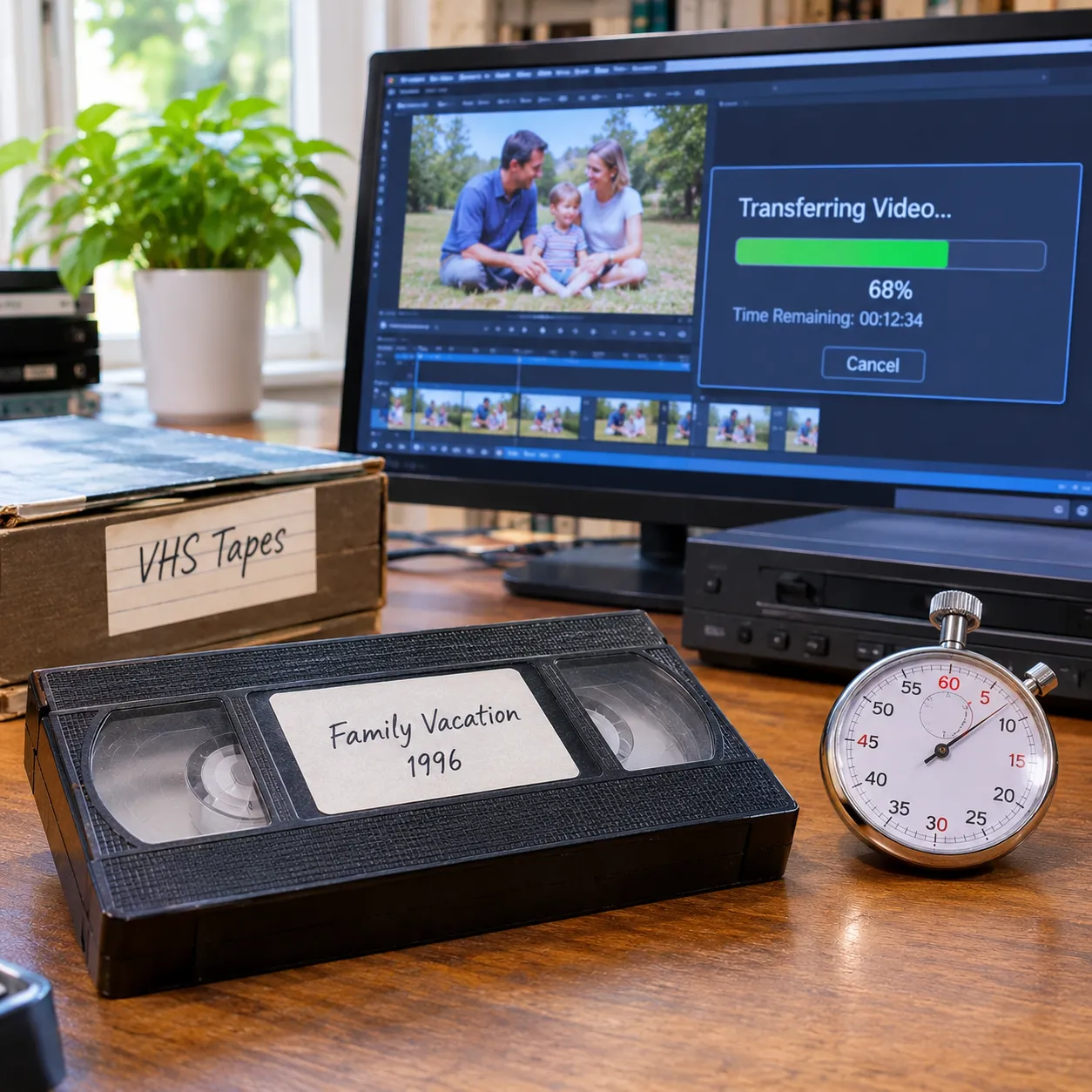
Converting a single VHS tape takes at least as long as the video's actual runtime—so a two-hour cassette requires two full hours of playback, plus extra time for inspection, file encoding, and quality checks. For a typical family order of 5 to 20 cassettes, an in-house studio usually completes the entire VHS to digital process within one to two weeks.
Your original cassettes are never erased, cut apart, or discarded during a standard transfer. After digitization, every tape is carefully rewound, placed back in its sleeve, and returned to you alongside your new digital files.
Why Does VHS to Digital Conversion Happen in Real Time?
Unlike copying files from one hard drive to another, analog video cannot be transferred at high speed. A VCR has to physically pull the magnetic ribbon past spinning playback heads at normal viewing speed to read the picture and audio cleanly.
That means there is no fast-forward shortcut for digitizing home movies. If you drop off a cardboard box holding 15 cassettes with two hours of family footage on each, those tapes alone require 30 hours of live playback before a technician even starts organizing folders, trimming blank static at the end of a reel, or transferring files onto a USB drive.
What Factors Affect Your Total Turnaround Time?
One of the first things families ask us at LIFETIME HERITAGE FILMS INC is why two boxes of the same size can have different completion dates. Several practical factors determine the real schedule:
- Total recorded hours: Outside labels rarely tell the whole story. A single cassette can hold 30 minutes of a wedding ceremony or up to six hours of mixed family holidays, which directly changes capture time.
- Number of tapes in your batch: Small orders of two or three cassettes can often be completed in just a few days, while multi-decade collections of 40 or 50 tapes naturally require more bench time.
- Physical repairs and cleaning: If a cassette arrives with a cracked plastic shell, a snapped leader, or heavy dust inside the housing, technicians pause to fix the issue before the tape ever enters a deck.
- Seasonal studio volume: Lead times stretch slightly in November and December, when families bring in boxes of home videos to turn into holiday gifts.
What Physically Happens to Your Tapes From Drop-Off to Pickup?
Handing over one-of-a-kind family memories takes real trust. Knowing the exact chain of custody helps remove the guesswork before you drop off a single box.
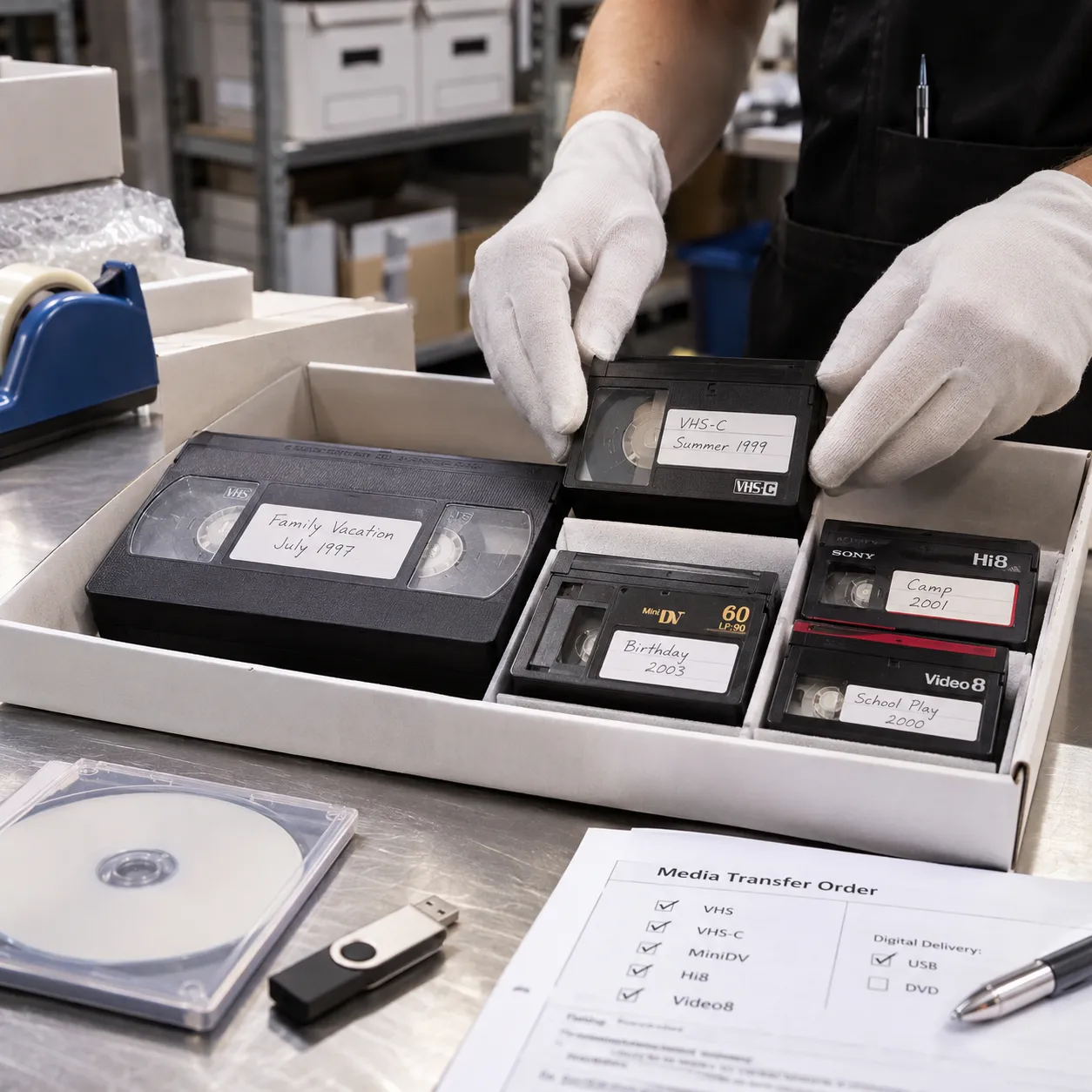
- Intake Logging and Labeling: Every cassette is counted, matched to your order ticket, and tagged individually so nothing gets mixed up with another family's collection. We also note any handwritten dates or titles on your cases so those same names carry over to your digital files.
- Pre-Playback Inspection: Before pressing play, a technician checks the cassette window and reels for loose slack, physical cracks, or debris that could snag inside a player.
- Monitored Real-Time Capture: The tape runs in real time on a calibrated studio deck while technicians watch for signal drops, blank stretches, or playback glitches rather than leaving machines unattended overnight.
- Encoding and Spot-Checking: Once captured, the video is encoded into clean, widely playable files like MP4 and spot-checked for smooth playback and proper audio sync.
- Rewinding and Safe Packaging: Each cassette is rewound cleanly back to the beginning, returned to its original cover, and packed securely with your USB drive, hard drive, or discs for pickup.
Do You Get Your Original VHS Tapes Back?
Yes—your original cassettes remain yours. Digitizing simply reads the magnetic signal off the ribbon; it does not wipe the tape or alter the original recording.
Once you get your order back, test your digital files on your computer or TV and create at least one backup copy in the cloud or on a second drive. After confirming everything plays smoothly, many families store the original cassettes in a cool, dry closet as keepsakes, while others finally feel comfortable clearing out bulky storage bins knowing the memories are safe.
Why Does In-House Handling Protect Both Time and Safety?
When people compare turnaround estimates, they often notice a huge gap between local archival labs and big-box retail drop-off counters. Retail chains rarely convert tapes on-site; instead, they ship your box to distant third-party processing centers, where orders can sit in queues for four to eight weeks—or longer during peak seasons.
At LIFETIME HERITAGE FILMS INC, every VHS to digital project stays right inside our own studio from start to finish. Keeping your cassettes under one roof avoids risky multi-carrier shipping, keeps your turnaround predictable, and lets you speak directly with the technicians handling your family history.
What If Your Storage Box Also Holds Older Movie Reels?
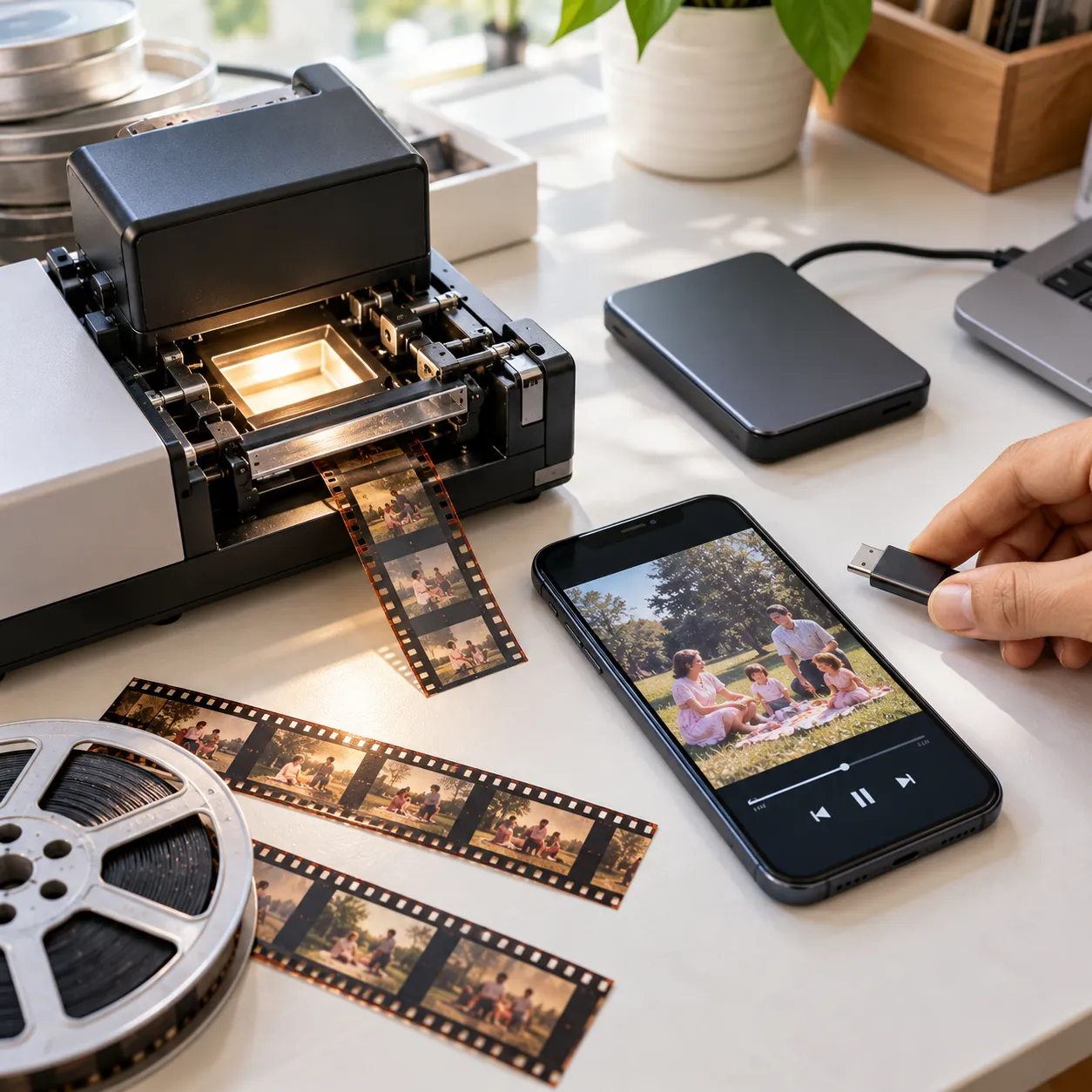
It is very common to open a closet looking for VHS cassettes and discover older metal canisters of silent or sound film tucked behind them. Film requires a completely different frame-by-frame scanning schedule than videotape, so knowing what is in the box upfront helps you plan both timelines together.
If you spot older celluloid reels alongside your cassettes, you can explore how we safely Transfer 16mm Film so every generation of your family's archive is preserved together. Whenever you are ready to get a realistic time estimate for your collection, the team at LIFETIME HERITAGE FILMS INC can walk you through your tapes and map out a clear, stress-free schedule.






Sign in to leave a comment.