

Modern RF systems often need to detect very weak signals without losing important information. This is where a low noise amplifier plays an important role. It sits near the front end of a receiver and boosts the signal before it passes through other parts of the system.
A good amplifier does more than add gain. It must increase the useful signal while adding as little noise as possible. For this reason, engineers consider gain, noise figure, frequency range, linearity, and stability when selecting an amplifier for an RF application.
Why Low Noise Amplifiers Matter in RF Systems
Weak signals can easily be affected by noise from cables, connectors, mixers, filters, and other components. If the signal becomes too weak before amplification, later stages may struggle to recover the required information.
A low noise amplifier addresses this problem by providing gain early in the signal path. This can help:
- Increase receiver sensitivity
- Preserve weak RF signals.
- Reduce the effect of noise from later components.
- Support accurate signal measurement.
- Improve the overall performance of a receiver chain.
The amplifier's location also matters. Placing it near the antenna or signal source minimises losses before amplification.
Here are some key specifications to consider:
Not all RF amplifiers suit every system. Engineers should consider a few specifications when choosing a model.
Gain
Gain is the amount by which an amplifier amplifies the input signal. Insufficient gain can result in low signal levels, and too much gain can compress or overload the signal in subsequent stages.
Noise Figure
The noise figure measures the noise added by the amplifier. The lower the number, the better, especially for very weak signals.
Frequency Range
The amplification range should cover the system's frequency range. RF applications can range from low frequencies to millimetre-wave and microwave. Frequency compatibility is paramount.
Linearity and Stability
A good amplifier should amplify the expected input energy without excessive distortion. Stability is equally important, particularly in sensitive measurement and communication systems.
How Testing Supports Better RF Performance
Accurate testing is essential when designing or maintaining an RF signal chain. A VNA test cable is commonly used with a vector network analyser to measure components and connections across a selected frequency range.
These cables need to maintain stable electrical performance during measurements. Poor cable quality or movement during testing can introduce errors, making it harder to assess an RF component's actual performance.
A reliable VNA test cable can support measurements such as:
- Return loss
- Insertion loss
- Reflection coefficient
- Phase response
- Transmission characteristics
For high-frequency applications, cable phase stability and connector quality become especially important.
Choosing the Right RF Components
Selecting an amplifier should always start with the requirements of the complete RF system, not gain alone. Engineers should consider the operating frequency, expected signal level, available power, connector type, noise requirements, and measurement setup.
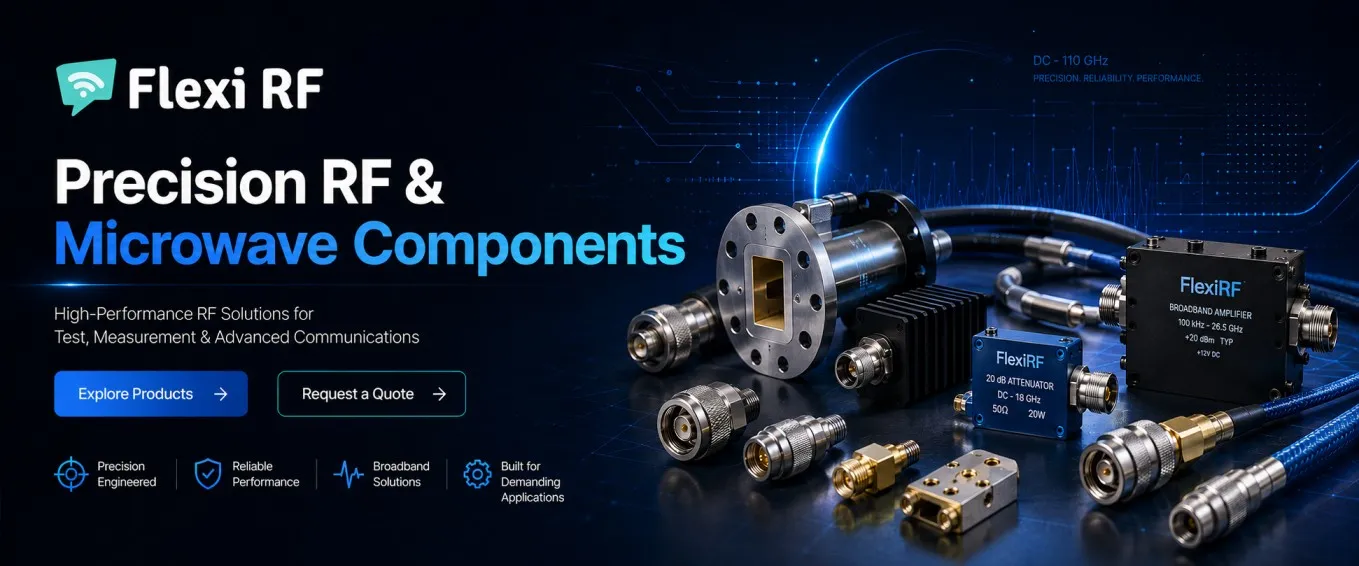
Flexi RF Inc offers RF and microwave components designed for a wide range of applications. Its product line includes amplifiers, connectors, cable assemblies, attenuators, loads, power dividers, and other components for testing and signal transmission.
When choosing components, verify how each component will work with the others. A good amplifier, properly matched connections, and reliable test equipment can significantly improve measurement accuracy and receiver performance.
Final Thoughts
A carefully selected low noise amplifier can play a key role in preserving weak RF signals and improving receiver sensitivity. However, amplifier performance depends on more than gain. Noise figure, frequency range, linearity, stability, and system compatibility all matter.
Reliable testing also helps engineers understand how each component performs in the actual signal path. Using a suitable VNA test cable and properly matched RF components supports consistent, dependable measurements across demanding applications.



























Sign in to leave a comment.