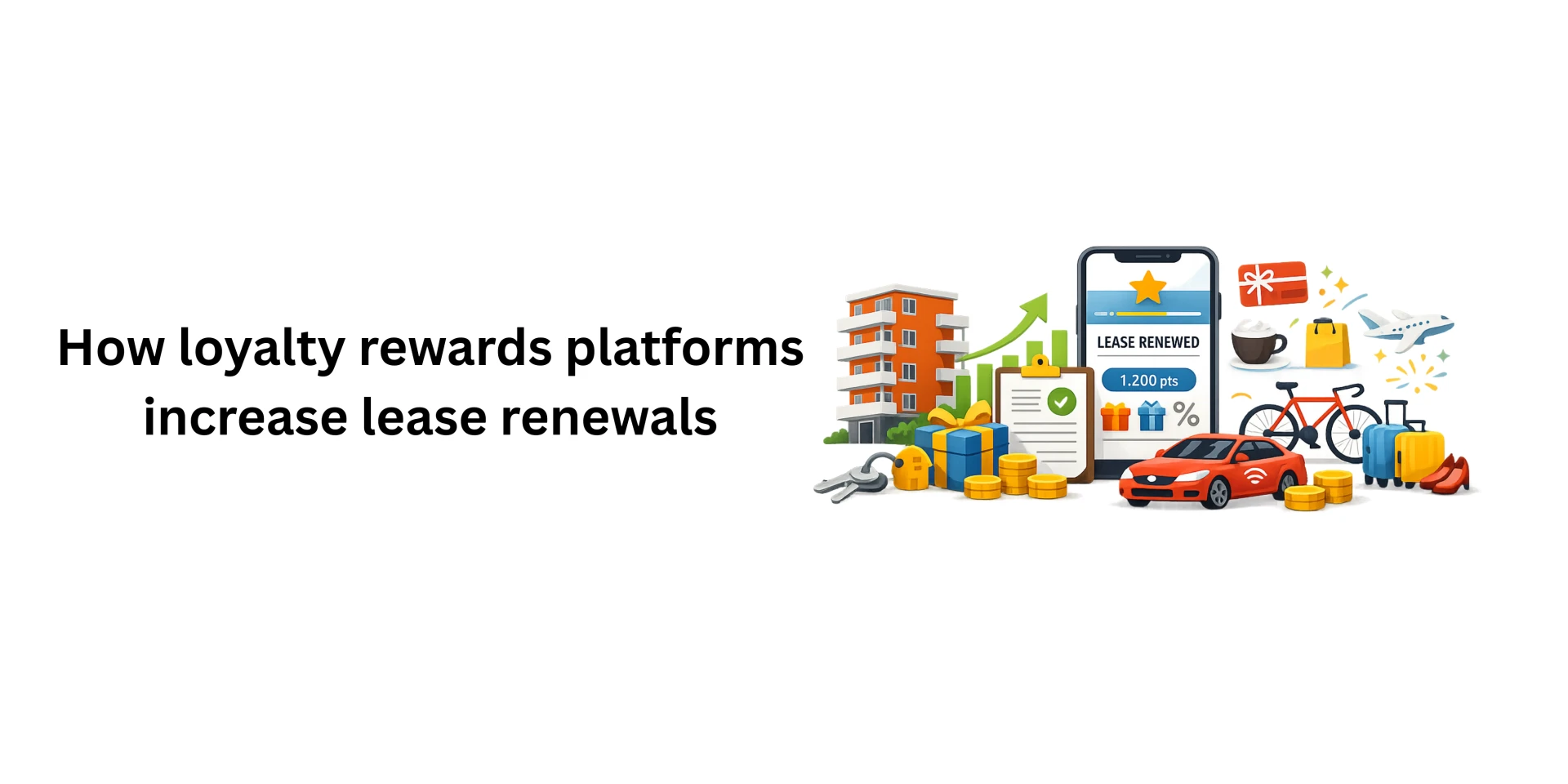

Lease renewals are no longer driven by price alone. In residential real estate, experience now shapes retention as much as rent.
A modern Loyalty Management Platform gives property teams a structured way to influence that experience. Instead of reacting at renewal time, operators can engage residents from move-in to month 12.
If you want a deeper look at how this works in multifamily, explore this breakdown of a loyalty rewards platform for multifamily and how it supports retention at scale.
This article explains why loyalty rewards platforms increase lease renewals, how they work, and what enterprise teams should prioritize when evaluating one.
Why lease renewals are harder than ever
Renewals used to be transactional. Offer a concession. Reduce friction. Hope the resident stays.
Today’s renter expectations are different:
- Amenities are table stakes
- Digital convenience is expected
- Ongoing value matters more than one-time perks
- Competing properties market aggressively year-round
For operators, that means:
- Higher turnover costs
- Pressure on net operating income
- Increased marketing spend to replace lost residents
Short-term incentives may fill vacancies. They rarely build loyalty.
A Loyalty Management Platform changes the approach. It focuses on consistent engagement, not last-minute negotiation.
The hidden cost of reactive retention
Many portfolios still manage renewals manually.
Typical process:
- Wait until 60–90 days before lease expiry
- Send renewal notice
- Offer a discount if needed
- Negotiate
This approach has three problems:
- No emotional connection built beforehand
- Limited data on engagement history
- Price becomes the only lever
When price becomes the lever, margin shrinks.
A Loyalty Management Platform reduces reliance on rent discounts by strengthening perceived value during the lease term.
How a loyalty management platform increases lease renewals
1. Engagement starts at move-in
Retention does not start at month 11. It starts on day one.
With a Loyalty Management Platform, residents can access:
- Everyday savings
- Lifestyle perks
- Digital rewards
- Partner discounts
Instead of a static lease, residents experience ongoing value.
That perceived value compounds over time. When renewal arrives, the question shifts from “Can I save elsewhere?” to “Will I lose benefits if I move?”
That shift matters.
2. Consistent value beats one-time concessions
Rent concessions are expensive and forgettable.
Loyalty rewards are:
- Ongoing
- Usage-based
- Personalized
- Reinforcing brand touchpoints
In residential real estate portfolios, small but frequent value signals build a stronger psychological attachment than a single discount.
A Loyalty Management Platform enables:
- Automated reward triggers
- Milestone recognition
- Referral incentives
- Payment behavior rewards
These interactions strengthen engagement without eroding rent integrity.
3. Behavioral data informs smarter renewal strategies
Manual tracking gives little insight.
A centralized Loyalty Management Platform captures:
- Engagement frequency
- Reward redemption
- Participation trends
- Communication responsiveness
This data helps property managers:
- Identify at-risk residents early
- Segment renewal outreach
- Tailor messaging
Instead of blanket incentives, teams can act strategically.
That improves renewal efficiency and protects margin.
4. Emotional loyalty reduces price sensitivity
Residents who feel valued are less likely to comparison-shop purely on rent.
Loyalty rewards platforms:
- Reinforce brand identity
- Create positive habit loops
- Encourage community participation
- Reward responsible behaviors
This builds emotional loyalty.
Emotional loyalty often reduces sensitivity to moderate rent increases. That stabilizes revenue without aggressive discounting.
5. Automation reduces operational friction
Property teams already manage leasing, maintenance, compliance, and communications.
A Loyalty Management Platform automates:
- Reward distribution
- Perk catalog updates
- Resident enrollment
- Reporting dashboards
This reduces administrative burden.
More importantly, it standardizes engagement across multi-property portfolios.
Enterprise operators gain consistency at scale.
Strategic impact on portfolio performance
For enterprise decision-makers, renewal improvement must tie to financial outcomes.
A Loyalty Management Platform supports:
- Higher lease renewal rates
- Reduced turnover costs
- Improved lifetime resident value
- Stronger NOI stability
Even a modest increase in renewal percentage can materially impact annual revenue.
Example impact areas:
- Lower vacancy days
- Reduced make-ready costs
- Fewer leasing incentives
- Improved forecasting accuracy
Retention strategy becomes proactive, not reactive.
Why residential real estate is uniquely positioned for loyalty
Unlike retail or telecom, multifamily has:
- Recurring monthly payments
- Long-term contracts
- Frequent brand touchpoints
- High switching friction
These characteristics make loyalty rewards highly effective.
Residents interact with the property brand regularly. That creates multiple engagement opportunities.
A Loyalty Management Platform leverages those moments.
Instead of limiting engagement to maintenance emails and rent reminders, operators can create positive touchpoints.
Over time, that changes how residents perceive the property.
What to look for in a loyalty management platform
Not all platforms deliver enterprise-level impact.
Decision-makers should evaluate:
1. Scalability
Can it support multi-property portfolios without operational complexity?
2. Automation capabilities
Does it minimize manual intervention?
3. Reporting and analytics
Can it demonstrate correlation with renewal performance?
4. Resident experience quality
Is the rewards catalog relevant and easy to access?
5. Integration flexibility
Does it connect with property management systems?
A strong Loyalty Management Platform should function as a retention infrastructure layer, not a marketing add-on.
Avoiding common pitfalls
When implementing loyalty rewards, avoid:
- Overcomplicating reward rules
- Offering low-value or irrelevant perks
- Launching without internal training
- Failing to measure engagement
Simplicity wins.
The goal is sustained engagement, not novelty.
The long-term renewal advantage
Lease renewals are not random events. They are outcomes of the resident’s accumulated experience.
If the experience includes
- Ongoing value
- Recognized milestones
- Digital convenience
- Rewarded engagement
Renewal likelihood increases.
A Loyalty Management Platform structures that experience intentionally.
For enterprise operators, that means:
- More predictable retention
- Lower acquisition dependency
- Stronger portfolio resilience
Final thoughts
In residential real estate, retention is revenue protection.
Discount-driven renewals weaken pricing power. Engagement-driven renewals strengthen it.
A modern Loyalty Management Platform turns everyday interactions into measurable drivers of retention.
If you are evaluating how to reduce turnover and increase lease renewals across your portfolio, explore the Paylode platform.


























Sign in to leave a comment.