
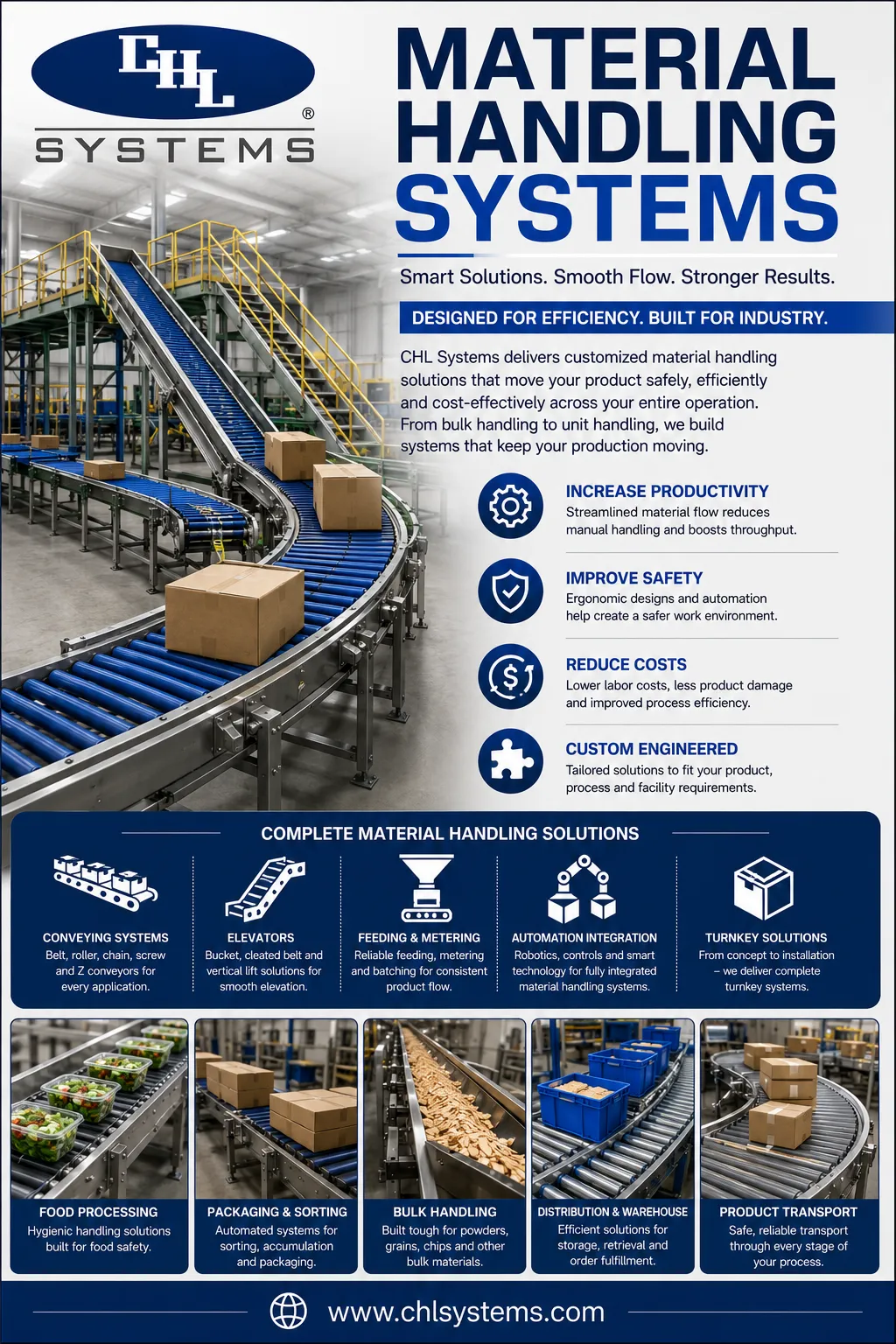
In the current rapidly changing industry world, companies require efficient procedures to be competitive. This can be a factory, a warehouse, or any other type of business. Quick and safe transport of materials has a direct influence on the effectiveness of the process. Advanced material handling systems make material transportation, storage, protection, and control easier without unnecessary physical efforts. Uses of smart equipment and good practices can help you make work more efficient, help to save resources, and make the workplace safer.
Improving Material Handling to Increase Workplace Safety
One of the most important problems in the manufacturing industry is how to prevent injury at workplace due to any mishap in lifting and loading. An optimal material handling system ensures safety in the workplace by minimizing the need for manual transport of loads.
Conveyors, lifting machines, pallets, and ergonomic workstations enable workers to work without having to make too many physical efforts. Proper material handling systems and designated storage places reduce the risk of trips, accidents, and falling objects. Through their efforts towards preventive maintenance, training, and effective material handling, organizations have been able to create a safe environment where employees can concentrate on their tasks.
Boost Operational Efficiency with Effective Workflow Design
The ability of operations to run efficiently depends on the efficiency of transferring raw materials at each level of production. There may be delays due to unnecessary transportation of goods, misplacement of stock, or manual handling of materials.
Material handling systems that are modern in nature help eliminate such problems through proper organization and flow of the materials involved. The use of automation and barcodes enhances the efficiency of the material handling process, and this leads to more accurate inventory of raw materials, improved production schedules, and faster order fulfillment.
Material handling technology allows workers to concentrate on productive tasks and frees them from transport-related tasks. It will be easier to transport heavy products without excessive effort that may cause tiredness or low work efficiency. Moreover, the faster movement of both raw materials and products makes it possible to shorten manufacturing processes and increase the number of manufactured products during the same period of time.
Also, precise material handling will lead to reduced damage to the products and the need for fewer replacements and complaints from customers.
Long-Term Growth of Businesses
With increasing business size, complexity becomes an inevitable part of operations. Facilities managing large inventories or large-scale production will need scalable technologies that can expand together with business needs.
Material handling systems allow for seamless scaling of facilities by enabling changes in layouts, automation of processes, and digital monitoring of them. Nowadays, many firms utilize warehouse management systems and material flow tracking technologies as well as analysis of the data received from them. These technologies allow for making decisions and achieving consistent results.
Material handling is no longer viewed as an operational process but as a strategic one.
Conclusion
For effective operations, it is important not only to produce quickly but also to ensure that material flow is efficient, controlled, and safe at all stages of the process. Material handling systems can bring many benefits to businesses through minimizing potential dangers for the employees, optimizing operations, improving inventory management, and increasing productivity levels. In today’s environment, automation is increasingly being used and logistics are improving; therefore, it is vital that material movement be efficient to ensure sustainable growth.
FAQs
1. What is a material handling system?
It is an advanced method of transportation, storage, control, and protection of materials in manufacturing facilities, warehouses, and distribution centers.
2. How do such systems enhance workplace safety?
They limit the need for manual material transportation, ensure proper load handling and balancing, optimize the flow of traffic, and eliminate possible injuries due to unsafe material handling.
3. What’s a material handling solution applicable to my industry?
Manufacturing, e-commerce, automotive, pharmaceuticals, retail, agriculture, food and beverage, general logistics & warehousing, etc.



























Sign in to leave a comment.