If you have ever thought about starting your own business in the pharmaceutical sector, you are not alone. Thousands of people across India are looking at pharma as a serious career move right now. And honestly, it makes sense. The healthcare industry is growing fast, medicine demand is not going anywhere, and the PCD Pharma Franchise model makes it possible for almost anyone to get started without needing a huge budget.
But the first question that comes to everyone's mind is simple: how much money do I actually need?
Let's break it down in plain terms.
The Good News About Starting Cost
One of the biggest reasons people love the PCD Pharma Franchise model is that it does not require you to set up a factory, hire a large team, or invest crores of rupees upfront. You are essentially partnering with an already established pharmaceutical company, selling their products in your area, and building your own business from there.
So the starting investment is much more manageable than most people expect.
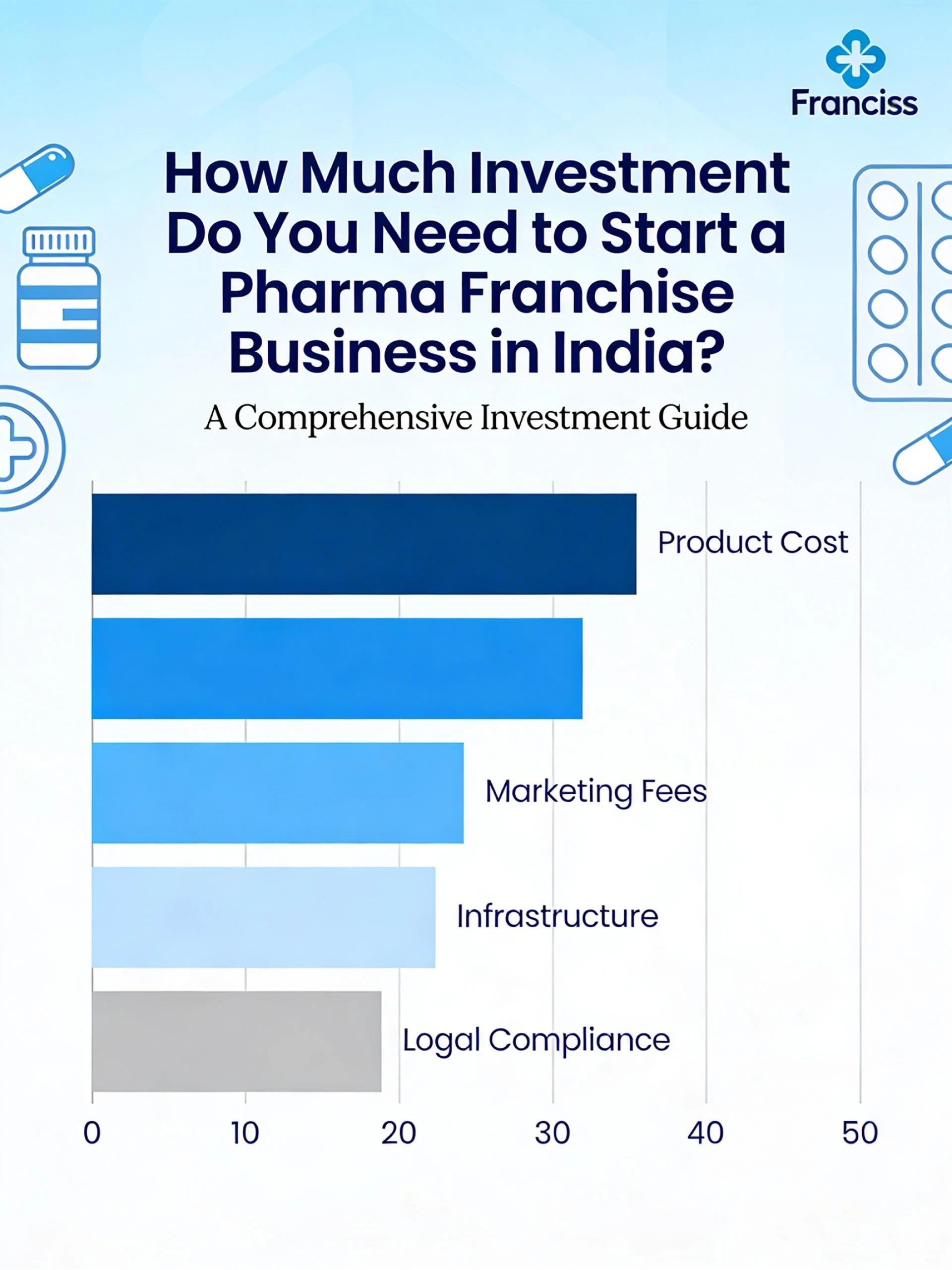
For a basic setup, you can start with somewhere between Rs. 10,000 and Rs. 50,000, depending on the product range you choose and the company you partner with. If you want a more solid product portfolio with a wider range, the investment can go up to Rs. 1 to 2 lakhs. This is still very affordable compared to most other business options available today.
What Does That Investment Cover?
When you invest in a PCD Pharma Franchise, your money goes into a few key things:
Initial product stock is your biggest expense. You need to purchase the medicines, creams, syrups, tablets, or whatever product segment you are focusing on. The more products you stock, the higher the initial order value.
Promotional materials are usually provided by the pharma company you partner with. This includes things like visiting cards, product visual aids, sample kits, and brochures. Some companies charge for these, some include them in your starter package. Always ask about this before signing anything.
Licensing and registration are costs many first-timers forget. You need a valid drug license to operate legally. The cost of getting a drug license in India is relatively low, usually a few thousand rupees, but you cannot skip this step.
Storage and logistics are another small but real cost. You need a proper place to store medicines, away from heat and moisture. This could be a small room at home or a rented space, depending on your scale.
Does Location Affect Your Investment?
Yes, it does. If you are operating in a metro city like Mumbai or Delhi, your overhead costs will naturally be higher. But if you are starting in a tier-2 or tier-3 city, your costs are lower and in many cases, the competition is also less. Many smart entrepreneurs are exploring PCD Pharma opportunities in smaller cities and towns where demand is growing, but supply is still limited. That is a smart move.
Hidden Costs to Watch Out For
Nobody talks about this enough. When you are calculating your investment, also factor in travel expenses to meet doctors and clinics, phone bills for follow-ups, and the occasional marketing spend. These are not huge amounts, but they add up over time. Let's plan for them from the start so there are no surprises later.
Is It Worth It?
Absolutely. The PCD Pharma opportunities available in India right now are genuinely exciting. The pharma sector is one of the few industries where demand stays consistent regardless of economic ups and downs. People always need medicines.
A well-run PCD Pharma Franchise business can give you returns within the first few months itself if you are consistent with your doctor visits, maintain good relationships, and keep your product stock ready. Many franchise partners in India have grown from a one-person operation to managing entire districts within two to three years.
Final Thoughts
Starting a pharma franchise business in India does not require you to be rich. It requires you to be smart about your choices. Pick a reliable company with a good product range and proper certifications. Start small, understand your local market, and grow steadily.
The investment is low. The opportunity is real. The only question is whether you are ready to take that first step.


























Sign in to leave a comment.