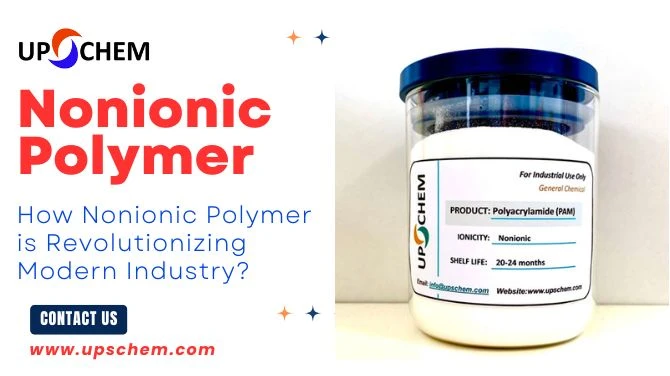
In the rapidly evolving landscape of modern industry, innovation is the key to staying competitive and sustainable. Among the many breakthroughs shaping the future of manufacturing, materials science stands out as a critical driver of progress. One such material that has garnered significant attention is the Nonionic Polymer.
This versatile compound is transforming a wide array of industrial applications, from water treatment and textiles to pharmaceuticals and agriculture. At Shandong UPS Chemical Co., Ltd., we are proud to be at the forefront of this revolution, providing high-quality nonionic polymers that meet the diverse needs of today’s industries.
In this comprehensive article, we will explore how nonionic polymers are revolutionizing modern industry. We will delve into their unique properties, diverse applications, and the benefits they bring to various sectors.
Furthermore, we will address frequently asked questions to provide a clear understanding of why nonionic polymers are becoming indispensable in industrial processes worldwide.
Understanding Nonionic Polymers: What Sets Them Apart?
To appreciate the impact of nonionic polymers, it is essential first to understand what they are. Unlike ionic polymers, which carry charged groups, nonionic polymers do not possess any electrical charge on their molecular chains. This fundamental difference imparts several unique characteristics that make nonionic polymers highly valuable in industrial applications.
Firstly, nonionic polymers exhibit excellent compatibility with a wide range of substances, including both hydrophilic (water-attracting) and hydrophobic (water-repelling) materials. This compatibility allows them to function effectively as emulsifiers, dispersants, and stabilizers in complex formulations. Moreover, their neutral charge reduces the risk of unwanted reactions with other charged components, enhancing the stability and performance of the final product.
Secondly, nonionic polymers typically demonstrate superior resistance to changes in pH and ionic strength. This means they maintain their functional properties even in harsh chemical environments, which is crucial for industries such as water treatment and oil recovery.
Key Industrial Applications of Nonionic Polymers:
The versatility of nonionic polymers is evident in their widespread use across multiple industries. Below, we highlight some of the most significant applications where nonionic polymers are making a transformative impact.
1. Water Treatment
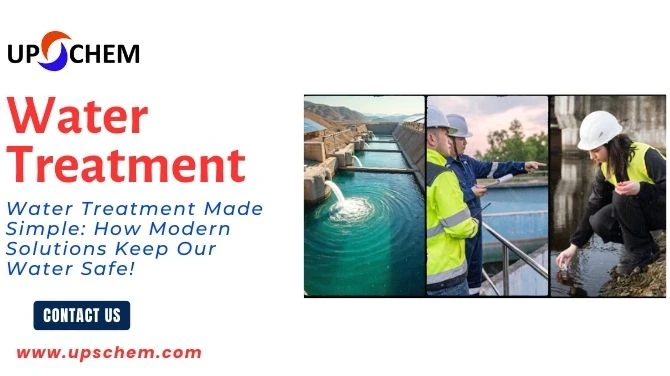
One of the most critical uses of nonionic polymers is in water treatment processes. They serve as effective flocculants and coagulants, helping to aggregate suspended particles and contaminants for easier removal. Because nonionic polymers are less sensitive to water hardness and pH variations, they provide consistent performance in diverse water conditions. This reliability is essential for municipal water treatment plants, industrial wastewater management, and even in the purification of drinking water.
2. Textile Industry
In textiles, nonionic polymers are used as sizing agents, thickeners, and finishing agents. Their ability to improve fabric strength, texture, and dye uptake enhances the quality and durability of textile products. Additionally, nonionic polymers help reduce water and energy consumption during textile processing, aligning with the growing demand for sustainable manufacturing practices.
3. Pharmaceuticals and Cosmetics
Nonionic polymers play a vital role in the formulation of pharmaceuticals and cosmetics. Their neutral charge minimizes irritation and allergic reactions, making them ideal for sensitive skin products. Furthermore, they act as stabilizers and viscosity modifiers, ensuring the consistency and efficacy of creams, lotions, and gels.
4. Agriculture
In agriculture, nonionic polymers are used as soil conditioners and controlled-release agents for fertilizers and pesticides. They improve soil moisture retention and nutrient availability, leading to better crop yields and reduced environmental impact.
5. Oil and Gas Industry
The oil and gas sector benefits from nonionic polymers in enhanced oil recovery (EOR) techniques. These polymers improve the viscosity of injection fluids, facilitating the displacement of oil from reservoirs. Their chemical stability under extreme conditions makes them indispensable in this challenging environment.
- Advantages of Using Nonionic Polymers
The growing adoption of nonionic polymers across industries can be attributed to several key advantages: - Chemical Stability: Nonionic polymers maintain their structure and function across a wide range of pH levels and ionic strengths.
- Versatility: Their compatibility with various substances allows for use in diverse formulations and processes.
- Environmental Friendliness: Many nonionic polymers are biodegradable and contribute to reducing the environmental footprint of industrial operations.
- Cost-Effectiveness: Due to their efficiency and multifunctionality, nonionic polymers often reduce the need for multiple additives, lowering overall production costs.
- Improved Product Performance: They enhance the physical and chemical properties of products, leading to higher quality and better consumer satisfaction.
Shandong UPS Chemical Co., Ltd.: Your Trusted Partner in Nonionic Polymers
At Shandong UPS Chemical Co., Ltd., we specialize in the production and supply of high-quality nonionic polymers tailored to meet the specific needs of our clients. Our commitment to research and development ensures that we stay ahead of industry trends, delivering innovative solutions that drive efficiency and sustainability.
We understand that every industry has unique requirements, which is why we offer customized polymer solutions backed by rigorous quality control and technical support. Whether you are in water treatment, textiles, pharmaceuticals, or any other sector, our nonionic polymers can help you achieve superior results.
Conclusion
In conclusion, nonionic polymers are undeniably revolutionizing modern industry by offering unparalleled versatility, stability, and efficiency. Their unique properties enable advancements across a broad spectrum of applications, driving innovation and sustainability. As industries continue to seek smarter, greener, and more cost-effective solutions, nonionic polymers stand out as a cornerstone of future development.
At Shandong UPS Chemical Co., Ltd., we are dedicated to supporting this transformation by providing premium nonionic polymers and expert guidance. We invite you to explore how our products can enhance your industrial processes and contribute to your success in an increasingly competitive market.
Frequently Asked Questions (FAQ)
Q1: What is a nonionic polymer?
A nonionic polymer is a type of polymer that does not carry any electrical charge on its molecular chain. This neutrality gives it unique properties such as chemical stability and compatibility with various substances.
Q2: How do nonionic polymers differ from ionic polymers?
Ionic polymers contain charged groups (either positive or negative), which can interact with other charged molecules. Nonionic polymers lack these charges, making them less reactive and more stable in different chemical environments.
Q3: What industries benefit the most from nonionic polymers?
Nonionic polymers are widely used in water treatment, textiles, pharmaceuticals, cosmetics, agriculture, and the oil and gas industry due to their versatility and stability.
Q4: Are nonionic polymers environmentally friendly?
Many nonionic polymers are designed to be biodegradable and help reduce the environmental impact of industrial processes. However, the environmental profile depends on the specific polymer and application.
Q5: Can nonionic polymers be customized for specific applications?
Yes, companies like Shandong UPS Chemical Co., Ltd. offer customized nonionic polymer solutions tailored to the unique needs of different industries and processes.
Q6: How do nonionic polymers improve water treatment?
They act as flocculants and coagulants, helping to aggregate and remove suspended particles and contaminants efficiently, even in varying water conditions.























Sign in to leave a comment.