In a world increasingly focused on sustainability, innovation in chemistry plays a pivotal role in addressing environmental challenges. Among the many advancements shaping a greener future, water soluble polymers stand out as a fascinating combination of science, practicality, and ecological responsibility. They are subtle yet powerful—quietly improving processes in industries from agriculture to wastewater treatment, textiles to oil recovery.
At Shandong UPS Chemical Co., Ltd., these remarkable materials embody our commitment to developing solutions that balance performance and sustainability. Through decades of research and industrial experience, we have witnessed the transformative potential of water soluble polymers in creating cleaner processes, reducing waste, and supporting global sustainability goals.
Understanding Water Soluble Polymers
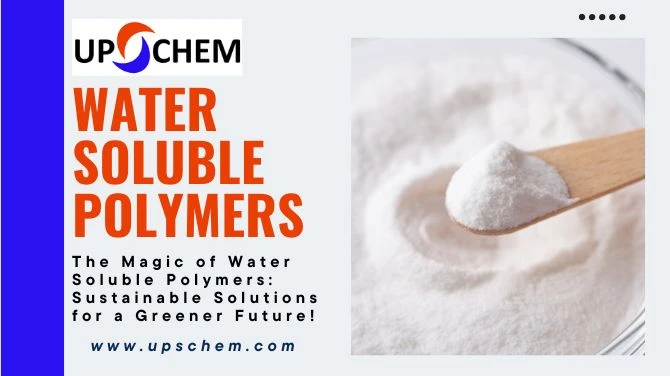
Water soluble polymers are long‑chain macromolecules that can dissolve, disperse, or swell in water, forming stable solutions or gels. Their solubility and versatility arise from their molecular structure, which contains hydrophilic groups capable of interacting with water molecules.
These polymers are not confined to a single category; they may be natural, synthetic, or modified versions of natural products. Natural examples include starch and gelatin, while synthetic varieties such as polyacrylamides and polyvinyl alcohols dominate industrial applications. This adaptability makes water soluble polymers truly indispensable in modern chemical engineering.
What makes them so special? It’s their combination of molecular flexibility, chemical stability, and functional tunability—scientists can design them to perform very specific tasks while maintaining eco‑friendly characteristics.
The Science Behind the Magic
When water soluble polymers dissolve in water, their individual chains disperse, creating a solution where the polymer molecules interact with both water and other substances present in the system. This property allows them to modify the viscosity, stabilize emulsions, or form films—all depending on the application.
The molecular architecture of these polymers often determines their role:
- Linear polymers create thickening effects and aid in flocculation.
- Cross‑linked polymers form networks that act as gels, perfect for controlled release or encapsulation processes.
Copolymers with both hydrophilic and hydrophobic sections show superior surface activity, acting as emulsifiers or dispersing agents.
Importantly, these substances can be engineered to be biodegradable or recyclable, aligning beautifully with the values of green chemistry.
Industrial Applications of Water Soluble Polymers
a. Water Treatment
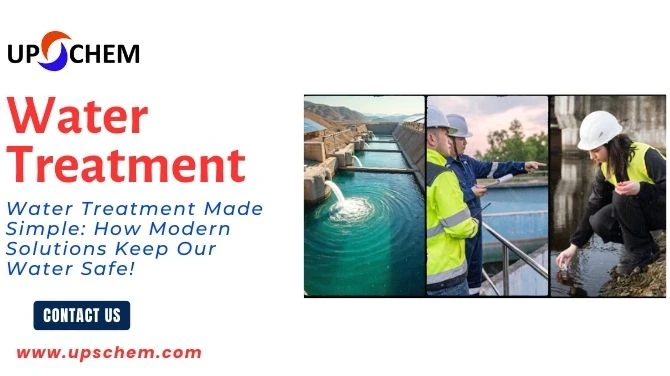
Perhaps the most crucial role of water soluble polymers is in wastewater and drinking water treatment. Acting as flocculants and coagulant aids, they help aggregate fine suspended particles into larger clusters that can be easily separated. By improving sedimentation, these polymers reduce processing time and energy use.
At Shandong UPS Chemical Co., Ltd., formulations based on high‑efficiency polyacrylamides have become integral to both municipal and industrial water treatment systems worldwide.
b. Agriculture
In agriculture, water soluble polymers have revolutionized irrigation and soil management. Water‑retaining polymers improve soil moisture levels by forming hydrogels that release water gradually to plant roots. Moreover, when combined with fertilizers, they reduce nutrient loss due to leaching—translating into improved yield and reduced environmental impact.
c. Food Industry
From thickening sauces to stabilizing emulsions in dairy products, these polymers quietly work behind the scenes. Natural water soluble polymers, such as guar gum and xanthan gum, provide texture, consistency, and stability to a wide range of consumables. With their non‑toxic and biodegradable nature, they align seamlessly with consumer demand for clean‑label, sustainable ingredients.
d. Paper and Textile Production
In papermaking, water soluble polymers enhance retention and improve paper strength. In the textile industry, they function as sizing agents, dye thickeners, and finishing materials—helping reduce waste and improve dye uptake. The increased precision and reduced resource consumption make these materials indispensable to eco‑efficient manufacturing.
e. Petroleum and Mining
While often overlooked, water soluble polymers play a vital role in enhanced oil recovery, drilling fluid stabilization, and ore processing. Their rheology‑modifying ability makes them essential for industrial processes that demand both efficiency and safety. At Shandong UPS Chemical Co., Ltd., we continue to refine polymer formulations for maximum yield with minimal environmental footprint.
Types of Water Soluble Polymers
1. Natural Polymers
Derived from renewable sources, natural water soluble polymers include cellulose derivatives, alginates, and chitosan. They are non‑toxic and biodegradable, which makes them valuable for food, pharmaceutical, and cosmetic applications.
2. Synthetic Polymers
Synthetic variants, such as polyacrylic acid and polyvinyl alcohol, offer superior mechanical strength, chemical resistance, and tunability. For industries that rely on performance consistency and scalability, these polymers are ideal.
3. Modified Natural Polymers
By chemically modifying natural polymers, scientists combine the best of both worlds—renewability and performance. These modified polymers often exhibit enhanced solubility, improved viscosity control, and unique structural properties tailored to application needs.
Environmental Impact and Sustainability
A central advantage of water soluble polymers is their alignment with sustainability principles. Compared with traditional materials, they can:
- Lower chemical consumption in industrial processes.
- Enhance efficiency in water purification, reducing sludge and waste.
- Enable new biodegradable formulations that replace fossil‑derived alternatives.
- Support renewable resource utilization.
By designing polymers that degrade into harmless byproducts or can be reused in closed systems, manufacturers move closer to the circular economy model. Shandong UPS Chemical Co., Ltd. emphasizes “Green Chemistry by Design”—developing products that perform effectively yet carry a minimal environmental footprint.
Challenges in Using Water Soluble Polymers
Despite their benefits, certain challenges remain worth addressing:
- Solubility control: Achieving complete dissolution without clumping or degradation requires careful formulation and equipment.
- Cost factors: Advanced polymers with special functional groups may have high production costs.
- Degradability balance: While biodegradability is desirable, sometimes excessive degradation compromises performance stability.
- Consistency in large‑scale production: Uniform viscosity and molecular weight distribution demand robust quality control.
Nevertheless, ongoing research in material science continues to refine these polymers, ensuring that their application range expands as new production technologies emerge.
Innovations Driving the Future
The field of water soluble polymers is evolving rapidly. Research has moved beyond simple performance enhancement toward eco‑optimization. Notable innovations include:
- Bio‑based monomers: Derived from renewable feedstocks like starch or algae.
- Smart polymers: Responsive to stimuli such as temperature, pH, or light—ideal for precision‑controlled drug delivery and industrial automation.
- Nanocomposite systems: Incorporation of nanoparticles to enhance durability, selective permeability, or active response.
- Zero‑waste formulations: Systems designed with complete recyclability, integrating life‑cycle thinking into the product.
At Shandong UPS Chemical Co., Ltd., innovation means marrying scientific creativity with real‑world sustainability goals. Our R&D team works closely with partners in water treatment, paper manufacturing, and agriculture to translate laboratory achievements into scalable environmental solutions.
Shandong UPS Chemical Co., Ltd.: Committed to Green Chemistry
Our company prides itself on being a trusted manufacturer and supplier of high‑quality water soluble polymers, including anionic, cationic, and nonionic varieties. By maintaining strict quality standards and leveraging advanced polymerization technology, we ensure consistent product performance and customer satisfaction.
What truly distinguishes Shandong UPS Chemical Co., Ltd. is our philosophy of innovation with responsibility. Every formulation is designed with the environment in mind—evaluated for biodegradability, efficiency, and life‑cycle impact.
Moreover, our commitment extends beyond production. Through technical support, customized solutions, and continuous training, we help clients maximize operational efficiency while meeting sustainability targets.
Economic and Environmental Benefits Combined
From an economic perspective, water soluble polymers increase productivity and reduce waste. Their ability to optimize raw material use directly translates into financial savings for industries. Environmentally, their controlled action minimizes chemical discharge, lowers energy consumption, and supports compliance with increasingly stringent environmental regulations.
In other words, the widespread use of water soluble polymers represents not merely a scientific trend, but a transformational shift toward integrated green manufacturing—a philosophy that benefits both business and the planet.
The Future Outlook
Looking ahead, the role of water soluble polymers appears brighter than ever. Global efforts to achieve net‑zero emissions and sustainable development goals will demand more environmentally conscious materials. As a result, their use is expected to expand in:
- Biodegradable packaging that dissolves safely in water.
- Agricultural applications that reduce dependency on chemical pesticides.
- Biomedical fields through drug encapsulation and tissue engineering.
Driven by consumer awareness and regulatory encouragement, these polymers will continue leading the march toward cleaner production and greener use cycles.
At Shandong UPS Chemical Co., Ltd., our mission is to stay at the forefront of this transformation—developing next‑generation water soluble polymers that deliver exceptional performance hand‑in‑hand with environmental stewardship.
Water soluble polymers epitomize the harmony between chemistry and sustainability. They demonstrate how sophisticated materials can help industries thrive while preserving environmental balance. From cleaner water to sustainable agriculture and advanced manufacturing, their influence is widespread and profound.
Frequently Asked Questions (FAQ)
Q1. What exactly are water soluble polymers?
They are long‑chain molecules that dissolve, disperse, or swell in water, forming clear or viscous solutions. Their hydrophilic nature allows them to interact effectively with water, making them useful as thickeners, flocculants, stabilizers, and binders in various industries.
Q2. Are water soluble polymers environmentally friendly?
Many are, particularly those designed to be biodegradable or derived from renewable materials. At Shandong UPS Chemical Co., Ltd., our product portfolio focuses on delivering eco‑friendly polymers that help reduce waste and support sustainable production.
Q3. How do water soluble polymers improve water treatment?
They act as flocculants that attract and bind small particles in water, creating larger aggregates that can easily settle or be filtered out. This process leads to cleaner effluent, reduced chemical use, and faster water purification cycles.
Q4. What are some examples of applications in everyday life?
Beyond industrial use, water soluble polymers appear in household products such as detergents, cosmetics, and food additives. They help maintain texture, stability, and product longevity.
Q5. What distinguishes Shandong UPS Chemical Co., Ltd. in this field?
Our strength lies in strong R&D, top‑tier manufacturing technology, and a strict environmental focus. We produce customized water soluble polymers suited to diverse industrial processes while upholding international quality standards.
Q6. Can these polymers be tailored for specific needs?
Absolutely. Molecular structure, charge density, and functional groups can be adjusted to match the demands of specific processes—whether in wastewater treatment or oil recovery. Our technical experts collaborate with clients to develop optimized formulas for performance and eco‑compliance.
Q7. What new developments are shaping the future of water soluble polymers?
The industry is moving toward bio‑based, smart, and multifunctional polymers. These new materials not only enhance efficiency but also reduce environmental impact, perfectly fitting global sustainability targets.






















Sign in to leave a comment.