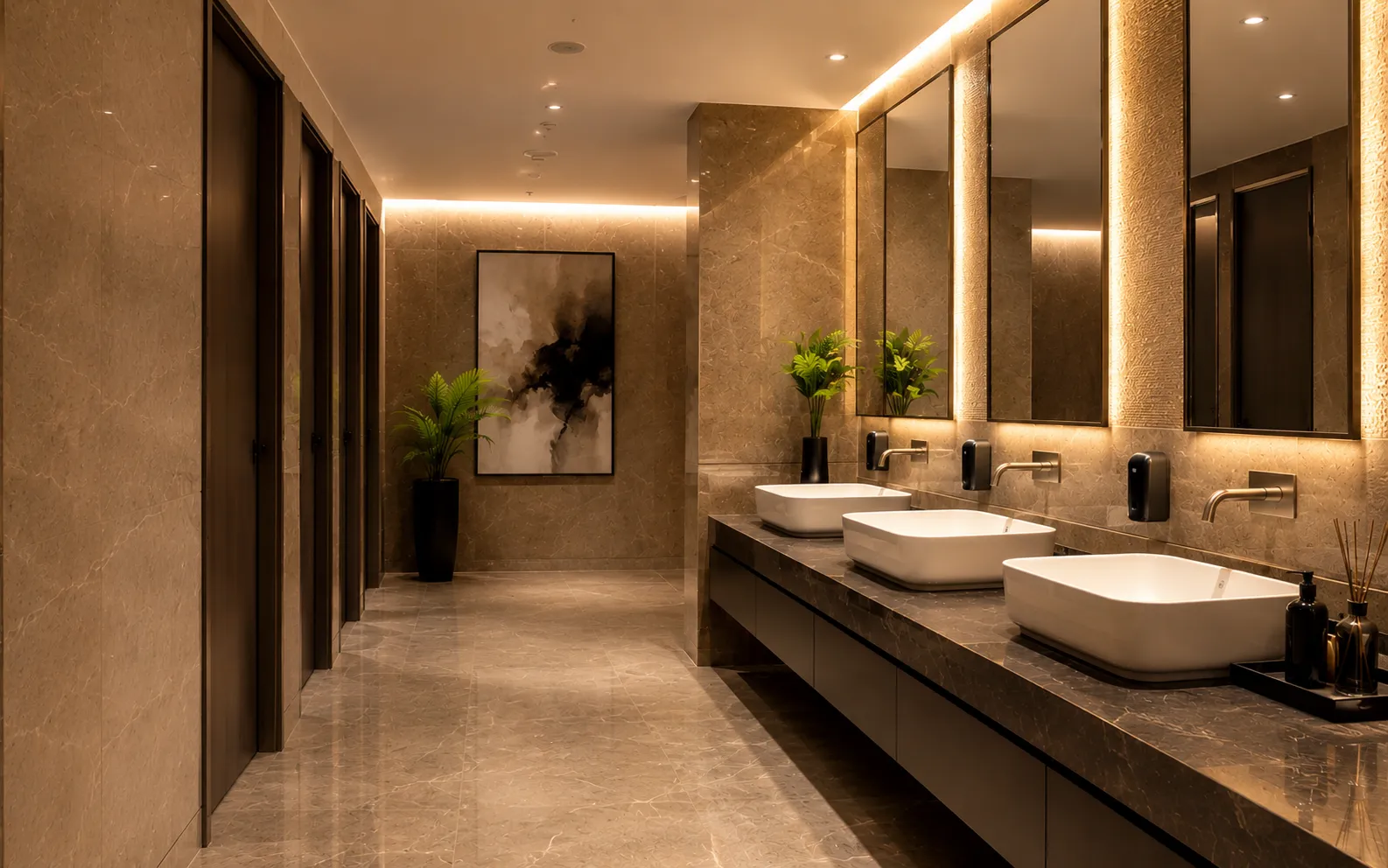

The Importance of Regular Maintenance in Healthcare Facilities
Washrooms in hospitals are in constant use. Unlike offices or residential buildings, healthcare facilities can have thousands of users every day, including patients with weakened immune systems. Any failure of hygiene equipment can have an impact on infection risks and operations.
Guarantees of regular servicing:
- Dependable touch-free operation
- Lower risk of bacterial contamination
- Correct water flow
- Reduce water waste
- Longer product life
- Adherence to hospital hygiene standards
A sensor tap is only as hygienic as the maintenance program behind it.
How often should hospital sensor taps be cleaned?
The surfaces should be cleaned daily.
surfaces still collect: Even if users don't touch the tap body,
- Water splash
- Soap scum
- Dust Particles .
- Airborne pollutants
- Biofilm on the spout
Daily Cleaning Recommendations
Hospital housekeeping personnel should:
- Thoroughly clean the entire tap body with an approved hospital disinfectant.
- Wipe the sensor window clean.
- Remove the soap.
- Dry the chrome or stainless steel.
- No harsh pads or acidic chemicals.
Daily cleaning of the tap keeps it looking clean and helps to avoid the build-up of microbes.
Weekly Upkeep
Housekeeping or maintenance teams should check the following weekly:
- Response of the sensor
- Flow of water
- Leaking in view
- Loose-fitting
- Battery indicator (on models with a battery)
- Valve functioning
This inspection generally takes just a few minutes, but it helps to discover problems before they affect users.
Monthly Internal Component Cleaning
Many facilities overlook one area: the aerator.
The aerator can collect the following:
- Mineral resources
- Silt
- Biofilm
- Sc Magnitude
Hospitals ought to:
- Remove the aerator.
- Cleaned up completely.
- Disinfect with approved sanitizing solutions.
- If worn, reinstall or replace it.
Monthly cleaning is even more important in areas with hard water.
Quarterly Preventive Servicing
A professional preventive maintenance visit every three months is recommended for hospitals with medium to heavy usage.
Typical servicing includes the following:
- Checking sensor calibration
- Cleaning the solenoid valve
- Inspecting water filters
- Testing response time
- Inspecting electrical connections
- Checking battery voltage
- Cleaning internal components
- Testing automatic shut-off timing
This preventive approach significantly reduces unexpected breakdowns.
Battery Replacement Schedule
Battery-operated sensor taps are common in hospitals because they continue working during power interruptions.
Battery replacement depends on usage.
Typical recommendations are
| Usage Level | Battery Inspection | Expected Replacement |
|---|---|---|
| Low traffic | Every 6 months | 18–24 months |
| Medium traffic | Every 3 months | 12–18 months |
| High-traffic hospitals | Monthly inspection | 6–12 months |
Many modern sensor taps include low-battery LED indicators, making replacements easier to schedule before performance declines.
Annual Deep Preventive Maintenance
At least once a year, hospitals should perform a complete preventive service that includes:
- Internal cleaning
- Solenoid inspection
- Sensor testing
- Seal replacement if required
- Aerator replacement
- Water pressure testing
- Complete functional testing
- Leak inspection
Annual servicing extends the lifespan of the best sensor tap and helps maintain reliable operation.
Signs That a Sensor Tap Needs Immediate Servicing
Do not wait for the scheduled maintenance if you notice the following:
- Delayed sensor response
- Continuous water flow
- Tap not activating
- Reduced water pressure
- Irregular flow
- Flashing low-battery indicator
- Water dripping after shut-off
- Sensor activating randomly
Prompt attention prevents larger failures and helps maintain uninterrupted service.
Best Sanitisation Practices for Hospital Sensor Taps
Hospital cleaning teams should follow these practices:
- Use hospital-grade disinfectants approved for healthcare environments.
- Avoid chlorine-based cleaners unless permitted by the manufacturer.
- Never spray chemicals directly into the sensor.
- Clean with a soft microfiber cloth.
- Disinfect surrounding countertops and basins at the same time.
- Flush taps regularly in low-use areas to prevent water stagnation.
These steps help maintain both hygiene and equipment reliability.
Preventive Maintenance Schedule
| Task | Frequency |
|---|---|
| External sanitisation | Daily |
| Functional inspection | Weekly |
| Aerator cleaning | Monthly |
| Battery inspection | Monthly to quarterly (based on usage) |
| Preventive servicing | Every 3 months |
| Complete maintenance | Annually |
Choosing Reliable Sensor Taps for Hospitals
Not all sensor taps are built for continuous healthcare use. Hospitals should look for models that offer the following:
- Fast infrared sensing
- Durable brass or stainless steel construction
- Water-saving automatic shut-off
- Reliable solenoid valves
- Easy access for maintenance
- Low-power electronics
- Replaceable spare parts
- Long-term service support
Bharat Photon’s commercial-grade sensor tap manufacturers are preferred by many facility managers for healthcare projects because they are made for high-traffic use, can be repaired and not thrown away, and have spare parts that are easily available. This makes routine servicing easier and reduces long-term maintenance costs.
Field Tip: What works
Maintenance teams in hospitals often focus on cleaning the visible surfaces and forget about the aerator. One of the most common causes of low flow during normal servicing is clogged aerators, not faulty sensors. Often, the aerator simply needs to be cleaned or replaced to return it to its former glory, without any major repairs needed.
Frequently Asked Questions (FAQs)
How often should hospital sensor taps be cleaned?
External surfaces should be cleaned and disinfected daily using approved hospital-grade disinfectants.
How often should sensor taps be serviced?
A preventive service every three months is recommended for hospitals with medium to heavy usage, along with an annual comprehensive maintenance assessment
Can bacteria grow inside a sensor tap?
Yes. Mineral deposits and stagnant water can encourage biofilm formation around aerators and internal water passages if they are not cleaned regularly.
How long do hospital sensor taps last?
With proper servicing, commercial-grade sensor taps typically provide reliable performance for many years, especially when worn components are replaced during scheduled maintenance.
Do sensor taps reduce hospital infection risks?
Yes. By eliminating the need to touch tap handles, sensor taps reduce opportunities for cross-contamination and support better hand hygiene practices.
Conclusion
Hospital automatic sensor tap prices are a vital infection prevention tool but require regular maintenance to be effective. Daily sanitization, weekly inspections, monthly aerator cleaning, quarterly preventive servicing, and annual deep maintenance ensure reliable operation and a hygienic healthcare environment. A structured maintenance schedule helps patient safety and extends the life of equipment, conserves water, and reduces operating costs over the long term.




























Sign in to leave a comment.