
How often is “enough” when it comes to pest control in Ohio homes? And what actually happens if you wait too long between treatments? These are questions homeowners ask after spotting ants in spring, hearing scratching in winter, or discovering damage that didn’t appear overnight.
Ohio’s climate, building styles, and seasonal pest cycles make pest control a serious planning decision.
This guide breaks down the timing, the why, and the long-term value so you can protect your home without overspending.
Why Pest Control Frequency Isn’t One-Size-Fits-all in Ohio
Ohio experiences four distinct seasons, and each one triggers different pest behaviors. Moist springs invite ants and termites. Hot summers increase cockroach activity. Fall pushes rodents indoors. Winter doesn’t remove pests—it just hides them.
Professional pest control works best when it’s preventive, not emergency-based. That means scheduling service based on risk, not just visible infestation.
From a homeowner’s perspective, regular scheduling reduces:
- Structural repair costs
- Health risks from allergens and bacteria
- Emergency extermination fees
From a cost standpoint, prevention almost always beats correction.
Recommended Pest Control Schedules for Ohio Homes
Quarterly Service – The Baseline Most Homeowners Need
For the average single-family home, quarterly service strikes the right balance between protection and cost.
What you gain:
- Ongoing perimeter defense using residual insecticides (products that stay active after application)
- Early detection of hidden issues like moisture intrusion or entry points
- Predictable annual costs instead of surprise bills
This schedule works well for homeowners searching for a reliable pest control service that manages seasonal pests before they become visible.
Monthly Service – When Higher Risk Demands It
Monthly visits make sense if your home has:
- Previous infestations
- Nearby wooded areas or water sources
- Shared walls (townhomes, duplexes)
In central Ohio neighborhoods, especially older properties, homeowners often shift to monthly plans after searching for pest control in Columbus, Ohio due to recurring activity.
While monthly plans cost more upfront, they reduce repeat infestations and long-term damage—especially in high-risk zones.
Special Cases That Require Targeted Scheduling
Some pests don’t follow general timelines. They require specialized treatment strategies.
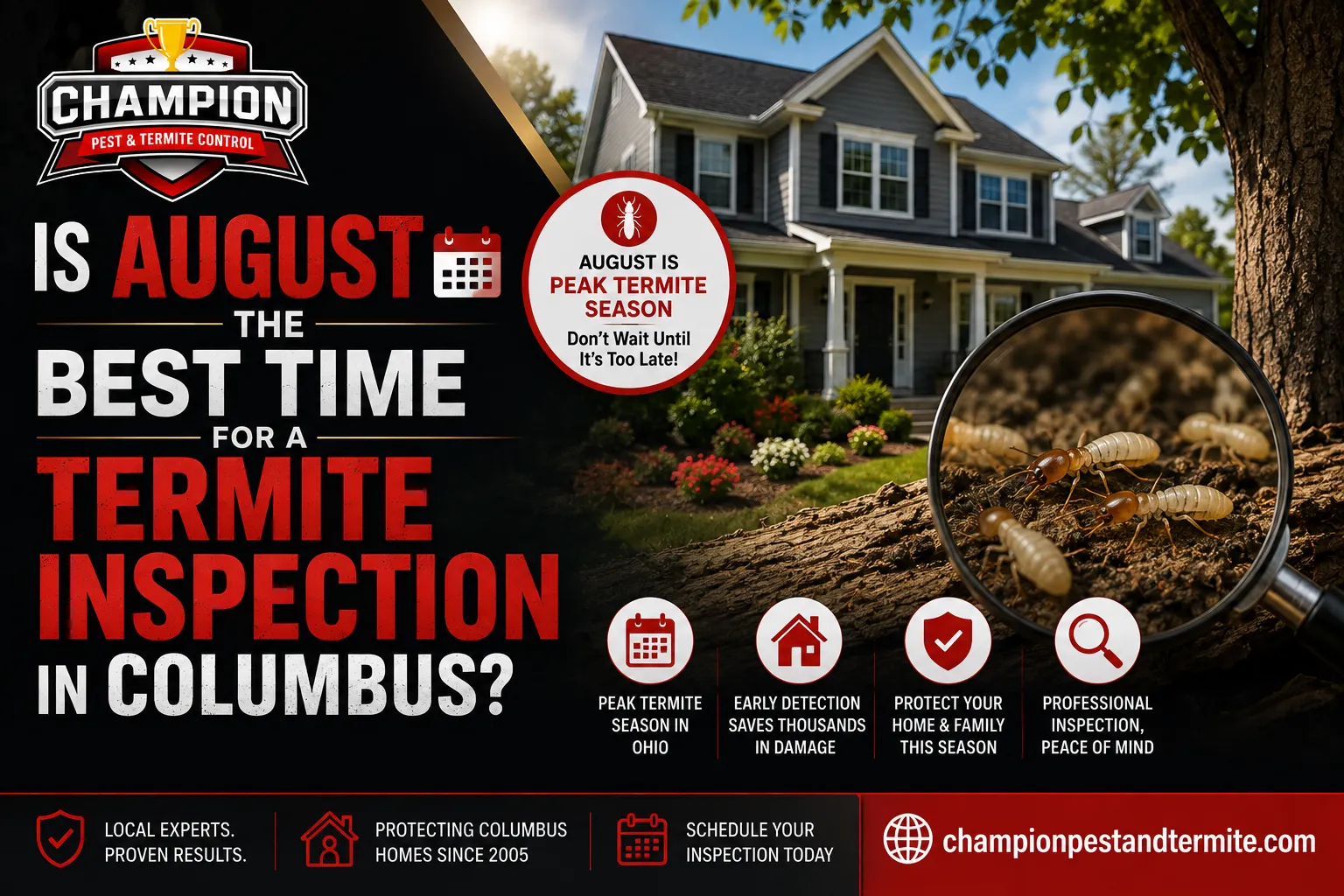
Termites – Annual Inspections Aren’t Optional
Termites work quietly. By the time you see damage, it’s already expensive.
An annual termite inspection combined with localized treatments protects your home’s framing and foundation. Homeowners often begin this process after looking up “termite pest control near me”. They usually once damage is suspected, which is later than ideal.
Early inspections reduce the risk of five-figure repair bills.
Cockroaches – Faster Cycles and Faster Response
Cockroaches reproduce rapidly and thrive indoors year-round.
Effective control uses Integrated Pest Management (IPM)—a method combining sanitation, exclusion, and targeted treatment.
Homes dealing with recurring activity often look for “cockroaches control near me” once the DIY solutions fail.
Bi-monthly or monthly follow-ups are common in these cases, until populations stabilize.
Cost vs Value – What Homeowners Actually Save
Here’s a simple comparison many homeowners find helpful:
| Approach | Short-Term Cost | Long-Term Risk | Overall Value |
| Reactive (call when seen) | Lower upfront | High damage risk | Low |
| Quarterly preventive | Moderate | Controlled | High |
| Monthly preventive | Higher | Minimal | Very High |
Regular scheduling reduces emergency calls, protects resale value, and keeps insurance claims simpler.
Example:
A suburban homeowner delayed service after minor ant sightings. Moisture attracted termites within a few months. Repairs exceeded $12,000.
After enrolling in a quarterly plan with moisture monitoring and perimeter treatments, follow-up inspections showed no further activity. The annual service cost? Less than 10% of the repair bill.
FAQs
Q: How do I know which schedule is right for my home?
A: A quick inspection usually answers that. A technician checks your home’s structure, past pest activity, and surroundings, then suggests what makes practical sense.
Q: Is quarterly service enough if I don’t see pests?
Q: Often, yes. Many pest problems start out of sight, and quarterly treatments help stop them before they become noticeable.
Q: Can I change the schedule later?
A: Yes. Most plans are flexible. You can adjust the schedule if pest activity or seasonal conditions change.
Final Thoughts
There has to be something off if you’re already searching for “local pest control near me” and finding pest control professionals urgently. Maybe you’ve seen a few ants, heard a noise at night, or you’re just trying to avoid bigger problems down the road.
A preventive plan usually makes the most sense—one that fits Ohio’s seasons and the way your home is built. Start with a proper inspection, talk through quarterly service options, and only step things up if there’s a real reason to. It’s a practical way to protect your home without wasting money on treatments you don’t actually need.
Contact Champion Pest and Termite and schedule a professional pest control service today!
























Sign in to leave a comment.