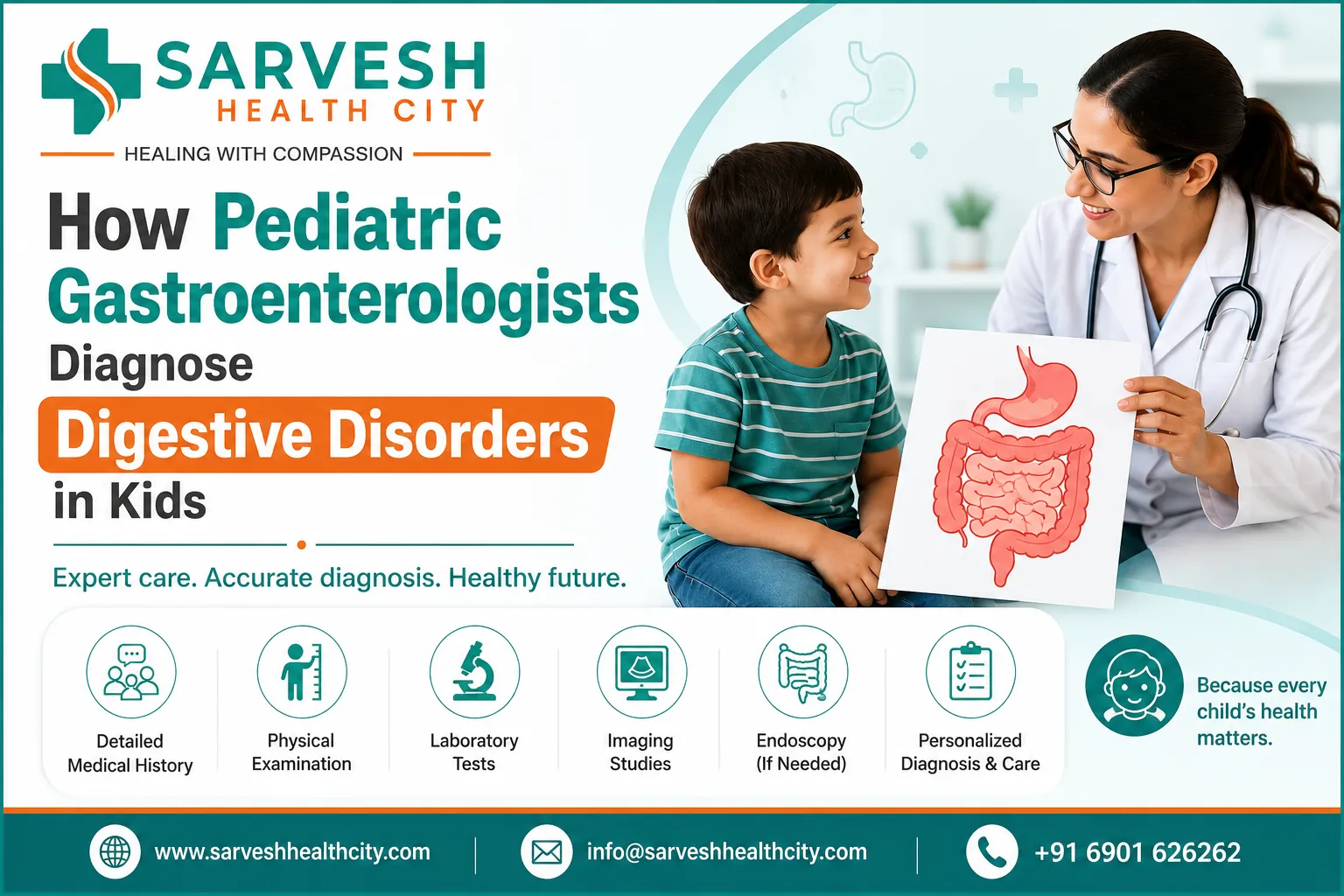

Digestive disorders in children may cause frequent stomach aches, vomiting, constipation, diarrhea, or difficulty eating. Digestive problems can affect the nutrition, growth and overall health of children as they are growing up. Hence, early diagnosis and treatment in time are of great importance. It’s difficult for many parents to know if their child’s digestive problem is a passing problem or one that needs medical attention.
Pediatric gastroenterologists are doctors specially trained to diagnose and treat digestive disorders in infants, children and teenagers. Best Pediatric Hospital In Hisar Sarvesh Health City specialists use advanced diagnostic methods and child-friendly care to accurately diagnose and effectively treat digestive issues.
Understanding Pediatric Digestive Disorders
Digestive problems in children can occur in the stomach, intestines, liver, pancreas or esophagus. Some are mild and transient, while others may require long-term medical care.
Common digestive problems in children include:
- Acid reflux (GERD)
- Constipation
- Chronic diarrhea
- Lactose intolerance
- Coeliac disease
- Irritable bowel syndrome (IBS)
- Food allergy
- Inflammatory bowel disease (IBD)
- Liver disease
- Swallowing and feeding disorders
Sometimes kids aren’t great at describing their symptoms clearly. So, if your child experiences frequent stomach aches, poor weight gain, vomiting, blood in stool, bloating, or loss of appetite, you need to be mindful of these warning signs.
Step-by-Step Process of Diagnosing Digestive Disorders in Kids
1. Past Medical History
The diagnosis typically starts with a detailed discussion about the child’s symptoms and medical history.
Pediatric gastroenterologists may ask questions including:
- Duration and frequency of symptoms
- Dietary habits
- Bowel habits
- Family history of gastrointestinal disorders
- Allergies or special dietary requirements
- Weight loss or growth problems
Doctors may be able to identify possible causes of the digestive problem by learning about the child’s daily routine and symptoms.
2. Clinical Examination
The doctor checks the child physically and reviews the medical history.
This may help identify:
- Abdominal swelling or pain
- Symptoms of dehydration
- Nutritional deficiencies
- Growth and weight trends
- Skin rashes related to digestive issues
The physical examination gives important clues about the severity and nature of the problem.
3. Laboratory Tests
Pediatric gastroenterologists may order a variety of lab tests to confirm the diagnosis. These simple tests are used to detect infections, inflammation, allergies, or digestive irregularities.
Blood Tests
Blood tests are useful for identifying:
- Infectious agents
- Nutritional deficiencies
- Liver function problems
- Coeliac disease
- Inflammatory diseases
Stool Examinations
Stool samples may be examined for:
- Viral or bacterial infections
- Parasites
- Blood in the stool
- Digestive enzyme issues
Urine Testing
Urine tests can help identify dehydration or metabolic problems that could affect digestion.
4. Imaging Tests
Imaging tests help doctors get a better picture of the digestive organs. These tests are painless and provide useful information about internal abnormalities.
Ultrasound
An abdominal ultrasound helps evaluate organs such as:
- Liver
- Gallbladder
- Pancreas
X-rays
X-rays may be used to check for:
- Bowel obstruction
- Constipation
- Swallowing problems
MRI Scan or CT Scan
In more complicated cases, detailed imaging studies may be recommended.
At Sarvesh Health City, the Best Pediatric Hospital in Hisar, doctors use advanced imaging facilities to diagnose pediatric digestive conditions accurately and safely.
5. Endoscopic Procedures
If symptoms continue after the initial treatment, pediatric gastroenterologists may perform an endoscopy to get a better look at the digestive tract.
Esophagogastroduodenoscopy (EGD)
A thin, flexible tube with a camera is passed through the mouth to examine the:
- Esophagus
- Stomach
- Small intestine
This helps diagnose:
- Acid reflux
- Ulcers
- Celiac disease
- Inflammation
Colonoscopy
A colonoscopy allows doctors to examine the large intestine for:
- Inflammatory bowel diseases
- Polyps
- Bleeding
- Causes of chronic diarrhea
These procedures are done under sedation to keep the child comfortable.
6. Food Allergy
Many children with digestive symptoms may have food allergies or intolerances. Doctors might recommend:
- Blood allergy tests
- Skin prick tests
- Elimination diets
These tests can help identify which foods may be causing digestive discomfort.
Importance of Early Diagnosis
If digestive symptoms in children are ignored, it can lead to problems such as malnutrition, poor growth, dehydration, and long-term health complications. Early diagnosis allows doctors to provide the right treatment before the condition worsens.
The advantages of early diagnosis include:
- Faster symptom relief
- Better nutrition and development
- Improved quality of life
- Prevention of complications
- Fewer hospital visits
If digestive symptoms persist for more than a few days or occur repeatedly, parents should consult a specialist.
Why Choose Sarvesh Health City for Pediatric Digestive Care?
Choosing the right healthcare center for your child’s health is very important. Sarvesh Health City is one of the Best Pediatric Hospitals in Hisar, offering expert care for children with advanced diagnostic support.
The hospital provides:
- Experienced pediatric gastroenterologists
- Child-friendly environment
- Advanced diagnostic technology
- Personalized treatment plans
- Comprehensive pediatric care under one roof
The team is dedicated to accurate diagnosis, compassionate care, and long-term digestive health for children.
Conclusion
Digestive issues in children should never be ignored, especially when symptoms are frequent or severe. Pediatric gastroenterologists use a combination of medical history, physical examinations, laboratory tests, imaging, and specialized procedures to diagnose digestive disorders accurately.
Seeking medical help at the right time can make a major difference in your child’s health and development. If your child is experiencing regular digestive problems, consult the experts at Sarvesh Health City, the leading Best Pediatric Hospital in Hisar.





























Sign in to leave a comment.