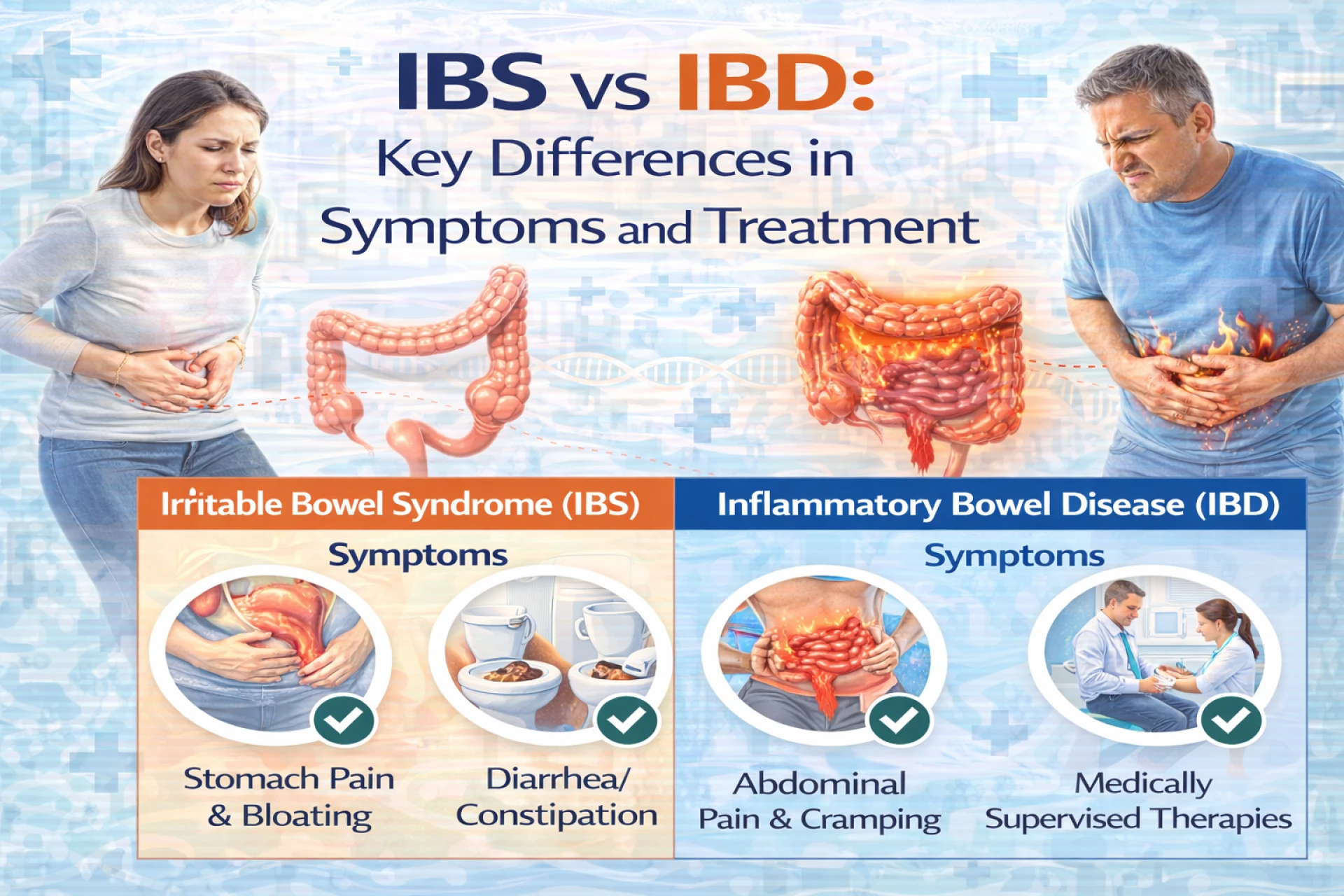

People of all ages can have digestive problems, which are very common. Irritable Bowel Syndrome (IBS) and Inflammatory Bowel Disease (IBD) are two gastrointestinal conditions that are often confused because they have a lot of the same symptoms, like stomach pain, bloating, and changes in bowel habits. But IBS and IBD are very different in terms of what causes them, how bad they are, how they are diagnosed, and how they are treated.
It's important for patients to know the difference between these two disorders so they can get the right medical care at the right time. If you have ongoing digestive problems, seeing the Best Gastroenterologist in Hisar at Sarvesh Health City can help you get the right diagnosis and treatment.
What is IBS?
Irritable Bowel Syndrome (IBS) is a functional gastrointestinal disorder that changes how the digestive system works. In IBS, the intestines usually look normal, but they don't work right. This condition affects the large intestine and can make daily life uncomfortable, but it doesn't permanently hurt the digestive tract.
People think that IBS is a long-term condition that can change over time. A lot of the time, symptoms get worse, and other times they get better.
IBS Symptoms That Are Common
- Pain or cramps in the stomach
- Gas and bloating
- Having diarrhea, constipation, or both at different times
- Mucus in the poop
- Feeling like you didn't finish going to the bathroom
- Feeling bad after eating some foods
After a bowel movement, these symptoms usually get better. Stress, what you eat, and how you live can all make IBS symptoms worse.
What does IBD mean?
IBD, or inflammatory bowel disease, is a group of long-term illnesses that cause inflammation in the digestive system. IBD, on the other hand, causes inflammation and damage to the lining of the intestines that can be seen.
Types of IBD
Crohn's Disease
Crohn's disease can affect any part of the digestive tract, from the mouth to the anus.
Ulcerative Colitis
Ulcerative Colitis primarily impacts the colon and rectum.
IBD is a more serious condition because it can cause problems if it is not treated correctly. It's very important to get a diagnosis and medical care as soon as possible.
Typical Signs of IBD
- Diarrhea that won't go away
- Very bad stomach pain
- Stool with blood
- Tiredness and weakness
- Weight loss that can't be explained
- Fever
- Not hungry
Some people with IBD may also have problems outside of the digestive tract, like joint pain, skin issues, or eye inflammation.
If you have these symptoms often, you should see the Best Gastroenterologist in Hisar at Sarvesh Health City for a proper diagnosis and treatment.
IBS and IBD: What Sets Them Apart
IBS and IBD have some of the same symptoms, but they are very different diseases. Patients and doctors can figure out the best way to treat them by knowing what makes them different.
1. What the disease is
IBS is a functional disorder, which means that the digestive system looks normal but doesn't work right. There is no visible swelling or damage to the structure.
IBD, on the other hand, is an inflammatory disease that hurts the tissues in the intestines. Medical tests like colonoscopy or imaging scans can show the inflammation.
2. How bad it is
IBS is uncomfortable, but it usually doesn't kill you. It doesn't hurt the intestines for good.
IBD is worse because long-term inflammation can cause problems like ulcers, blocked intestines, malnutrition, or a higher chance of getting colon cancer.
3. What causes it
We don't know exactly what causes IBS, but it is often linked to things like:
- Stress and worry
- Food intolerance
- Problems with the gut-brain connection
- Changes in the bacteria in the gut
People think that IBD happens because of problems with the immune system, genetic factors, and things in the environment that set it off. The immune system mistakenly attacks the digestive tract in IBD, which causes inflammation.
4. Finding out what it is
A doctor will usually look at your symptoms, medical history, and rule out other conditions before diagnosing IBS. To make sure there isn't a disease hiding behind the symptoms, doctors might do tests like blood tests or stool analysis.
IBD needs more detailed medical tests to confirm that there is inflammation. Some common ways to diagnose are:
- Colonoscopy
- Endoscopy
- CT scan or MRI
- Tests of blood and stool
These tests help doctors figure out how bad the inflammation is and how far it has spread.
5. Problems
IBS doesn't usually cause serious problems, but it can make life less enjoyable.
If left untreated, IBD can cause a number of problems, such as:
- Intestinal inflammation that is very bad
- Lack of nutrients
- Blockage of the bowel
- Higher chance of getting colon cancer
Because of these risks, it is very important to get treatment right away.
Choices for treating IBS
The main goal of IBS treatment is to control symptoms and improve quality of life. Making changes to your diet and lifestyle is a big part of managing the condition.
1. Changes to Your Diet
A lot of patients feel better when they stay away from foods that cause problems, like:
- Spicy foods
- Meals with a lot of fat
- Caffeine
- Dairy foods
- Foods that make gas
Doctors may also suggest a low-FODMAP diet, which cuts out some carbs that can make you feel bloated and uncomfortable in your stomach.
2. How to Handle Stress
Relaxation techniques like yoga, meditation, and regular exercise can help because stress can make IBS symptoms worse.
3. Drugs
Doctors may give you medicine to help with:
- Diarrhea
- Constipation
- Pain in the stomach
- Feeling bloated
Patients with IBS can better manage their condition with the right treatment plan from the Best Gastroenterologist in Hisar at Sarvesh Health City.
IBD Treatment Options
The goal of IBD treatment is to lower inflammation, control symptoms, and stop complications from happening. The treatment plan is based on how bad the disease is.
1. Medicines that reduce inflammation
To lower inflammation in the digestive tract, doctors may give patients aminosalicylates or corticosteroids.
2. Things that weaken the immune system
Because IBD is caused by an overactive immune system, drugs that slow down the immune system may be used to treat it.
3. Biologic Therapy
Biologic drugs are used to treat moderate to severe cases of IBD and work by targeting certain parts of the immune system.
4. Surgery
If medications don't work or if complications happen, surgery may be necessary in some cases. During surgery, doctors may have to cut out parts of the intestine that are damaged.
When to Go to a Gastroenterologist
People often ignore digestive symptoms, but they should never ignore problems that last for a long time. If you have any of the following, you should see a doctor:
- Long-term stomach pain
- Having diarrhea or constipation a lot
- Stool with blood
- Weight loss that can't be explained
- Extreme tiredness
- Ongoing stomach pain
Finding out about a disease early can stop problems from happening and help patients deal with their illness better. You can be sure to get expert advice and personalized care when you see the best gastroenterologist in Hisar at Sarvesh Health City.
How to Keep Your Digestive Health
Keeping your digestive system healthy can lower your risk of getting a lot of stomach problems. Some good habits to have in your life are:
Healthy Lifestyle Tips
- Eating a diet that is balanced and high in fiber
- A lot of water to drink
- Working out on a regular basis
- Keeping stress levels in check
- Not eating too many processed foods
- Having regular checkups with a doctor
Final Thoughts
IBS and IBD may sound the same, but they are very different. IBS is a functional digestive disorder that changes how the bowel works without hurting it. IBD, on the other hand, is a long-term inflammatory disease that can cause serious problems if it isn't treated.
Recognizing the signs and getting medical help early can make a big difference in how well these conditions are managed. Patients can live healthy and comfortable lives if they get the right diagnosis, make changes to their lifestyle, and get medical care.
If you or someone you care about has ongoing digestive problems, don't ignore the signs. Seeing the best gastroenterologist in Hisar at Sarvesh Health City can help you get the right diagnosis, the best treatment, and full digestive care.





























Sign in to leave a comment.