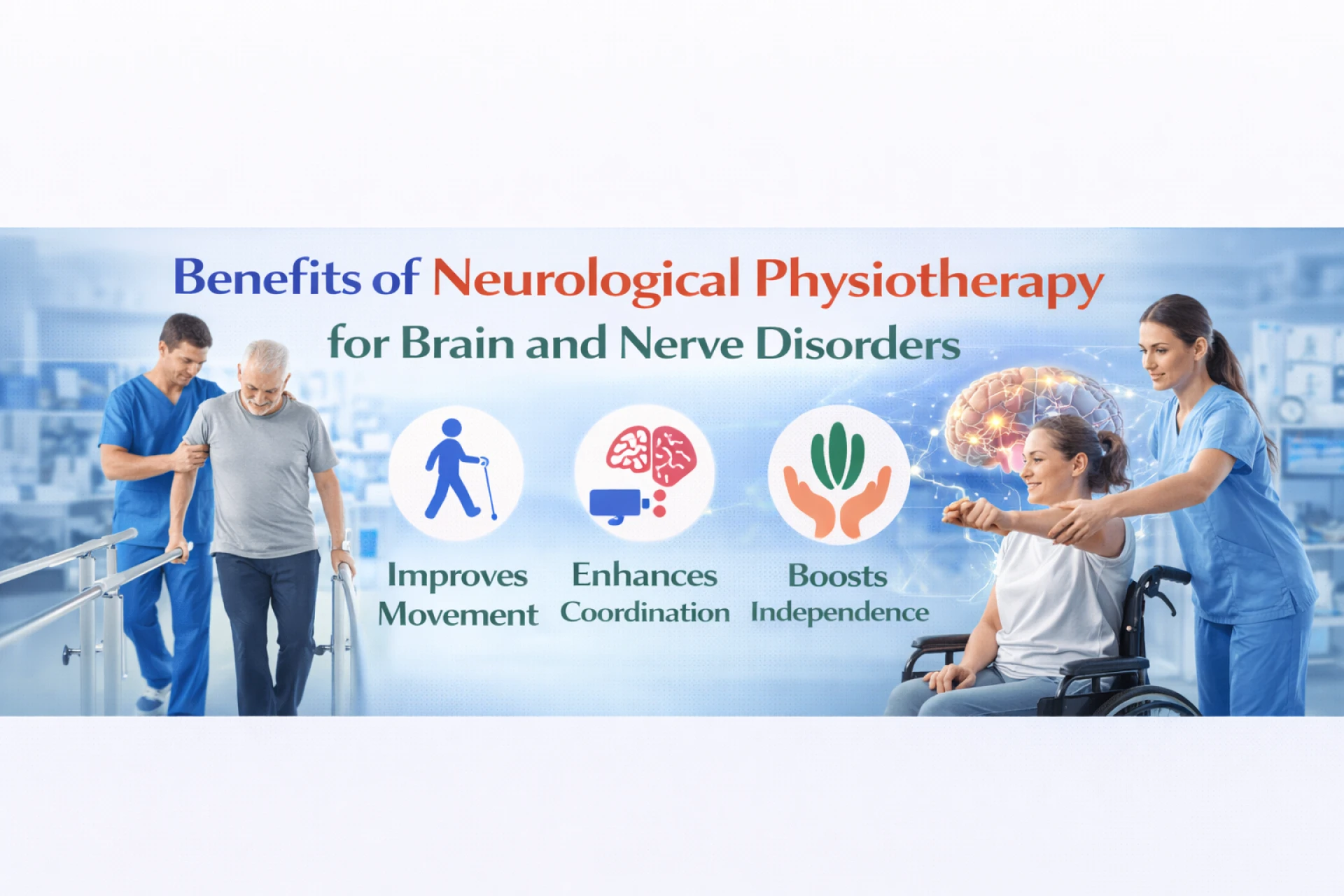

Neurological disorders can have a big effect on a person's ability to move, think, and do everyday things. Conditions that affect the brain, spinal cord, and nerves can make people weak, lose their coordination, have trouble with balance, and become less independent. This is where neurological physiotherapy is very important for both recovery and long-term care.
Sarvesh Health City is a well-known Physiotherapy & Rehabilitation Center in Hisar that offers specialized neurological physiotherapy programs to help patients regain function, improve mobility, and improve their overall quality of life. This blog will talk about how neurological physiotherapy works and all the good things it can do for people with brain and nerve problems.
What is Physiotherapy for the Nervous System?
Neurological physiotherapy is a type of physiotherapy that focuses on helping people with problems with their nervous system. These conditions might include:
- Stroke
- Parkinson's disease
- Multiple sclerosis
- Injuries to the spinal cord
- Injuries to the brain
- Bell's palsy
- Neuropathy
The main goal of neurological physiotherapy is to help patients regain their independence by restoring movement, increasing strength, and using specific exercises and rehabilitation methods.
How Neurological Physiotherapy Works
The nervous system is in charge of moving, balancing, coordinating, and using muscles. These functions can be messed up if it gets broken. Neurological physiotherapy functions through:
- Encouraging neuroplasticity, which is the brain's ability to change itself
- Making weak muscles stronger
- Better motor control and coordination
- Improving posture and balance
- Teaching the body to do everyday tasks again
At a top physiotherapy and rehabilitation center in Hisar, therapists make individualized treatment plans for each patient based on their needs and goals for recovery.
Neurological Physiotherapy Has a Lot of Benefits
1. Encourages Neuroplasticity
One of the best things about neurological physiotherapy is that it can help the brain change and adapt. This is what happens when the brain makes new neural connections after an injury.
Physiotherapy helps the brain "relearn" functions that have been lost by doing the same exercises over and over and moving in specific ways. This is especially good for people who have had a stroke or brain injury.
2. Makes it Easier to Move and Get Around
Many neurological disorders make it hard for a person to walk, move, or even sit up straight. Physiotherapy's main goal is to help people move better by:
- Training for walking
- Exercises that make your muscles stronger
- Exercises to improve range of motion
Patients slowly get back control of their movements, which makes everyday tasks easier and safer.
3. Improves Balance and Coordination
People with neurological conditions often have trouble with balance, which makes them more likely to fall and get hurt. Physiotherapy helps you get better at balancing and coordinating by:
- Building up the muscles in the core
- Working on fixing your posture
- Using techniques for balance training
This not only makes you more stable, but it also makes you feel more confident about doing everyday things.
4. Makes Muscles Less Stiff and Spastic
Muscle stiffness (spasticity) is common in people who have had a stroke, multiple sclerosis, or cerebral palsy. Neurological physiotherapy employs techniques such as:
- Exercises for stretching
- Therapy by hand
- How to position things
These methods help make movements smoother, reduce stiffness, and increase flexibility.
5. Makes Muscles Stronger
Patients with nerve or brain disorders have a hard time with weak muscles. Physiotherapy helps you get stronger again by:
- Training with resistance
- Exercises that work
- Training for specific tasks
Patients can do everyday tasks more easily and independently when their muscles are stronger.
6. Helps with Pain Management
Neurological disorders can cause long-term pain because they damage nerves, make muscles stiff, or make you stand or sit up straight. Physiotherapy is a good way to relieve pain because it:
- Exercises for therapy
- Therapy with heat and cold
- Stimulation with electricity
Managing pain makes you more comfortable overall and encourages you to take part in rehabilitation.
7. Gives Back Independence
Helping patients regain their independence is one of the most important goals of neurological physiotherapy. This includes the power to:
- Walk without help
- Take care of yourself
- Do your daily tasks
At a professional Physiotherapy & Rehabilitation Centre in Hisar, therapists focus on functional training that directly improves real-life skills.
8. Improves Quality of Life
Having a neurological disorder can be hard on both your body and your mind. Physiotherapy can make life better by:
- Boosting confidence and mobility
- Lessening reliance on others
- Enhancing mental health
Patients often feel more motivated and good about themselves as they get better.
9. Stops Problems from Happening
If neurological conditions don't get the right treatment, they can cause problems like:
- Muscle contractions
- Sores from pressure
- Stiffness in the joints
- Less fit for the heart and blood vessels
Regular physiotherapy sessions can help keep these problems from happening and keep you healthy overall.
10. Helps with Long-Term Recovery
It can take a long time for the brain to heal. Physiotherapy gives ongoing help by:
- Keeping an eye on progress
- Changing treatment plans
- Encouraging regular practice
This long-term plan makes sure that things get better and stay better.
Neurological Physiotherapy Often Uses These Methods
Sarvesh Health City uses cutting-edge methods to provide effective rehabilitation, such as:
- Gait training helps patients learn how to walk again
- Balance training helps you stay stable and coordinate your movements
- Functional Electrical Stimulation (FES): Makes weak muscles work harder
- Task-Oriented Training: Focuses on things that happen in real life
- Manual therapy improves how muscles and joints work
The doctor picks the right technique for each patient based on their condition and stage of recovery.
Who Can Neurological Physiotherapy Help?
Neurological physiotherapy can help people of all ages who are dealing with:
- Getting better after a stroke
- Taking care of Parkinson's disease
- Rehabilitation for spinal cord injuries
- Neurological recovery after surgery
- Injuries to nerves and neuropathy
Early intervention is very important for getting better results.
Why Should You Choose Sarvesh Health City?
There are a few reasons why Sarvesh Health City is the best place to find a reliable Physiotherapy and Rehabilitation Center in Hisar:
- Physiotherapists with a lot of experience and skill
- Plans for treatment that are unique to you
- Advanced methods of rehabilitation
- An approach to care that puts the patient first
- Modern tools and infrastructure
The goal is not only to treat the patients, but also to help them feel better about themselves and live a full life.
Advice for a Faster Recovery
Patients should do the following to get the most out of neurological physiotherapy:
- Do the exercises you were told to do on a regular basis
- Keep going to therapy sessions
- Keep a positive attitude
- Eat a healthy and balanced diet
- Be honest with the therapist
It takes time to get better, but working hard every day makes a big difference.
Final Thoughts
Neurological physiotherapy is a very useful way to treat and recover from brain and nerve problems. It has many life-changing benefits, such as making it easier to move around, getting stronger, being more independent, and having a better quality of life.
If you or someone you care about has a neurological condition, getting expert care at a trusted physiotherapy and rehabilitation center in Hisar, like Sarvesh Health City, can make a big difference. With the right help, advice, and commitment, recovery is not only possible, it is possible.




























Sign in to leave a comment.