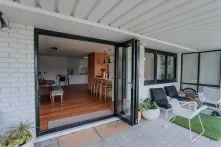

“Perth homeowners are rethinking windows and doors as heat, natural light and flexible living become central to smarter home design”.
Perth’s housing conversation has shifted noticeably in recent years. Rising summer temperatures, stronger awareness of household energy use, and changing expectations around comfort have encouraged homeowners to look more carefully at how homes respond to climate. Rather than treating windows and doors as purely architectural details, more Australians now see them as part of a home’s environmental performance.
In Western Australia, design choices have always been influenced by climate. Long dry summers, strong sunlight and coastal conditions create practical challenges that affect indoor comfort. Homes that once prioritised simple enclosure are increasingly being reconsidered in terms of airflow, orientation and solar control. The result is a broader interest in openings that help regulate internal temperature while improving daylight and liveability.
This trend is particularly visible in conversations around Perth windows and doors. What makes this topic more relevant today is not only aesthetics but performance. Larger glazed areas can bring welcome natural light into living spaces, yet they also require thoughtful placement. Without attention to shading, orientation and ventilation, large openings can increase heat gain. Current design thinking in Perth increasingly focuses on balance: bringing in light while managing solar exposure.
Architects and building researchers often point out that passive design begins with understanding the path of the sun. In Perth, north-facing openings can be highly useful when properly shaded, while western-facing glass often demands more careful treatment because of intense afternoon heat. This means that window planning is increasingly connected to broader sustainability goals. It is no longer simply about appearance from the street, but about how a home performs during long periods of seasonal heat.
Open-plan living has also reshaped expectations. Many households now want stronger visual and physical connection between interior living zones and outdoor spaces. This is partly cultural and partly practical. Outdoor entertaining remains central to the way many Perth families use their homes, so transitional spaces matter more than ever. That helps explain ongoing interest in bifold doors Perth, especially in homes where kitchens, dining areas and patios are designed to function as one connected environment.
Yet flexible layouts are not the only reason doors matter. Ventilation plays a major role in thermal comfort. Openings placed strategically can encourage cross-breezes, which remain an important passive cooling strategy in Western Australian housing. Even small design changes can influence how warm air escapes and how fresh air moves through occupied rooms. In that sense, openings are not isolated design elements; they contribute directly to how a home feels across the day.
Another growing trend in the local market is renovation rather than new construction. With land values rising and established suburbs remaining highly desirable, many owners are upgrading existing homes instead of moving. Older dwellings often present a different set of challenges. Frames may have deteriorated, seals may no longer perform effectively, and older glazing may allow unnecessary heat transfer. This has made window replacement Perth an increasingly practical topic in discussions around comfort and long-term energy efficiency.
Replacing ageing glazing is often less about dramatic transformation and more about incremental improvement. Better sealing can reduce draughts. Improved glazing can help moderate indoor temperature. Updated openings may also improve acoustic comfort in areas affected by traffic or suburban density. These are small functional changes, but together they can noticeably affect how a home performs through both summer heat and cooler winter evenings.
There is also a clear shift toward adaptable spaces. Home offices, multi-purpose family rooms and compact urban blocks have encouraged more flexible planning. Openings that allow rooms to expand or contract according to daily use are becoming increasingly relevant. This is one reason interest in folding doors Perth continues to appear in renovation and design conversations. When carefully integrated, these systems can help households respond to changing patterns of work, family life and seasonal living.
Importantly, today’s most thoughtful design conversations are less trend-driven than they once were. Homeowners are asking more informed questions: How does orientation affect heat? Which rooms need more airflow? How can natural light be increased without sacrificing comfort? These are not cosmetic questions. They reflect a more mature understanding of how building elements shape everyday wellbeing.
For Perth homes, climate-responsive design is becoming less of a niche concept and more of a practical necessity. As living patterns evolve and environmental awareness grows, the role of windows and doors is being understood with greater clarity. Good design is no longer defined only by appearance. Increasingly, it is measured by how comfortably a home supports the people who live in it.
Author Bio:
This article was written by Sam, a housing researcher covering Australian climate-responsive design, with a focus on Perth windows and doors and practical renovation decisions.






















Sign in to leave a comment.