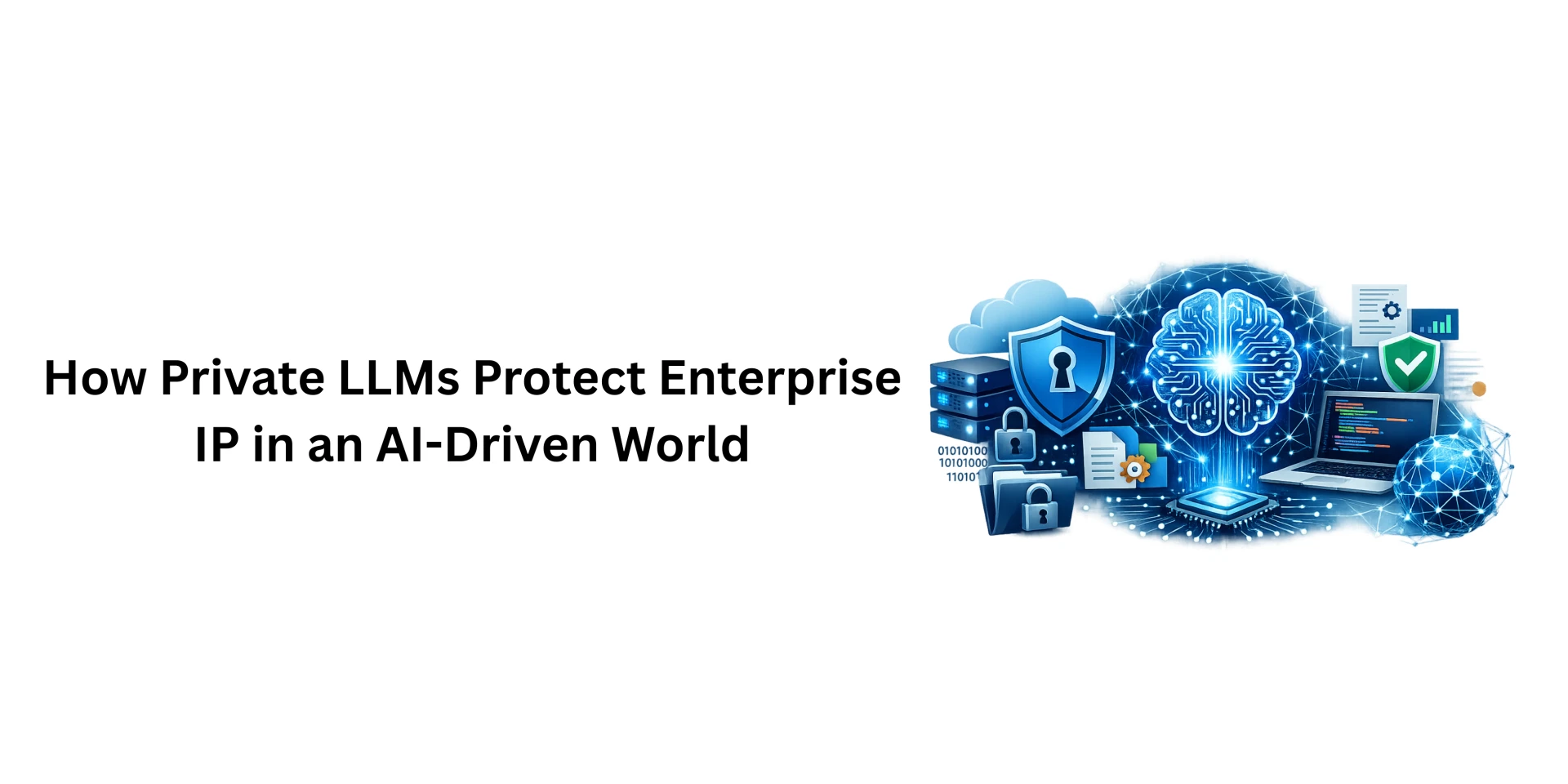

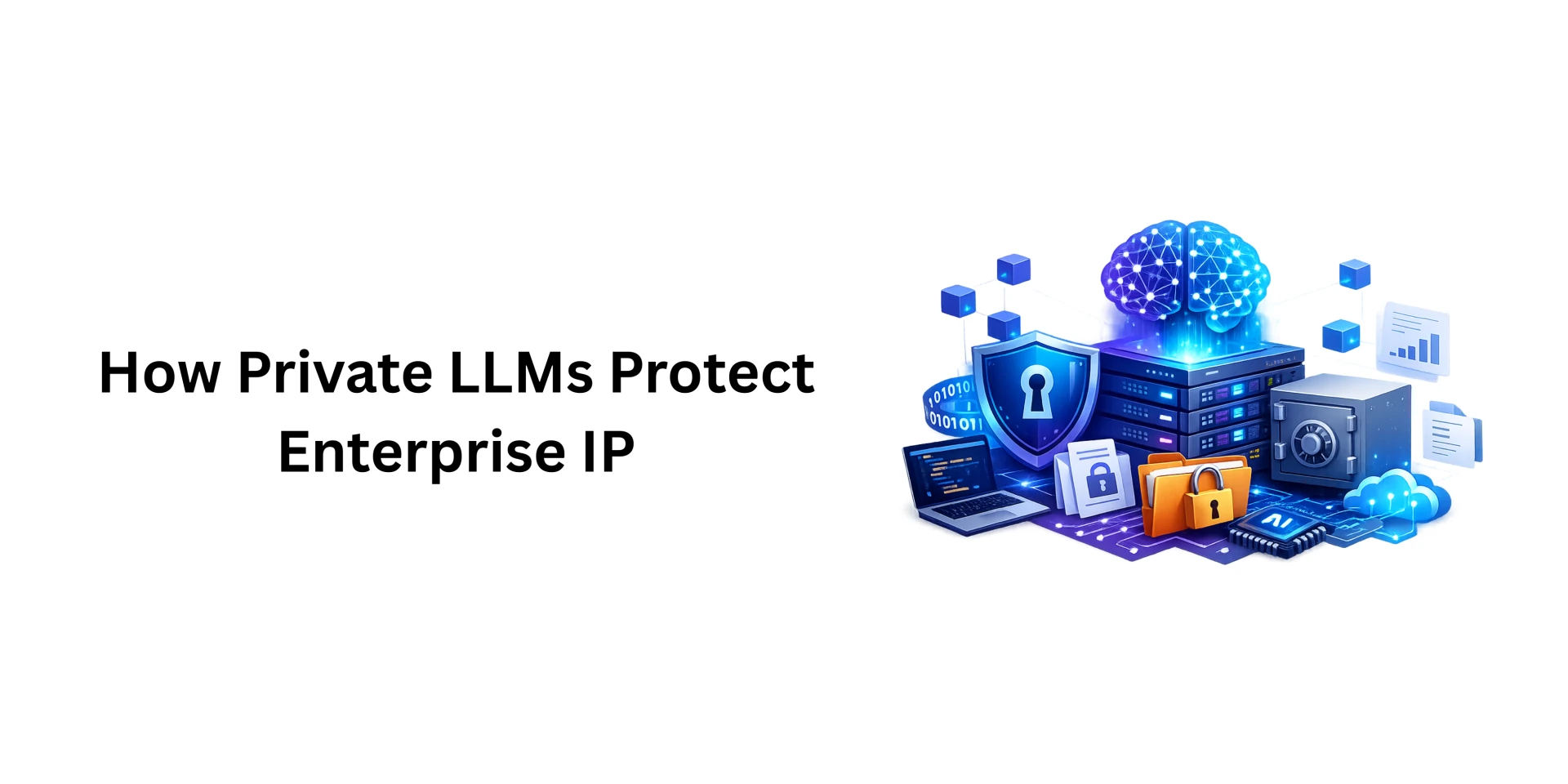
Intellectual property (IP) is now more vulnerable than ever as businesses integrate AI into their daily operations. AI systems today routinely process company data, from customer insights and strategic plans to proprietary formulas and internal papers. Because of this, the choice of AI deployment is crucial. Private large language models (LLMs) are becoming a reliable base for secure enterprise AI, assisting businesses in safeguarding their most valuable resources.
This blog discusses why business executives are giving controlled AI environments top priority and how private LLMs protect enterprise intellectual property.
Why Shared AI Platforms Put Enterprise IP at Risk
AI systems that are public and SaaS-based frequently use shared infrastructure. These models can create uncertainties around data usage, retention, and training, notwithstanding their convenience.
Typical IP-related issues include:
- Information kept outside of the company's control
- restricted access to the logging of prompts and outputs
- Danger of private information affecting the behaviour of shared models
These concerns translate into long-term reputational harm, competitive exposure, and possible IP leakage for CEOs and boards.
Why Enterprise IP Is at Risk with Shared AI Platforms
Private LLMs are implemented in specialised settings where businesses have complete control over data and model behaviour, either on-site or in separate cloud infrastructure. The foundation of secure enterprise AI is this architectural division.
Private LLMs prevent shared data pools by design, guaranteeing that company knowledge is kept private and confidential.
1. Full Ownership and Isolation of Proprietary Data
With private LLMs, enterprise-controlled systems handle all training, inference, and storage. This ensures that internal conversations, codebases, and confidential documentation are never disclosed to other parties.
Among the main benefits are:
- No data exchange with third-party models
- Unambiguous ownership and lifetime management of data
- Robust protections for intellectual property and trade secrets
For businesses in highly regulated or competitive industries, this degree of isolation is essential.
2. Managed Model Training and Optimisation
Organisations can refine models solely on internal datasets with private LLMs. This training procedure does not support more extensive model learning, in contrast to public platforms.
As a result:
- Institutional expertise is still confidential.
- Model intelligence turns into a competitive advantage.
- Businesses prevent unintentional IP transfers
This kind of controlled training enhances accuracy and relevance while fortifying secure enterprise AI.
3. Enterprise-Grade Access Controls and Auditing
Enterprise identity and access management systems are directly integrated with private LLM environments. This guarantees that sensitive AI workflows can only be accessed by authorised individuals and programs.
Benefits include:
- Access to AI systems based on roles
- Comprehensive compliance and governance audit logs
- Quicker identification of abuse or irregularities
Meeting legal requirements and safeguarding intellectual property depend on this kind of openness.
4. Compliance-Ready AI Governance
Businesses frequently have to abide by internal governance guidelines, contractual requirements, and data protection legislation. Enforcing these requirements consistently is made easier by private LLMs.
Organisations provide a compliant, long-lasting basis for secure enterprise AI adoption by coordinating AI deployments with internal security standards.
Why CEOs Are Choosing Private LLMs for IP Protection
Enterprise intellectual property protection is a strategic leadership objective, not merely an IT duty. Businesses may advance with AI while retaining ownership over their most valuable knowledge thanks to private LLMs.
Private LLMs provide a clear route to protecting intellectual property, fostering trust, and maintaining long-term competitive advantage for businesses that are serious about secure corporate AI.


























Sign in to leave a comment.