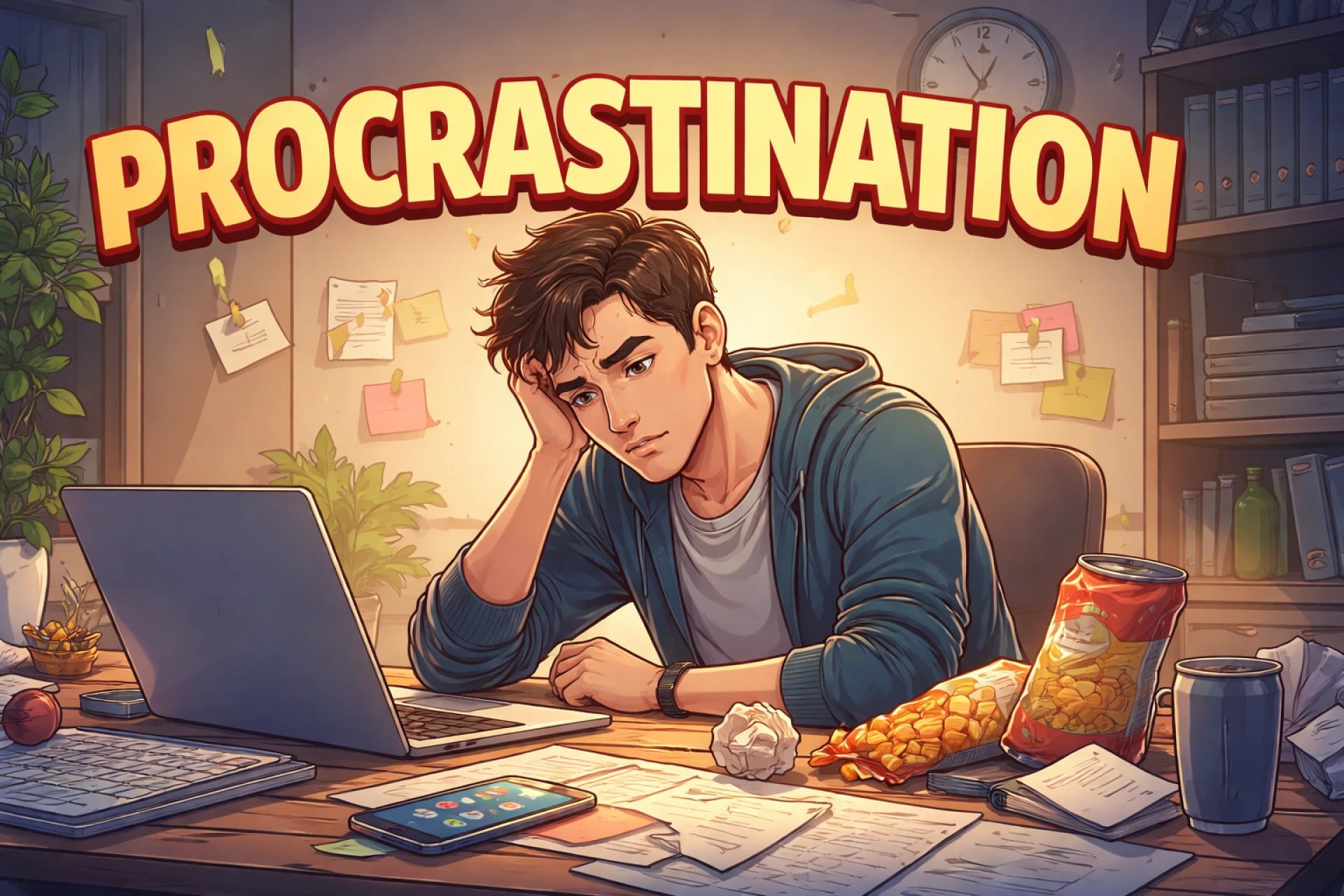

Have you ever felt frustrated because you know you have the ability to do more, yet you keep delaying the things that matter the most? You plan your days, set goals, and imagine a better version of yourself, but when it comes to taking action, you push it to tomorrow. If you are ambitious, capable, and still stuck in this loop, then this article is for you.
Procrastination is not just a bad habit. Over time, it quietly damages your confidence and your belief in yourself. Let us understand why this happens and how you can finally break the cycle.
What is procrastination really
Most people think procrastination means being lazy, but that is far from the truth. Procrastination is actually a way of avoiding discomfort. When a task feels boring, confusing, or emotionally heavy, your mind looks for escape. That escape often comes in the form of scrolling, sleeping, or distracting yourself with small pleasures.
In simple words, you procrastinate not because you cannot work, but because starting feels uncomfortable.
Why procrastination develops
Procrastination usually develops slowly, without you noticing it. A few delays turn into habits, and habits turn into identity. Some common reasons behind it include:
• Fear of failure and judgment
• Wanting everything to be perfect
• Feeling overwhelmed by big goals
• Constant digital distractions
• Lack of a clear daily structure
Today, this problem is widespread. Research shows that nearly 50 to 60 percent of teenagers and college students in India struggle with regular procrastination. Pressure to succeed, social media comparison, and fear of falling behind have made it even worse.
How procrastination destroys your confidence
This is where the real damage happens.
Every time you procrastinate, you make a promise to yourself and break it. At first, it may not feel serious, but over time your brain starts noticing the pattern. Slowly, you stop trusting your own words. That loss of self trust is what destroys confidence.
Here is what usually follows:
• Constant guilt, even during rest
• Anxiety about unfinished tasks
• Fear of starting something new
• A feeling of wasted potential
You may still be talented, but deep inside, you start doubting yourself.
How to overcome procrastination
You do not need extreme discipline or motivation to beat procrastination. What you need is a smarter approach that works with your mind, not against it.
1. Stop waiting for motivation
Motivation is unreliable. Action comes first. Tell yourself you will work for just five minutes. This lowers pressure and makes starting easier.
2. Break tasks into small steps
Big tasks scare the brain. Small steps calm it. Instead of focusing on the entire goal, focus on the very next action you can take.
3. Change your environment
Willpower alone rarely works. Reduce distractions before you start. Keep your phone away, close unnecessary tabs, and sit in a simple space.
4. Decide your tasks in advance
At night, write down three important things for the next day. This gives your mind direction and reduces decision fatigue in the morning.
Simple habits that reduce procrastination
Building a few small habits can slowly weaken procrastination:
• Start your day with one easy task
• Keep your to do list short
• Work in focused time blocks
• Reward yourself after finishing work
• Track progress instead of perfection
These habits may seem small, but together they build consistency.
Rebuilding confidence step by step
Confidence does not come from big achievements. It comes from keeping small promises to yourself. When your actions match your words, even in small ways, trust is rebuilt. If you slip, do not attack yourself. Acknowledge it and restart. Self kindness makes long term change possible.
Final thoughts
Procrastination does not mean you lack ambition. In many cases, it means you care deeply and are afraid of doing things wrong. But avoiding action only keeps you stuck. You do not need to change your entire life today. You just need to take one small step and take it now. That is how procrastination loses its power and confidence slowly returns.




























Sign in to leave a comment.