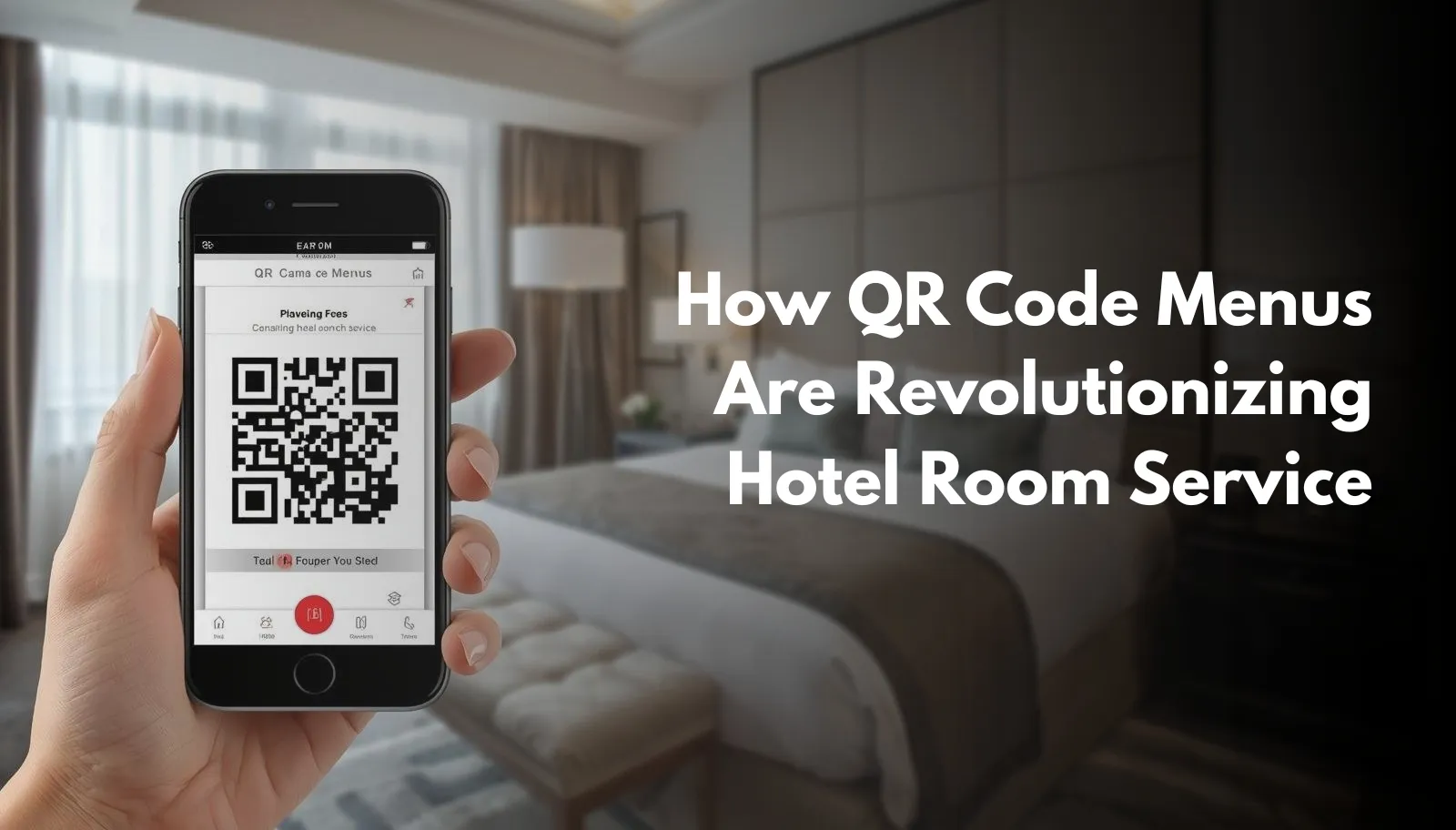

Hotel room service has changed a lot. Guests no longer want to flip through an old printed menu, pick up the phone, wait for someone to answer, and hope the item they ordered is still available. They want something faster, simpler, and more in line with how they already order everything else in daily life.
That is exactly where QR code menus are changing the experience.
With a quick scan, guests can open a live room service menu on their phone, browse food and beverage options, check images, see updated prices, and place orders with less friction. For hotels, this small shift can solve a long list of everyday problems. It can reduce order mistakes, make menu updates easier, lower the pressure on staff, and create more chances to increase room service revenue.
What makes this change so important is not just convenience. It is the way QR code menus bring speed, accuracy, and flexibility into one of the most visible parts of the guest experience. A better room service process does not just help operations behind the scenes. It also shapes how guests remember their stay.
This article explains how QR code menus are revolutionizing hotel room service, why more hotels are moving toward digital ordering, and what this shift means for both guests and hotel businesses.
What Is a QR Code Menu in Hotel Room Service?
A QR code menu in hotel room service is a digital menu that guests can open by scanning a QR code placed inside their room. The code usually appears on a table tent, bedside card, welcome booklet, TV screen, or room service guide. Once scanned, it opens a mobile-friendly menu where guests can check available dishes, drinks, prices, and service options.
In simple terms, it turns the old room service menu into a live digital experience.
Instead of reading a printed card and calling the service desk, guests can browse the menu on their phone at their own pace. They can look at categories, view item details, check photos, choose add-ons, and in many cases place the order directly without speaking to anyone. Some systems also allow payment, special instructions, room number mapping, and access to other hotel services from the same interface.
That is what makes QR code menus more useful than a basic digital PDF. A real hotel QR menu is not just a scanned copy of the menu. It is a working tool that helps guests order more easily and helps hotels manage room service with better speed and accuracy.
For guests, it feels familiar because the experience is close to how people already order food online. For hotels, it creates a more flexible and efficient way to manage in-room dining.
How Traditional Hotel Room Service Works and Where It Falls Short
Traditional hotel room service still follows a familiar process. It works, but it comes with several limitations that affect both guests and hotel operations.
Here is how it typically works:
- Guests pick up a printed room service menu available in the room
- They browse through static items, often without images or updates
- They call room service or the front desk to place an order
- Staff manually note down the order and pass it to the kitchen
- The kitchen prepares the order and sends it for delivery
- Billing is handled separately or added to the room
Now, here is where this process starts to fall short:
- Printed menus become outdated quickly
Prices change, items go out of stock, and new dishes are not reflected in time. Guests often see information that is no longer accurate - Calling for room service feels slow and inconvenient
Guests have to wait for someone to answer, especially during busy hours. This adds friction to a simple task - Higher chances of order errors
Verbal communication can lead to missed details, wrong items, or confusion around special instructions and dietary needs - Extra workload on hotel staff
Front desk and service teams spend time answering calls and repeating menu details instead of focusing on service quality - Limited upselling opportunities
Printed menus cannot highlight add-ons, combos, or special offers in an engaging way. Guests often order basic items only - No real-time updates or flexibility
Hotels cannot instantly remove unavailable items or promote specials based on demand - Not aligned with modern guest expectations
Today’s guests are used to quick mobile ordering. Calling for food feels outdated compared to the convenience they experience elsewhere
How QR Code Menus Are Revolutionizing Hotel Room Service
QR code menus are not just replacing printed cards in hotel rooms. They are changing how room service works from the moment a guest decides to order. What used to feel slow and manual now feels quicker, smoother, and far more in line with what modern guests expect.
Here is how QR code menus are changing hotel room service in real ways:
- Guests can order without making a phone call
Many guests do not want to call room service, wait on hold, or explain their order verbally. A QR code lets them open the menu instantly and order at their own pace - Menus can be updated in real time
Hotels can change prices, add new items, remove unavailable dishes, or promote special offers without reprinting anything. Guests always see the latest version - Ordering becomes faster and easier
Guests can scan, browse, choose, and place an order in just a few steps. This removes friction from the process and makes in-room dining feel more convenient - Guests get a better viewing experience
A digital menu can show item names, descriptions, photos, categories, portion details, and add-ons more clearly than a printed room service sheet - Hotels can reduce order mistakes
When guests select items directly from the menu, there is less chance of staff mishearing orders, missing special instructions, or confusing similar menu items - Staff spend less time handling repetitive calls
Instead of answering basic questions about menu items or availability, staff can focus more on preparation, delivery, and guest service - Unavailable items can be removed instantly
If a dish is sold out, the hotel can take it off the menu right away. This prevents disappointment and avoids back-and-forth calls with guests - Hotels can support multilingual guests more easily
A digital menu can offer multiple language options, which helps international travelers understand items better and order with more confidence - Upselling becomes more natural
Hotels can highlight chef specials, desserts, beverages, breakfast combos, or premium add-ons directly inside the menu. That makes it easier to increase average order value - The room service experience feels more modern
Guests are already used to scanning QR codes and ordering from their phones in restaurants, cafes, and airports. Bringing that same ease into hotel rooms makes the experience feel familiar and current - Hotels can connect room service with other guest services
In many cases, the same QR code menu can also give access to housekeeping requests, spa bookings, laundry services, or restaurant reservations. That turns one simple scan into a wider guest service tool - Hotels gain more control over operations
With digital menus, hotels can track popular items, monitor order flow, test offers, and improve service based on actual guest behavior instead of guesswork
Leading QR Code Menu Systems for Hotel Room Service
Hotels usually need more than a simple QR code generator. They need a system that can support in-room ordering, menu updates, smoother kitchen coordination, and a better guest experience. These five platforms stand out for hotels exploring QR-based room service.
1. GonnaOrder
GonnaOrder is built around digital ordering across different parts of a hotel, including room service, sunbed service, and table ordering. Its hotel page puts strong focus on letting guests browse, order, and pay from their phone while reducing delays, language barriers, and staff overload. It also highlights direct-to-kitchen order flow, POS integrations, automatic printing, multilingual access, and upsell rules, which makes it more than a basic menu tool.
For hotels that want one digital ordering setup across rooms, pool areas, and dining spaces, GonnaOrder can be a practical fit. It feels especially relevant for properties that want to reduce phone-based ordering and create more spontaneous guest orders during the stay.
2. Foodiv
Foodiv is a strong option for hotels that want to modernize in-room dining without moving into a heavy enterprise setup. On its hotel-focused positioning, it highlights QR-based room ordering, digital menus, charge-to-room or online payment options, live kitchen order management, built-in upselling, and reduced front desk calls. It also clearly states that the hotel flow is designed for independent and boutique hotels.
What makes Foodiv a natural fit for this article is that it stays close to the real room service problem. Guests scan a QR code in the room, place an order without calling, and the kitchen handles everything digitally. That setup works well for hotels that want a simpler guest journey, easier menu updates, and better control over in-room dining operations.
It can be especially useful for properties that want to improve guest convenience while also increasing food and beverage revenue through add-ons and smoother ordering.
3. Mews POS
Mews takes a broader hotel operations approach. Its POS product emphasizes digital ordering for room service, bars, poolside service, and other hotel outlets, with the benefit of working inside a larger hotel tech environment. The platform stresses that guests can order and pay instantly from wherever they are, and it ties that experience to hotel revenue opportunities and smoother operations when the POS is connected to the PMS.
This makes Mews a stronger fit for hotels that want QR ordering as part of a wider connected system, not just as a standalone menu layer. Larger hotels or hotel groups may find this especially valuable when they want dining, billing, upselling, and guest data to work together across the property.
4. QR TIGER Digital Menu
QR TIGER is widely known for QR code solutions, and its hotel room service content leans into the use of QR menus to improve customer experience in hotels. It presents the idea of replacing traditional room service menus with a digital, scannable menu that guests can access more easily on mobile. That makes it appealing for hotels that want to move away from static printed menus and bring room service into a more digital flow.
It may be a better fit for hotels that are starting with the menu experience first and then expanding later into deeper ordering or operational workflows. In other words, it suits hotels that want digital access and easier menu delivery, but may still need to evaluate whether the broader ordering workflow matches their service model.
5. Astro Menu
Astro Menu positions QR menus as a hospitality tool that goes beyond restaurants. Its hospitality content talks about in-room dining, poolside and beachside service, and even spa or amenity access through QR-based experiences. That wider service angle makes it interesting for hotels that want one digital access point for multiple guest touchpoints, not just food ordering.
It can be a practical choice for hotels and resorts that want to make service access feel more modern across the property. For example, a guest could use the same general QR-driven experience for in-room dining, drinks by the pool, or service discovery during the stay.
Key Benefits of QR Code Menus for Hotel Guests
QR code menus improve the hotel stay in a very practical way. They make ordering easier, faster, and more comfortable for guests who want a smooth in-room experience. Instead of depending on printed menus and phone calls, guests can access everything from their own phone in just a few seconds.
More Convenience and Privacy
Many guests prefer handling things on their own without calling room service. A QR code menu gives them that freedom. They can scan the code, browse the menu quietly, and place an order when it suits them. This feels especially useful during late hours, early mornings, or moments when they simply want a private and hassle-free experience.
Faster Access to Food and Hotel Services
One of the biggest guest benefits is speed. A QR code opens the menu almost instantly. There is no need to wait for someone to answer the phone or explain available items. Guests can go straight from scanning to ordering, which makes the process feel far more efficient.
Better Browsing Experience on Mobile
Printed room service menus often feel limited. They may be hard to read, outdated, or missing useful details. A digital menu gives guests a cleaner experience. They can view categories, read descriptions, check prices, and sometimes even see item photos. This helps them understand their options much more clearly.
Easier Order Customization
Guests often want to make small changes to an order. They may want to remove an ingredient, add a side, or mention a dietary preference. A QR code menu makes this easier because guests can enter their choices directly. That feels more comfortable than trying to explain every detail during a call.
More Confidence While Ordering
When guests can clearly see what is available, they feel more confident about what they are choosing. They do not have to guess whether an item is still available or worry that they misunderstood something on the phone. That clarity makes the ordering process smoother and more satisfying.
Better Support for International Travelers
Hotels welcome guests from different regions and language backgrounds. A QR code menu can support multiple languages, which makes the ordering process easier for international travelers. This helps guests understand menu items better and reduces confusion during the ordering experience.
More Accurate Orders
When guests place their own orders through a digital menu, the chances of mistakes become lower. There is less risk of staff mishearing item names, quantities, or special instructions. That leads to better order accuracy and a more reliable room service experience.
A More Modern and Comfortable In Room Experience
Guests already use their phones for food delivery, shopping, payments, and bookings. So when room service works in a similar way, it feels familiar. That simple familiarity improves the guest experience. It makes hotel room service feel more current, more user-friendly, and much more aligned with modern expectations.
Easier Access to More Than Just Food
In many hotels, a QR code menu is not limited to meals and drinks. It can also help guests request housekeeping, laundry, spa bookings, or other services. This gives guests one simple digital access point for multiple needs, which adds more comfort to the overall stay.
Key Benefits of QR Code Menus for Hotel Operations
QR code menus do not just improve the guest experience. They also make hotel operations easier to manage. What looks like a simple digital menu from the guest side often solves several daily problems behind the scenes. It reduces manual work, improves order flow, and gives hotel teams better control over room service.
Lower Printing and Reprinting Effort
Printed room service menus are never easy to maintain. Hotels need to reprint them whenever prices change, items are removed, or new dishes are added. That takes time, effort, and budget. A QR code menu removes that constant cycle. Updates can be made digitally, which keeps the menu current without the cost and delay of reprinting physical copies.
Fewer Calls to Room Service and Front Desk Teams
Phone based ordering creates a steady stream of repetitive calls. Guests ask about menu items, availability, pricing, or delivery time. QR code menus reduce that call volume because guests can find most of the information themselves. This gives room service teams and front desk staff more time to focus on actual service instead of handling routine menu questions.
Better Order Accuracy
Manual order taking often leads to small mistakes that affect the guest experience. Staff may mishear a menu item, miss a special request, or enter the wrong quantity. With a QR code menu, guests place their selections directly. This lowers communication errors and helps the kitchen receive clearer and more accurate order details.
Faster Kitchen Communication
When orders come in through a digital system, the process becomes more organized. Instead of depending on handwritten notes or verbal coordination, hotels can move orders faster from guest request to kitchen action. This improves internal workflow and helps room service run more smoothly during both normal hours and busy service periods.
Easier Menu Management Across Rooms and Outlets
Hotels often manage multiple menu versions for breakfast, all day dining, late night service, minibar items, or outlet specific offerings. Keeping those menus updated in print across all rooms can be difficult. A QR code system makes this easier. Hotels can manage different categories, timings, and service options from one place and keep everything aligned.
Better Staff Productivity
When staff spend less time answering calls, repeating menu details, and fixing order confusion, they can spend more time on service quality. That shift matters. It helps hotels use staff time more effectively and reduces unnecessary pressure during peak ordering periods. Even a small gain in efficiency can improve the overall service experience.
More Upselling and Cross Selling Opportunities
A printed menu is limited in how it presents items. A digital menu can do much more. Hotels can highlight chef specials, desserts, premium beverages, breakfast combos, and seasonal offers in a more visible way. They can also promote spa bookings, housekeeping requests, or other services through the same digital interface. That creates more chances to increase average order value and guest spending.
Real Time Control Over Availability and Pricing
One of the biggest operational advantages is flexibility. If an item is sold out, the hotel can remove it immediately. If prices change or a special offer needs to be promoted, the update can go live right away. This prevents guest disappointment, reduces back and forth communication, and keeps the ordering system more reliable.
Better Data and Performance Insights
QR code menus can also help hotels understand guest behavior more clearly. They can track which items are viewed most, what guests order often, when demand peaks, and which offers perform best. These insights help hotel teams make better decisions about menu design, pricing, promotions, and staffing.
How Hotels Can Implement QR Code Menus Successfully
Adding a QR code menu is not just about placing a code in the room and expecting guests to use it. The system works best when hotels plan the experience properly from the start. A successful setup should feel simple for guests and easy for staff to manage every day.
Define Service Goals First
Before choosing any platform, hotels should be clear about what they want the QR code menu to improve. Some properties want to speed up room service ordering. Others want to reduce phone calls, improve order accuracy, increase in-room dining revenue, or connect food ordering with other guest services. Clear goals make it much easier to choose the right setup and measure results later.
Choose the Right QR Code Menu Platform
Not every QR menu system is built for hotel room service. Hotels should look for a solution that supports live menu updates, mobile-friendly design, room-based ordering, multilingual access, and simple order management. If the goal is to offer more than food, the platform should also support services like housekeeping requests, spa bookings, or concierge access.
Organize the Menu Clearly
A digital menu should be easy to scan and easy to understand. Hotels should group items into clean categories such as breakfast, main course, beverages, desserts, late night dining, and special offers. Clear item names, short descriptions, prices, and add-on options make the ordering experience smoother. If possible, adding high-quality food images can also improve order confidence and increase conversions.
Place QR Codes Where Guests Can Easily Notice Them
Placement matters more than many hotels expect. If the QR code is hidden inside a room folder or placed in a low-visibility area, usage will stay low. Hotels should place it where guests naturally look, such as the bedside table, work desk, coffee table, minibar area, or welcome card. A short instruction like “Scan to order room service” can also make the action more obvious.
Train Staff for the New Workflow
Even a good digital system can fail if hotel staff are not comfortable using it. Room service teams, front desk staff, and kitchen teams should understand how orders come in, how updates are managed, and what to do if a guest needs help. Staff should also know how to explain the QR ordering option in a simple and helpful way when guests ask about room service.
Test the Full Guest Journey
Before rolling the system out fully, hotels should test the complete experience from a guest point of view. Scan the code. Open the menu. Add items. Submit the order. Confirm room details. Check how the order reaches the kitchen or service team. This process helps identify weak points such as slow loading, confusing layout, missing menu details, or errors in order routing.
Keep the Menu Updated Regularly
A QR code menu only works well when the content stays current. Hotels should update unavailable items, pricing, service hours, promotions, and special menus on time. If guests scan the code and still find wrong information, trust drops quickly. A live menu should always feel reliable.
Promote the Digital Ordering Option
Guests will not always use the system just because it exists. Hotels should introduce it clearly. This can be done through in-room signage, welcome materials, check-in communication, or a short mention from staff. The message should be simple and benefit-focused. For example, faster ordering, easy browsing, and direct access to room service.
Track Performance and Improve Over Time
Once the QR code menu is live, hotels should monitor how guests use it. Track scans, orders, top-selling items, order timing, average order value, and drop-off points in the journey. This helps hotels improve the menu structure, placement, promotions, and service flow based on real guest behavior.
Common Mistakes Hotels Should Avoid
Even a good QR code menu can fail if it is not implemented properly. Many hotels make small mistakes that reduce usage and impact the guest experience.
Using a Static PDF Instead of a Live Menu
A QR code that opens a PDF does not solve real problems. Guests still face outdated items, poor readability, and no ordering convenience. A live, editable menu works much better.
Poor QR Code Placement
If guests cannot easily find the QR code, they will not use it. Hiding it inside a room folder or placing it in low-visibility areas reduces engagement.
Not Keeping the Menu Updated
Outdated prices or unavailable items create frustration. Guests lose trust quickly if what they see is not accurate.
Making the Ordering Process Complicated
Too many steps, slow loading, or confusing navigation can push guests away. The experience should feel quick and simple.
Ignoring Multilingual Support
Hotels serve guests from different regions. A single-language menu can create confusion and limit usage.
Not Promoting the QR Menu to Guests
If guests are not clearly told about the option, many will continue using traditional methods. A simple instruction can make a big difference.
Missing Upselling Opportunities
Some hotels treat the QR menu as just a digital version of the old menu. They miss chances to highlight add-ons, combos, and special offers.
No Staff Training
If staff do not understand the system, they cannot support guests properly. This leads to confusion and poor service experience.
How QR Code Menus Can Increase Hotel Revenue
QR code menus can do more than improve convenience. They can also help hotels generate more revenue from room service and other in-room services.
Higher Average Order Value
Digital menus make it easier to highlight add-ons, combos, desserts, drinks, and premium items. Guests are more likely to notice these options when they are clearly displayed on screen.
More Orders from More Guests
Some guests avoid room service because calling feels inconvenient. A QR code menu removes that friction. When ordering becomes easier, more guests are likely to place an order.
Better Promotion of Specials
Hotels can promote breakfast offers, chef specials, seasonal dishes, or limited-time deals directly in the menu. This creates more visibility and encourages extra spending.
Cross Selling Other Hotel Services
A QR code menu can also promote spa bookings, laundry, housekeeping upgrades, or restaurant reservations. This gives hotels more chances to earn from services beyond food.
Fewer Lost Sales from Outdated Menus
Printed menus often show unavailable items or old prices. That creates frustration and lost sales. A live QR menu keeps everything updated, which helps hotels convert orders more smoothly.
Improved Guest Experience Leads to More Spend
When the ordering process feels easy and modern, guests are more comfortable using it again during their stay. A better experience can lead to repeat orders and stronger in-room spending.
Conclusion
Hotel room service is no longer just about delivering food to a guest room. It is now part of the overall guest experience, and that experience needs to feel fast, simple, and modern. That is exactly why QR code menus are gaining so much attention in hotels.
They remove many of the common problems linked to printed menus and phone-based ordering. Guests get a smoother way to browse and order. Hotel teams get better control over menu updates, order accuracy, and daily operations. On top of that, hotels also get more chances to increase in-room dining revenue and promote other services more effectively.
For hotels that want to improve guest convenience without making the process harder for staff, QR code menus offer a practical solution. It is a small digital change, but it can create a noticeable difference in service quality, operational efficiency, and revenue potential.
As guest expectations continue to shift toward mobile-first experiences, QR code menus are not just a trend in hotel room service. They are becoming a smarter way to serve.




















Sign in to leave a comment.