

A sports watch is starting to look a lot like a food diary
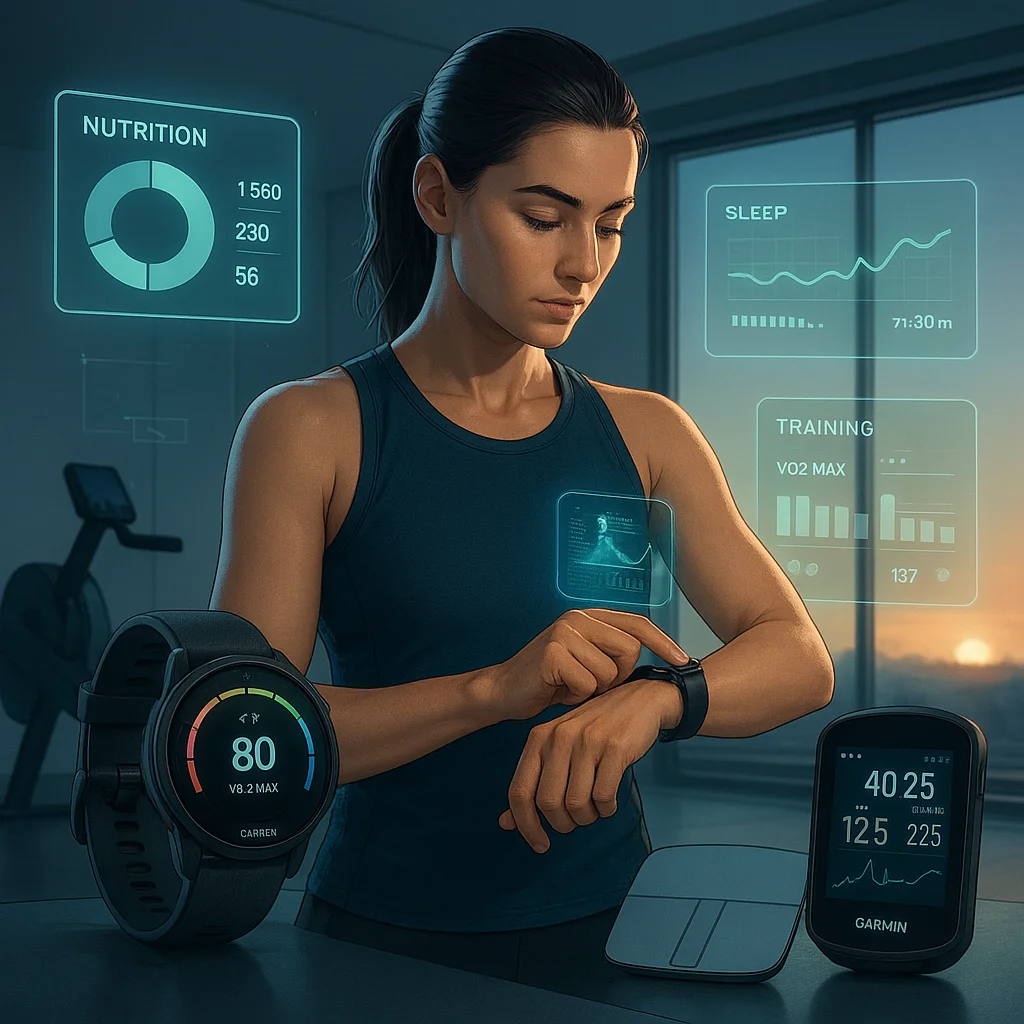
I kept thinking about a scene I have seen more than once at running expos and conference talks: athletes crowding around a wristwatch demo, then asking not about pace zones first, but about breakfast, caffeine, hydration, recovery meals. That shift matters. Garmin built its reputation on GPS accuracy, endurance metrics, and the kind of hard-edged performance data that makes cyclists and marathoners happy. Yet the newest Garmin training push, centered on nutrition tracking, lifestyle logging, and adjacent habit tools, suggests the company has accepted something coaches have said for years: training stress does not live in a sealed box. It leaks into sleep, food, mood, work, alcohol intake, and the thousand tiny choices that shape whether a workout lands well or falls flat.
Why does that matter in a food and cooking context? Because once a major wearables brand starts treating meals as training data, the kitchen becomes part of the performance stack. Not metaphorically. Operationally. A late dinner, low-carb breakfast, missed snack, or under-fueled long run can now sit closer to heart-rate variability, sleep scores, and readiness dashboards. For recreational athletes, that could be clarifying. For serious users, it could be transformative. For everyone else, it raises a fair question: are wearables becoming nutrition coaches by stealth?
Garmin has not entered this space alone. Competitors have been moving in similar directions. A recent Indiatimes report on Fitbit’s AI health coach described expanded features including cycle tracking, mood logging, and nutrition tools, showing that the broader wearables market is converging on a more holistic model of health data. You can read that coverage here: Fitbit’s new nutrition and mood features. Garmin’s version feels less like a wellness journal and more like a training engine asking, with increasing insistence: what did you eat, and what did it do to your body?
When food moves from a separate app into the training workflow, it stops being background information and starts becoming performance evidence.
That is the hinge point for this whole conversation. If Garmin can connect nutrition and lifestyle logging to training decisions in a way users trust, the company is no longer just measuring exercise. It is mapping behavior.
How we got here: from mileage logs to all-day physiology
Garmin’s evolution did not happen overnight. For most of the 2010s, the company’s strongest identity rested on sport-specific depth: VO2 max estimates, training load, recovery time, race predictors, structured workouts, multisport modes, topographic maps. The appeal was obvious. Garmin made devices for people who wanted more than step counts. It made tools for cyclists comparing power curves, trail runners planning vert-heavy weekends, triathletes parsing split transitions, and hikers who still trust a breadcrumb trail in bad weather.
But the market changed. Apple normalized the smartwatch as a health companion. Oura turned sleep and readiness into mainstream language. Whoop persuaded many users to think in terms of strain and recovery rather than isolated workouts. Fitbit, despite its own strategic swings, kept emphasizing lifestyle adherence and behavior tracking. As these products matured, the center of gravity moved from single events to continuous context. One hard interval session no longer told the whole story. The surrounding day did.
Garmin responded by widening its health stack: Body Battery, stress tracking, sleep score, nap detection, menstrual cycle tracking, respiration, pulse oximetry on selected devices, and training readiness. Each feature nudged the brand toward a larger thesis. The point was not merely to record what you did. The point was to estimate what you could handle next. Nutrition tracking and lifestyle logging are logical extensions of that thesis because they address variables that often explain why the same workout feels easy on Tuesday and punishing on Thursday.
There is also a business reason for this shift. Hardware margins are one thing; ecosystem stickiness is another. The more a user logs meals, hydration, habits, and subjective signals inside Garmin’s orbit, the harder it becomes to switch platforms. A runner who only wants GPS pace can change brands. A runner whose sleep trends, fueling experiments, caffeine timing, and recovery notes all live in one system? Much less likely.
That is why the new feature set deserves attention beyond gadget coverage. It signals a competition not just over devices, but over interpretation. Who gets to tell you what your body data means? And which company becomes the place where exercise and eating habits finally meet?
- Early wearables focused on steps, heart rate, and workout duration.
- Second-generation platforms added recovery, sleep, and readiness scores.
- The newest phase links physiology to inputs such as meals, mood, and daily habits.
- That shift turns food logging from a wellness extra into a training variable.
What Garmin’s nutrition and lifestyle tools actually change
The most interesting thing about Garmin’s newer training features is not that they acknowledge nutrition. Plenty of apps already do that. The interesting part is integration. If nutrition tracking sits close to workout recommendations, recovery estimates, and all-day physiological trends, users gain something most food apps struggle to provide: context with consequences. A meal is no longer just calories or macros on a ledger. It becomes part of a cause-and-effect chain.
Think about a long run on Saturday morning. A traditional watch records distance, pace, heart rate, and maybe cadence. A nutrition-aware training system can potentially connect the previous evening’s carbohydrate intake, morning hydration, subjective energy, sleep disruption, and post-run recovery markers. Does that guarantee accurate advice? No. Human metabolism is messy, and self-reported food logs are famously imperfect. But even imperfect linkage can be useful if it helps users spot recurring patterns. Under-fueled threshold sessions. Better afternoon workouts after a more substantial lunch. Sleep deterioration after late alcohol. Faster recovery after consistent post-exercise protein? These are the kinds of insights athletes usually learn through trial, coaching, or painful mistakes.
That is why the practical value may vary by user type:
- Beginners can learn the simple relationship between eating enough and completing training consistently.
- Intermediate athletes can compare fueling habits across workout types and recovery windows.
- Advanced users can test race-week carbohydrate strategy, hydration timing, and day-to-day readiness with more discipline.
- General wellness users may benefit from seeing how meal regularity affects stress, sleep, and energy.
There is also a cultural shift embedded here. Nutrition tracking used to carry a faintly punitive vibe: count, restrict, optimize, repeat. Garmin’s framing appears more performance-oriented than moralistic. The question is less “did you eat too much?” and more “did you eat appropriately for the training demand?” In endurance sport, that distinction matters enormously. It can be the difference between sustainable habit-building and a brittle obsession.
Readers who want a broader walkthrough of the feature set can compare this analysis with this WriteUpCafe overview of Garmin’s new training features and this companion piece on Garmin’s latest nutrition and lifestyle logging tools. Both help frame the ecosystem question: Garmin is not merely adding boxes to tick. It is trying to make those boxes talk to one another.
The real promise is not meal logging by itself. It is meal logging that changes how training advice is generated, interpreted, or trusted.
That promise is exciting. It also creates a burden. If the insights are shallow, users will ignore them. If they are too rigid, users may resist them. The sweet spot is guidance that feels evidence-based without pretending the body is a spreadsheet.
Why this matters specifically to food culture, home cooking, and sports nutrition
From a food-trends angle, Garmin’s move is more consequential than it first appears. Wearables have spent years shaping what people think about movement; now they are starting to shape what people think about meals. Once a device nudges users to connect dinner composition with next-day training readiness, it influences grocery lists, meal prep habits, snack choices, and even restaurant behavior. Not through direct coercion, but through feedback loops.
That can push sports nutrition out of the niche corner of gels and electrolyte tabs and into ordinary home cooking. The athlete who once improvised with toast and coffee might begin planning a more deliberate pre-run breakfast. The office worker training for a half marathon may batch-cook rice bowls, roasted potatoes, lentils, yogurt snacks, or higher-protein soups because the watch keeps reminding them that recovery is not just sleep. It is fuel. In that sense, Garmin’s features could quietly mainstream a more practical, less supplement-driven view of performance eating.
There is another layer. Food logging often fails because it is tedious and emotionally loaded. But if users see a direct payoff in training quality, adherence may improve. Not perfect adherence, of course. Humans are still humans. Still, there is a difference between logging lunch for aesthetic goals and logging lunch because your Sunday ride felt dreadful three weeks in a row. One is abstract. The other is embodied.
For home cooks, this could reframe what “healthy eating” means. Not low-carb by fashion, not high-protein by slogan, not clean eating by vague purity standards, but eating in relation to demand. A rest day may call for one pattern; a double-workout day another. That is a more nuanced and, frankly, more adult way to think about food. It resembles what sports dietitians have advocated for years: periodized nutrition, adequate energy availability, and meal timing that matches training load.
- More users may prioritize pre-workout digestibility over trend dieting.
- Post-workout meals could shift toward convenience plus protein and carbohydrate balance.
- Hydration awareness may increase, especially in hot-weather training blocks.
- Meal prep may become less about weight loss and more about consistency.
If you are approaching these tools for the first time, this beginner-friendly WriteUpCafe guide is useful because it translates feature language into everyday practice. More advanced users may prefer this deeper strategy piece, which is closer to how coaches and self-experimenters think.
I find that food-tech stories often miss the kitchen-level reality. Most people are not asking whether a wearable can produce a perfect macro prescription. They are asking smaller, more human questions. Should I eat more before tempo runs? Why do I sleep worse after late training? Is my coffee habit helping or hurting? Those questions are where Garmin’s new direction becomes genuinely interesting.
The competitive picture in 2026: Garmin is not moving in a vacuum
By mid-2026, the wearables market is crowded with platforms trying to own the relationship between behavior and biometrics. Garmin’s advantage remains depth with endurance users and a broad device lineup spanning Forerunner, Fenix, Epix-era successors, Venu-style wellness devices, cycling computers, and outdoor handhelds. Yet the company is operating in a field where nearly every serious competitor now understands that health data without interpretation feels incomplete.
The clearest sign of convergence is competitor feature creep toward lifestyle intelligence. As noted earlier, Indiatimes reported Fitbit’s expansion into cycle tracking, mood logging, and nutrition tools for its AI health coach. That matters because it shows nutrition is no longer a side module. It is becoming standard equipment in digital health ecosystems. Garmin’s challenge is to do this without diluting the sport credibility that made it distinctive in the first place.
Pricing and accessibility also shape adoption. According to Popular Science’s coverage of Garmin Prime Day deals, Garmin devices saw notable discounts during the 2026 shopping cycle, making entry points more reachable for users who once viewed the brand as premium-only. Lower hardware prices can accelerate uptake of software-led features because more users end up inside the ecosystem. A nutrition or lifestyle tool is only influential if enough wrists are wearing the platform that hosts it.
There is also a subtle strategic contrast between Garmin and some rivals. Garmin tends to present health tools as subordinate to training logic rather than replacing it. That may appeal to users skeptical of generic AI coaching. A cyclist does not necessarily want a chatbot mood check-in; they want to know whether poor sleep and low fueling explain a weak power session. Garmin’s opportunity is to keep the advice concrete, sport-relevant, and grounded in observable behavior.
Still, there are risks:
- Users may resist logging fatigue if the interface feels cumbersome.
- Nutrition recommendations can become simplistic if they ignore culture, budget, and personal preference.
- Data overload may reduce trust rather than increase it.
- Privacy concerns will intensify as more intimate habits are recorded.
That last point is not trivial. Meal timing, alcohol use, menstrual data, mood notes, sleep disruption, and stress patterns together create a remarkably intimate portrait of a person. The more capable these systems become, the more important governance and user control become too. A museum curator once told me that every archive reflects a power structure. Wearable archives are no different, are they?
What athletes, coaches, and ordinary users can do with the data
The best use of Garmin’s new training features is not blind obedience. It is structured curiosity. That sounds soft, maybe, but it is how good coaching works. You form a hypothesis, collect observations, and adjust. If a user treats nutrition tracking and lifestyle logging as experiments rather than commandments, the system becomes far more useful.
Consider a few practical applications. A runner preparing for a marathon can compare long-run quality across three breakfast strategies. A strength athlete can track whether higher total daily protein correlates with better next-day readiness and lower perceived soreness. A shift worker can test whether moving the largest meal earlier improves sleep score. A cyclist training in summer heat can monitor hydration habits against recovery patterns and resting metrics. None of these requires perfect data. They require consistency and a willingness to notice patterns over time.
Coaches may gain the most if Garmin presents the information cleanly. For years, many coaches have depended on athlete honesty about eating, stress, and sleep. Honesty is fragile when memory is foggy or shame enters the room. A better logging structure can surface trends without requiring dramatic confessionals. “You under-fueled the last three hard sessions” is a more actionable observation than “try eating better.”
Here is a sensible framework for users:
- Track one or two variables first, such as breakfast composition and hydration.
- Compare them against a specific outcome, like workout completion or recovery score.
- Review trends weekly rather than reacting to a single bad day.
- Avoid treating algorithmic suggestions as medical advice.
- Use subjective notes; numbers alone rarely explain everything.
This is where Garmin’s ecosystem could become especially sticky. Training software has long been good at telling users what happened. The next frontier is helping them understand why. Food and lifestyle data are imperfect, but they often hold the missing clues. Why did threshold pace collapse? Why did sleep suddenly worsen? Why did training readiness stay low despite reduced mileage? Sometimes the answer is a hard block. Sometimes it is dinner, dehydration, stress, or all three.
I like that these tools invite better questions rather than pretending to provide final answers. What if your easy runs feel better after a larger lunch? What if alcohol, not mileage, is crushing recovery? What if the issue is not discipline but under-eating? Those are more humane questions, and usually more useful ones too.
What to watch next: the future of wearables, food logging, and daily life
The next stage for Garmin and the wider wearables sector will hinge on whether these features become smarter without becoming preachy. Users do not need another app that moralizes dinner. They need systems that can detect patterns, acknowledge uncertainty, and offer recommendations proportional to the evidence. If Garmin gets that balance right, its nutrition and lifestyle tools could become as central to training as heart-rate zones once were.
Several developments are worth watching over the next product cycle. First, expect tighter integration between meal logging and workout recommendations. If the platform can infer low energy availability or poor fueling consistency, it may eventually modify suggested session intensity or recovery guidance. Second, watch for more personalized prompts based on training phase. Base training, race taper, and off-season living should not trigger the same nutritional advice. Third, the ecosystem may expand toward recipe suggestions, shopping prompts, or integrations with third-party food services, though any such move would need careful execution to avoid clutter and overreach.
There is also the social question. As more people use wearables to govern food decisions, what happens to intuition? The optimistic view is that technology teaches users to notice bodily signals more clearly. The pessimistic view is that it outsources judgment. Reality will likely sit between those poles. The best systems sharpen awareness; the worst replace it.
A useful wearable should make you more observant of your own habits, not less capable of living without a dashboard.
For readers deciding whether Garmin’s new features matter, my answer is yes, but conditionally. They matter if they help connect training to eating in a way that is practical, flexible, and evidence-aware. They matter if they move sports nutrition closer to ordinary cooking and away from gimmickry. They matter if they help users see that performance is built not only on heroic workouts, but on breakfast, lunch, late-night choices, and the texture of everyday life.
And if they do not? Then they become another layer of quantified noise. That is the tension. Yet the direction itself is unmistakable. Wearables are no longer content to count what the body does. They want to understand what the body was given, what the day felt like, and what tomorrow should look like. For athletes, home cooks, and anyone trying to connect the plate to the performance graph, that is a shift worth paying attention to.



























Sign in to leave a comment.