
Commercial real estate has traditionally been associated with high investment requirements, lengthy paperwork, multiple intermediaries, and limited access for smaller investors. Whether it involves office buildings, retail centers, warehouses, hotels, or industrial properties, entering the commercial property market often requires significant capital and legal procedures. As digital finance continues to grow, businesses are looking for practical ways to improve how commercial assets are managed, funded, and traded.
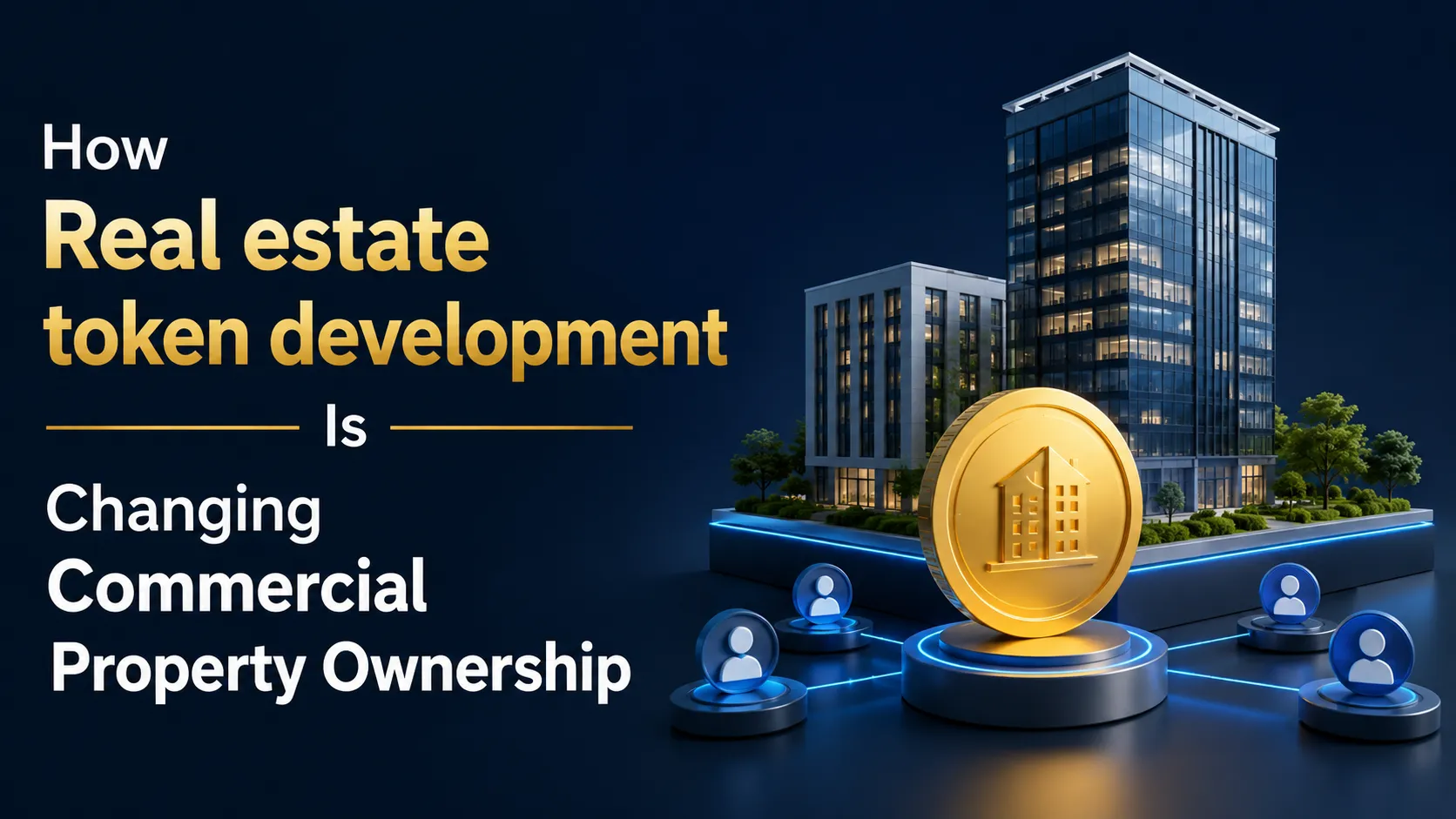
Real estate token development is becoming an important part of this change. Instead of relying entirely on traditional ownership structures, property owners can represent commercial assets as digital tokens on a blockchain network. These tokens represent ownership shares and can be distributed among multiple investors under applicable legal and regulatory requirements. This approach introduces new possibilities for developers, investment firms, and property owners seeking wider investor participation.
With increasing interest from institutions and technology providers, many organizations are working with a Real estate tokenization company to convert commercial properties into digital assets. As more businesses adopt Real estate tokenization development, commercial property ownership is gradually becoming more accessible, efficient, and suitable for modern investment models.
Understanding Real Estate Token Development
Real estate token development is the process of creating digital tokens that represent ownership or investment rights in a property. These tokens are issued through blockchain technology and are linked to physical real estate assets. Instead of purchasing an entire commercial building, investors can purchase a fraction of the property's value through digital tokens.
Each token represents a predefined ownership percentage, allowing several investors to participate in the same commercial asset. Smart contracts manage ownership records, distributions, and transaction conditions according to the project's requirements.
Businesses often work with a Real estate tokenization development company to develop secure token structures, legal frameworks, compliance procedures, and investor management systems suitable for commercial property projects.
Why Commercial Property Is Moving Toward Tokenization
Commercial real estate has unique investment challenges. Office towers, shopping malls, logistics parks, and hotels require significant financial commitments, making them inaccessible for many investors.
Real estate tokenization offers a different ownership structure by dividing valuable assets into digital shares. This approach supports broader investor participation without requiring full ownership of a property.
Several market factors are encouraging this shift:
- Growing interest in fractional ownership
- Digital investment platforms
- Blockchain-based asset management
- Faster ownership transfers
- International investor participation
- Better record management
These factors are encouraging property developers to consider Real estate token development as part of their investment strategy.
Fractional Ownership Is Expanding Investment Opportunities
One of the biggest changes introduced by Real estate token development is fractional ownership.
Instead of requiring one buyer to purchase an entire office complex or shopping center, ownership can be divided into thousands of digital tokens. Investors purchase only the amount they wish to own.
This approach benefits multiple participants.
For investors, it lowers the financial barrier to entering commercial real estate markets.
For developers, it provides access to a larger investment community.
For property owners, it creates additional funding opportunities without selling the entire property.
As a result, commercial real estate is becoming accessible to a much wider audience.
Faster Capital Collection for Commercial Projects
Commercial construction projects often require large amounts of funding before completion. Traditional financing methods may involve banks, institutional investors, or private equity firms.
Real estate tokenization introduces another funding method by allowing developers to issue ownership tokens before or during development.
Instead of depending on a limited group of investors, businesses can present investment opportunities to qualified participants across multiple regions while complying with local regulations.
Many organizations choose Real estate tokenization platform development to manage investor onboarding, token issuance, ownership records, and fundraising activities within one digital environment.
Improved Liquidity for Commercial Assets
Commercial properties are generally considered illiquid investments because selling a building may require several months or even years.
Tokenized ownership introduces more flexibility.
Rather than selling an entire property, investors may transfer part of their ownership by selling their tokens on approved marketplaces where regulations permit.
Although liquidity depends on market demand and legal frameworks, tokenized ownership creates more possibilities compared to traditional commercial real estate transactions.
This has become one of the reasons many investors are paying attention to Real estate tokenization.
Digital Ownership Records Reduce Administrative Work
Commercial property ownership involves contracts, title records, legal documents, investor agreements, and financial reports.
Blockchain technology records ownership transactions digitally, making ownership history easier to verify.
Instead of maintaining paper-based records across multiple departments, businesses can store transaction histories securely within blockchain systems.
A Real estate asset tokenization company generally develops solutions that include digital ownership records, investor dashboards, compliance features, and document management systems suitable for commercial property projects.
International Investment Is Becoming More Practical
Commercial real estate has always attracted international investors. However, traditional cross-border investments often involve lengthy banking procedures, legal reviews, and administrative approvals.
Tokenized commercial properties simplify investment participation by using digital ownership structures alongside identity verification and compliance procedures.
International investors can review opportunities, complete verification requirements, and receive ownership tokens through approved investment platforms.
This wider investor participation gives commercial property owners additional funding possibilities beyond local markets.
Smart Contracts Simplify Property Operations
Smart contracts automatically execute predefined agreements when certain conditions are satisfied.
Within commercial real estate, smart contracts can manage:
- Rental income distribution
- Investor payments
- Ownership transfers
- Dividend calculations
- Voting rights
- Compliance procedures
These automated functions reduce repetitive administrative work while maintaining consistent transaction records.
Businesses working with a Real estate tokenization platform development company often include smart contract functionality as part of their commercial property platforms.
Better Portfolio Diversification for Investors
Traditional commercial property investing often limits investors to one or two properties because of high purchase costs.
Tokenization allows investors to spread investments across multiple commercial assets such as:
- Office buildings
- Retail complexes
- Hotels
- Warehouses
- Industrial facilities
- Business parks
Instead of concentrating capital into one property, investors can build diversified commercial real estate portfolios according to their financial goals.
Better Access for Property Developers
Commercial developers frequently require continuous funding for multiple projects.
Real estate token development provides another funding model that can support:
- New commercial construction
- Property expansion
- Renovation projects
- Mixed-use developments
- Business parks
- Commercial leasing projects
Rather than relying entirely on conventional financing channels, developers can introduce tokenized investment opportunities that attract qualified investors interested in commercial real estate.
Compliance Remains an Important Part of Tokenization
Commercial property tokenization involves financial regulations, securities laws, investor verification, taxation, and reporting requirements.
Every project must follow the legal framework of the country where the property is located and where investment is offered.
A professional Real estate tokenization development company usually works alongside legal professionals to include compliance features such as:
- KYC verification
- AML procedures
- Investor eligibility checks
- Ownership records
- Regulatory reporting
- Digital documentation
Compliance continues to be one of the most important parts of commercial real estate tokenization projects.
Technology Behind Commercial Property Tokenization
Several technologies work together to support commercial property tokenization.
These include blockchain networks for ownership records, smart contracts for automated processes, secure digital wallets for token storage, investor management systems, and compliance modules.
Many businesses invest in Real estate tokenization platform development because it combines these technologies into one platform that manages token issuance, investor activity, property information, and ownership records.
A reliable technology foundation contributes to consistent platform performance while supporting future commercial property projects.
Choosing the Right Development Partner
Commercial property tokenization involves technology, legal compliance, blockchain development, and long-term platform maintenance.
When selecting a development partner, businesses should consider:
- Experience in commercial real estate projects
- Blockchain development knowledge
- Smart contract development
- Security testing
- Regulatory understanding
- Platform support services
- Integration capabilities
- Previous tokenization experience
Many businesses compare Top real estate tokenization companies before selecting a technology partner. Evaluating the Best real estate tokenization companies based on technical knowledge, project portfolio, compliance understanding, and long-term support can help businesses make informed decisions.
Future Outlook for Commercial Property Ownership
Commercial property ownership continues to evolve alongside digital finance and blockchain technology. More developers, investment firms, and financial institutions are studying tokenized ownership as a practical option for raising capital and expanding investor participation.
As regulations continue to mature across different countries, commercial real estate may increasingly include digital ownership alongside conventional investment methods. Businesses investing in Real estate tokenization development today are preparing for changing investment preferences, digital asset management, and broader participation in commercial property markets.
Conclusion
Real estate token development is introducing a different approach to commercial property ownership by allowing assets to be divided into digital ownership units, supporting fractional investment, improving capital collection opportunities, simplifying ownership records, and providing additional participation for qualified investors across different markets. As blockchain adoption continues to grow, commercial real estate is expected to include more digital ownership models alongside traditional investment structures. Businesses planning to enter this market should work with experienced technology providers that understand both blockchain and real estate regulations. Blockchain App Factory provides White Label Real Estate Tokenization Development with solutions that support token issuance, investor management, compliance features, smart contracts, and platform development for commercial real estate projects.
FAQs
1. What is real estate token development?
Real estate token development is the process of creating blockchain-based digital tokens that represent ownership or investment rights in real estate assets, allowing multiple investors to own portions of a property.
2. How does commercial property tokenization work?
A commercial property is legally structured for token issuance, after which digital tokens representing ownership shares are created. Investors purchase these tokens through a compliant investment platform according to applicable regulations.
3. Why are businesses investing in real estate tokenization development?
Businesses use real estate tokenization development to attract more investors, divide property ownership into smaller investment units, simplify ownership management, and introduce digital investment opportunities for commercial assets.
4. What does a real estate tokenization platform development company provide?
A real estate tokenization platform development company develops blockchain platforms that include token issuance, investor onboarding, smart contracts, digital wallets, compliance modules, ownership tracking, and administrative dashboards.
5. How do businesses choose among the best real estate tokenization companies?
Businesses should review industry experience, blockchain knowledge, security practices, compliance capabilities, previous projects, platform features, and ongoing technical support before selecting from the best real estate tokenization companies.































Sign in to leave a comment.