

Job interviews can be stressful, even when you have the right skills for the position. You may know your subject well but still struggle to organize your thoughts, answer unexpected questions, or stay confident under pressure. This is where an AI interview assistant can become a useful preparation partner.
Instead of replacing your knowledge or experience, AI tools can help you prepare more effectively. They can simulate interview questions, suggest better ways to structure responses, and help you identify areas where your answers could be stronger. For people who want practical preparation without depending entirely on a coach or mock-interview partner, this approach can save both time and effort.
What Is an AI Interview Assistant?
An AI interview assistant is a technology-based tool designed to support candidates before or during an interview. Depending on the platform, it may help generate role-specific questions, analyze responses, provide feedback, or offer suggestions for improving communication.
For example, a candidate applying for a software development position might practice questions about programming, system design, or problem-solving. Someone interviewing for a marketing role could practice questions about campaigns, customer research, analytics, and strategy.
The biggest advantage is personalization. Instead of preparing from a generic list of interview questions, candidates can focus on situations that are more relevant to their target position.
How Does a Real-Time AI Interview Assistant Work?
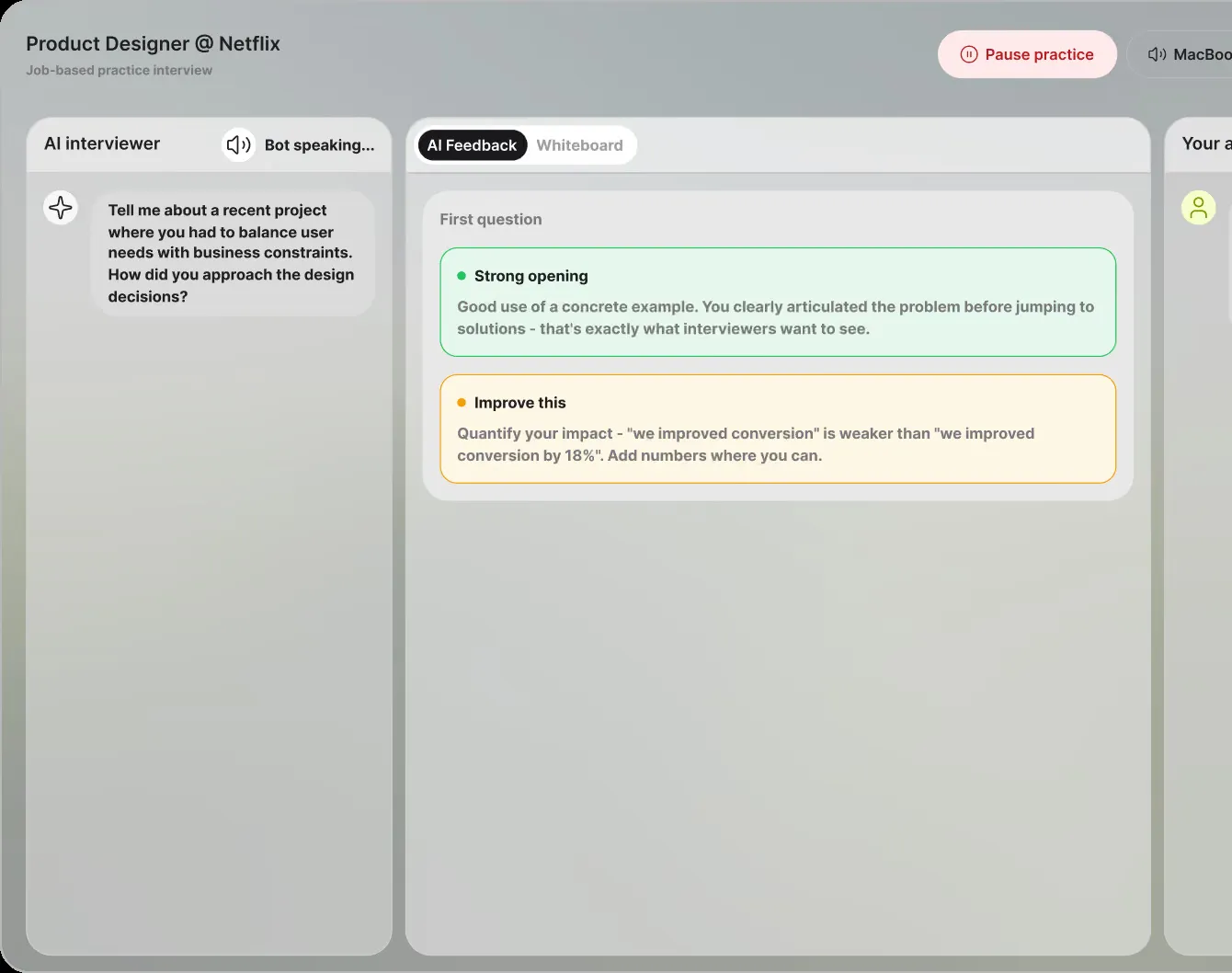
A real-time AI interview assistant is designed to provide support while an interview or practice session is happening. Depending on the technology and interview setting, it may analyze questions and provide relevant guidance quickly.
During practice, this can be especially helpful. You can receive suggestions on how to make an answer clearer, whether you have addressed the main question, and which points might deserve more explanation.
However, real-time assistance should be used responsibly. Candidates should understand the rules of an actual interview before using any AI-based support. In many professional interviews, relying on hidden assistance may violate company policies or undermine the purpose of the assessment.
For preparation, though, real-time feedback can be valuable because it helps you notice mistakes while they are still fresh.
Why Are Candidates Using AI for Interview Preparation?
One reason is convenience. Traditional interview preparation often requires finding another person who has time to conduct a mock interview. AI can make practice available whenever you need it.
Another advantage is repetition. You can answer the same type of question several times without worrying about frustrating a practice partner. Each attempt gives you another opportunity to improve your wording, confidence, and structure.
AI can also help candidates move beyond memorized answers. Instead of learning a fixed response, you can practice explaining your actual experience in different ways. This makes your answers sound more natural during a real conversation.
What Can an AI Interview Assistant Help You Improve?
The technology can support several areas of interview preparation.
Answer structure: AI can help you organize responses logically. For behavioral questions, for example, practicing a clear situation, action, and result structure can make your answer easier to follow.
Communication: Feedback can highlight answers that are too long, unclear, repetitive, or lacking specific examples.
Confidence: Repeated practice can make unfamiliar questions feel less intimidating.
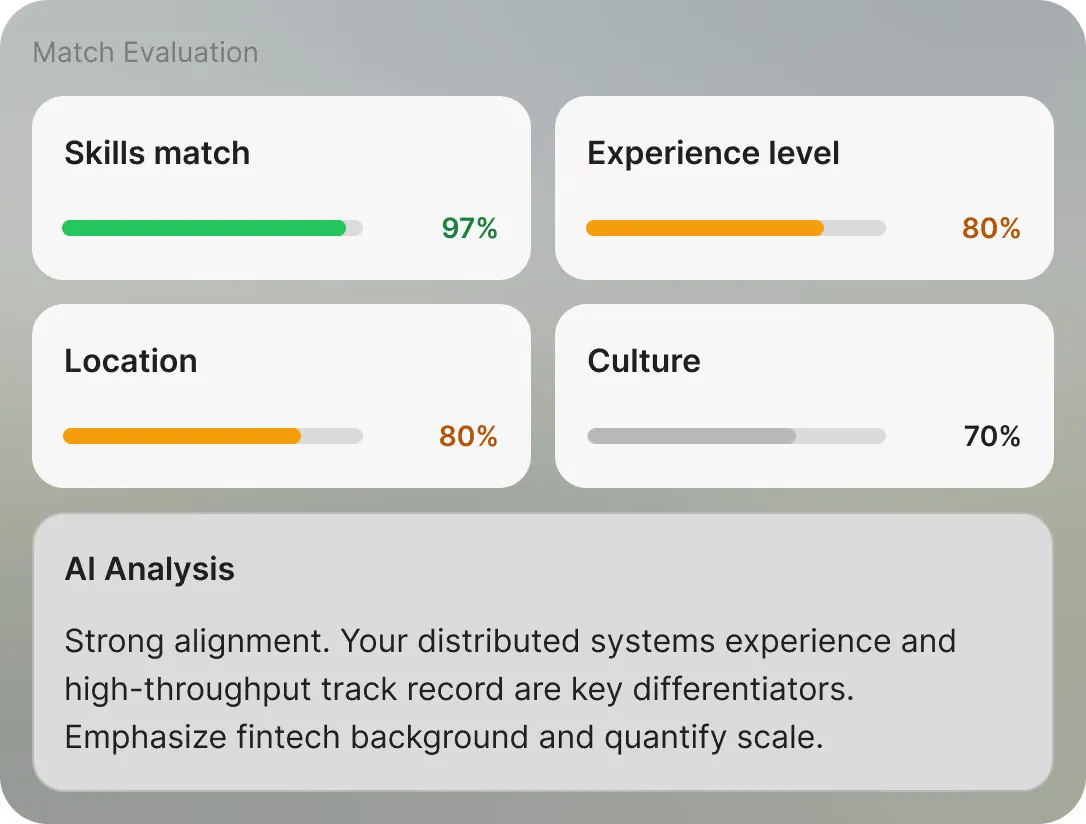
Role-specific preparation: AI can generate questions based on a job description, industry, or skill set.
Weak areas: Reviewing multiple practice sessions can reveal topics that you consistently struggle to explain.
These benefits are most useful when AI is treated as a learning tool rather than a shortcut.
How Can You Use AI Without Losing Your Authentic Voice?
The goal of interview preparation is not to sound like a machine. Your answers should still reflect your experiences, personality, and way of communicating.
Start by giving the tool accurate information about your background, skills, projects, and the position you want. Then use its suggestions as guidance rather than copying every response word for word.
For example, if AI suggests a polished answer that does not sound like something you would normally say, rewrite it in your own language. Interviewers generally respond better to clear and genuine communication than to overly rehearsed statements.
It is also useful to practice without assistance occasionally. This tests whether you have actually developed the skill instead of becoming dependent on prompts.
Is Real-Time Assistance Right for Everyone?
Not necessarily. Some candidates may benefit more from conventional mock interviews, while others may prefer a combination of AI practice and human feedback.
AI can provide speed and consistency, but it cannot fully reproduce the human side of an interview. A real interviewer may react to your tone, ask an unexpected follow-up question, or change direction based on something you say.
For that reason, the best approach is often a balanced one. Use AI to build confidence and practice frequently, then use human conversations to test your ability to handle natural interview dynamics.
What Should You Look for in an AI Interview Tool?
Before choosing an AI-based interview platform, consider what you actually need.
Look for tools that provide relevant questions, useful feedback, and a straightforward user experience. If you are preparing for a specific career, role-based customization can be particularly helpful.
Privacy is another important consideration. If you share your resume, personal information, or interview recordings, check how the platform handles that data.
Most importantly, choose a tool that helps you learn. A platform that simply provides answers may feel convenient, but one that explains why an answer could be improved can offer much greater long-term value.
Final Thoughts
An AI interview assistant can make interview preparation more accessible, structured, and personalized. From practicing common questions to improving the way you communicate your experience, AI can give candidates a practical way to prepare with greater confidence.
A real-time AI interview assistant can add another layer of support by providing immediate feedback during practice. Still, technology works best when it complements your preparation rather than replacing it.
The strongest interview strategy remains simple: understand your experience, know the role, practice explaining your value, and stay authentic. AI can help you prepare for that conversation—but you are the person who ultimately needs to have it.
Frequently Asked Questions
1. What is an AI interview assistant?
An AI interview assistant is a tool that helps candidates prepare for interviews by generating questions, reviewing responses, and providing feedback on communication, structure, and relevance.
2. How does a real-time AI interview assistant help?
A real-time AI interview assistant can provide quick feedback or guidance during practice sessions. It may help candidates understand questions, organize responses, and identify areas for improvement.
3. Can AI help me practice for a specific job?
Yes. Many AI interview tools can tailor practice questions around a job description, industry, position, or particular skill set, making preparation more relevant.
4. Should I use AI during an actual job interview?
Always check the employer's rules first. Some interviews prohibit external assistance. Using AI during an interview without permission could violate the company's expectations or assessment policies.
5. Can AI replace a human mock interviewer?
AI can provide convenient and repeatable practice, but it does not completely replace human feedback. Combining AI preparation with mock interviews involving real people can provide a more complete experience.





















Sign in to leave a comment.