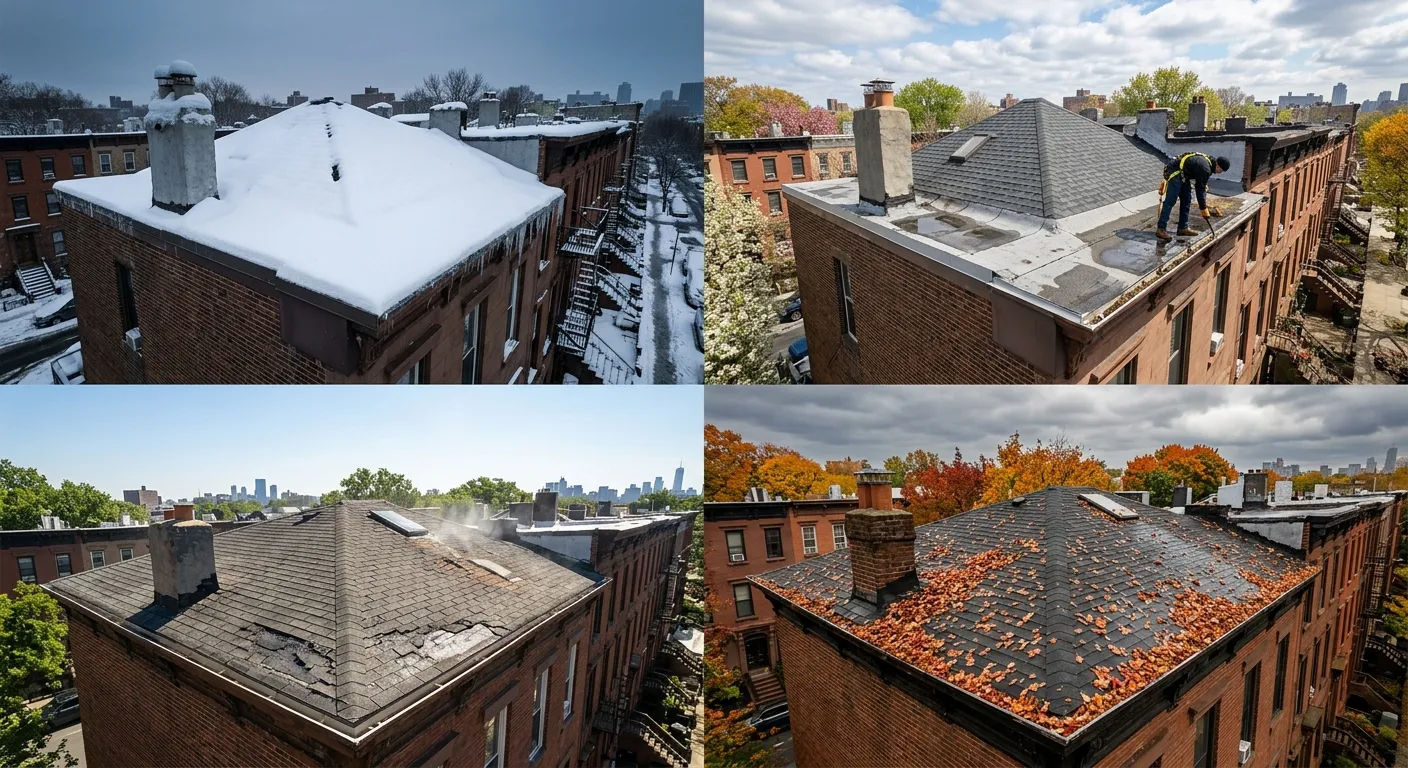
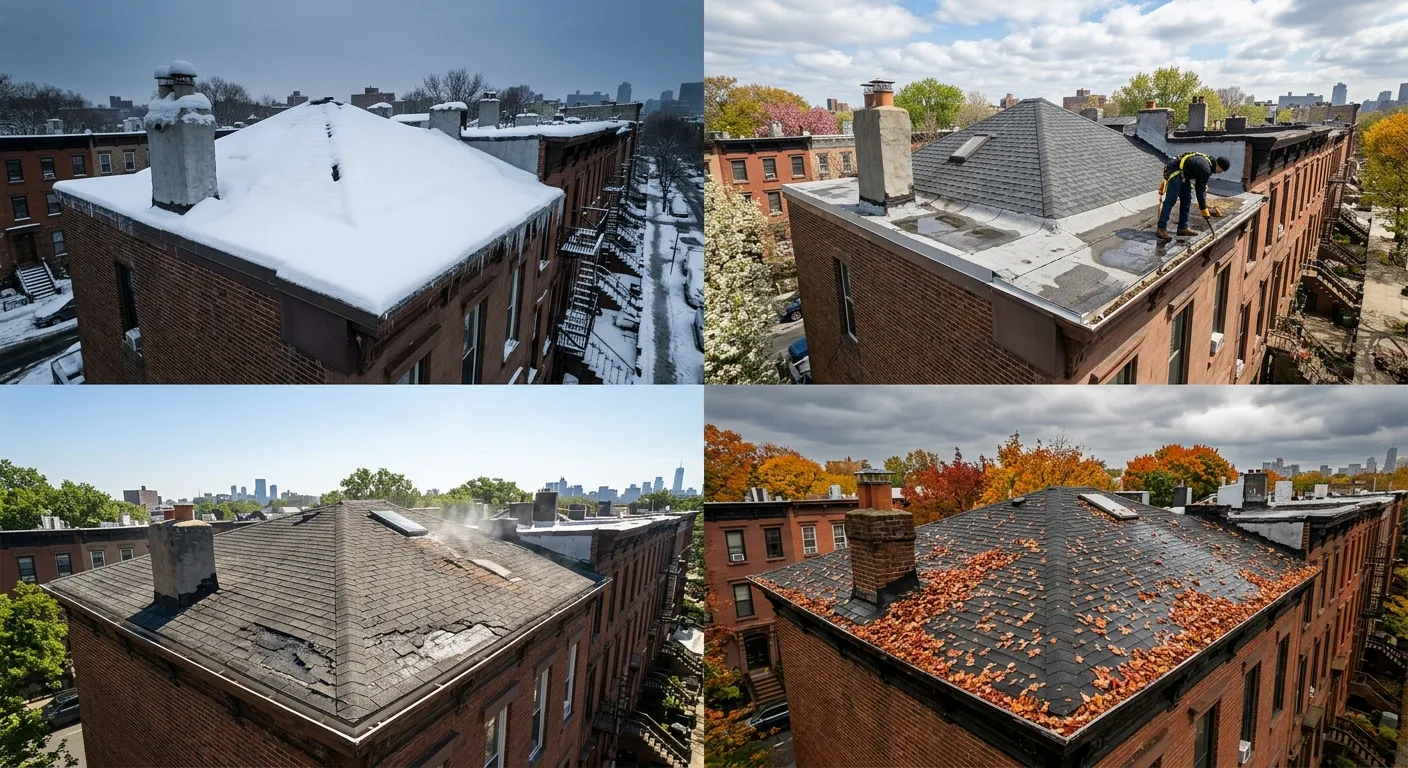
In a place like Brooklyn, the weather doesn’t just change—it tests your home year-round. From freezing winters to humid summers, every season places a different kind of stress on your roofing system. For homeowners and property managers in neighborhoods like Bushwick, understanding how these seasonal shifts impact roof performance is essential for preventing costly repairs and maintaining long-term structural integrity.
A roof is not a static structure. It expands, contracts, absorbs moisture, and withstands environmental pressure every single day. Over time, these repeated cycles can weaken materials, create vulnerabilities, and lead to hidden damage. Knowing what to expect in each season allows property owners to stay ahead of problems rather than reacting to them.
Winter Stress and Structural Strain
Winter in Brooklyn is often the most demanding season for any roofing system. Snow accumulation may look harmless at first, but its weight can place significant pressure on the roof deck. Flat roofs, which are common in Brooklyn buildings, are especially vulnerable because they do not shed snow as easily as sloped designs.
When temperatures fluctuate between freezing and thawing, ice dams can form along roof edges. These occur when melting snow refreezes, preventing proper drainage. As water backs up behind the ice, it can seep beneath roofing materials and into the interior structure. Over time, this leads to insulation damage, mold growth, and interior leaks.
Cold weather also makes roofing materials more brittle. Shingles can crack, and membranes on flat roofs may lose flexibility, increasing the likelihood of splits or punctures. Without timely inspections, these issues often go unnoticed until spring, when leaks become more apparent.
Spring Moisture and Hidden Damage
As winter fades, spring introduces a new challenge: moisture. Melting snow combined with frequent rainstorms exposes any weaknesses that developed during the colder months. This is often when property owners first notice water stains on ceilings or walls.
Spring is also a critical time for drainage systems. Gutters and downspouts may have become clogged with debris over the winter, preventing proper water flow. When water cannot drain effectively, it pools on the roof, accelerating wear and increasing the risk of leaks.
In many Brooklyn properties, spring inspections reveal issues that require immediate attention. Small cracks, loose flashing, or minor membrane damage can quickly escalate if ignored. Addressing these problems early helps avoid more extensive repairs later in the year.
Summer Heat and Material Expansion
Summer brings a different kind of stress—heat. Roofing materials absorb sunlight throughout the day, causing them to expand. At night, as temperatures drop, they contract. This constant expansion and contraction cycle gradually weakens the structure of the roof.
Flat roofs are particularly susceptible to heat-related damage. Prolonged exposure to high temperatures can cause roofing membranes to blister or warp. In some cases, seams may separate, creating entry points for water during sudden summer storms.
Humidity also plays a role in roof performance. Moist air can become trapped within roofing layers, especially if ventilation is inadequate. Over time, this trapped moisture can lead to rot, mold, and reduced insulation efficiency.
For property owners, summer is an ideal time to evaluate energy efficiency. Reflective roofing materials and proper insulation can significantly reduce heat absorption, helping to maintain comfortable indoor temperatures while lowering energy costs.
Fall Preparation and Preventive Maintenance
Fall is often considered the most important season for roof maintenance. As temperatures begin to drop, it is crucial to prepare the roof for the upcoming winter. Leaves and debris can accumulate quickly, especially in urban neighborhoods with tree-lined streets.
Clogged gutters during fall can create serious drainage issues. When water cannot flow freely, it increases the likelihood of ice dam formation once temperatures drop. Cleaning and maintaining gutters during this season is one of the simplest yet most effective ways to protect a roofing system.
Fall is also the best time for a comprehensive roof inspection. Identifying and repairing minor issues before winter arrives can prevent major damage during harsh weather conditions. This proactive approach saves both time and money in the long run.
The Impact on Flat and Shingle Roofing Systems
Both flat and shingle roofing systems respond differently to seasonal changes. Shingle roofs are designed to shed water efficiently, but they can lose granules over time due to weather exposure. This reduces their ability to protect against UV rays and moisture.
Flat roofs, while efficient for urban structures, require careful maintenance throughout the year. Their design makes them more susceptible to water pooling, which can accelerate wear if not properly managed. Regular inspections and timely repairs are essential to maintaining their performance.
Regardless of the roofing type, seasonal changes in Brooklyn create a cycle of stress that cannot be ignored. Each season builds upon the effects of the previous one, gradually impacting the overall condition of the roof.
Why Local Expertise Matters
Brooklyn’s climate presents unique challenges that require localized knowledge and experience. Roofing solutions that work in other regions may not be suitable for the conditions found in New York City. Factors such as building density, weather patterns, and architectural styles all influence how a roof performs over time.
Working with professionals who understand these local conditions ensures that roofing systems are designed and maintained to withstand seasonal changes effectively. From selecting the right materials to implementing proper drainage solutions, local expertise makes a measurable difference in long-term performance.
For homeowners and property managers seeking reliable solutions, exploring trusted roofing repair and maintenance solutions in Brooklyn can help ensure that your property remains protected throughout the year.
Long-Term Value of Seasonal Awareness
Understanding how seasonal changes affect roof performance is not just about avoiding immediate problems. It is about preserving the long-term value of your property. A well-maintained roof enhances structural integrity, improves energy efficiency, and contributes to overall property appeal.
Ignoring seasonal impacts, on the other hand, often leads to a cycle of reactive repairs. What starts as a minor issue can quickly escalate into a major expense if left unaddressed. By staying proactive and informed, property owners can extend the lifespan of their roofing systems and reduce unexpected costs.
Brooklyn’s climate may be unpredictable, but your approach to roof maintenance doesn’t have to be. With the right knowledge and professional support, it is possible to navigate seasonal challenges and keep your roofing system performing at its best year after year.


























Sign in to leave a comment.