
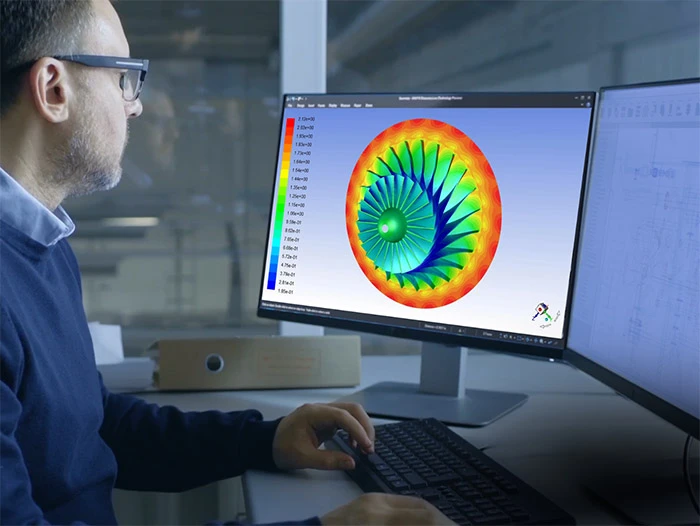
In today’s competitive engineering landscape, companies are under constant pressure to design better products, reduce costs, and speed up development cycles. Physical prototyping alone is no longer fast or efficient enough to keep up with market demands. That’s why many organizations now rely on the combined power of simulation consultants, CFD consulting companies, and FEA engineering to solve complex challenges with precision and confidence.
Why Simulation Expertise Matters
Simulation consultants bring specialized technical insight that most in-house engineering teams simply don’t have the time, tools, or training to develop on their own. They help companies analyze real-world conditions virtually, saving thousands of dollars in prototyping, testing, and redesign.
These experts understand the physics behind thermal behavior, stress distribution, fluid flow, vibration, fatigue, and product failure. Their role goes beyond software operation—they interpret results, optimize designs, and provide actionable recommendations that reduce risk and boost performance.
Whether a business is creating medical devices, industrial equipment, consumer electronics, or aerospace systems, simulation consultants offer a level of flexibility and depth that enables faster, smarter decision-making.
The Role of CFD Consulting Companies
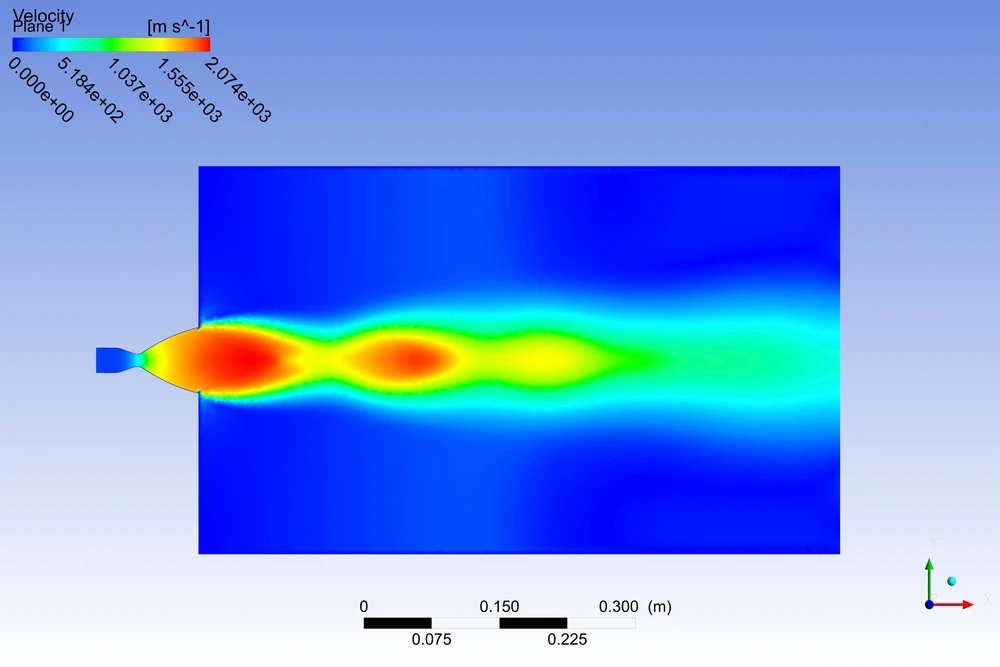
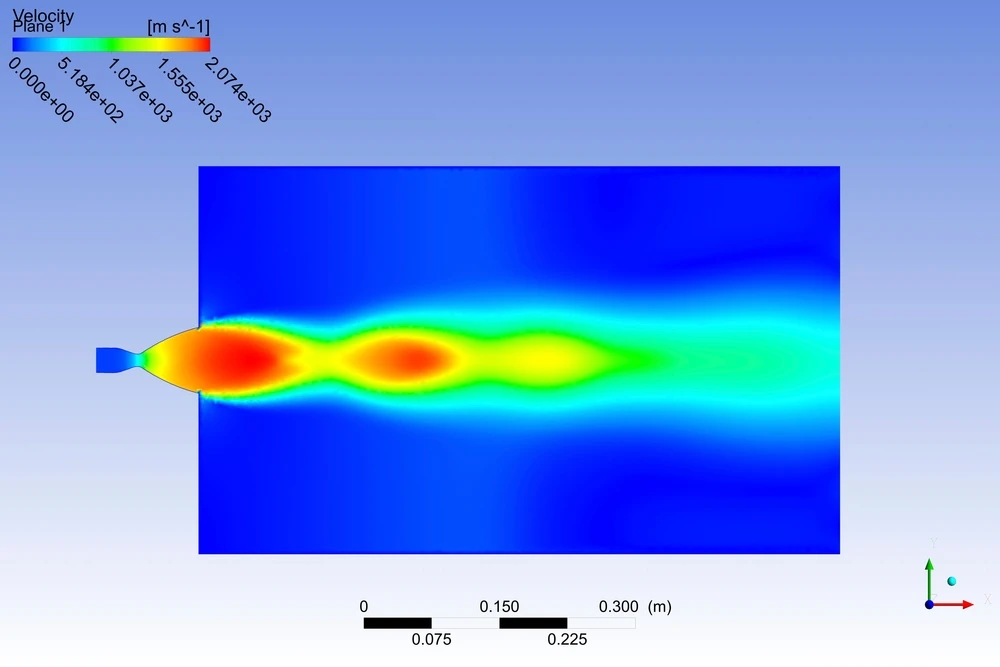
Fluid dynamics plays a critical role in countless applications—from cooling systems and mixing equipment to aerodynamics and HVAC design. That’s where CFD consulting companies step in. They specialize in computational fluid dynamics, giving engineers a clear understanding of how liquids and gases behave under various conditions.
These companies support projects such as:
- Airflow optimization in enclosures or ventilation systems
- Pressure drop analysis in piping and duct networks
- Cooling strategies for electronics, batteries, and motors
- Combustion, heat transfer, and multiphase flow modeling
- Flow uniformity in reactors and process systems
- Design of pumps, fans, and nozzles
By creating high-fidelity simulations before manufacturing begins, CFD consulting companies help clients avoid costly redesigns and identify the most efficient paths forward.
How FEA Engineering Complements CFD
While CFD focuses on fluids and thermal performance, FEA engineering provides insight into the strength, durability, and structural behavior of components. Finite Element Analysis allows engineers to test how products respond to stress, vibration, pressure, impact, or thermal expansion—without ever building a physical prototype.
FEA engineering is commonly used to:
- Evaluate material strength and fatigue
- Optimize designs for weight and performance
- Assess deformation, cracking, or failure points
- Analyze thermal stress and creep
- Improve product safety and compliance with standards
- Reduce overengineering and unnecessary costs
By integrating FEA with CFD insights, engineers get a complete picture of how a design will perform under real-world conditions.
When Teams Combine Simulation Forces
Many engineering projects require both thermal-fluid analysis and structural evaluation. For example, cooling systems in electric vehicles must consider airflow and heat distribution (CFD) while also ensuring structural integrity and vibration resistance (FEA). Similarly, aerospace or energy applications often demand multiphysics analysis to capture the full picture.
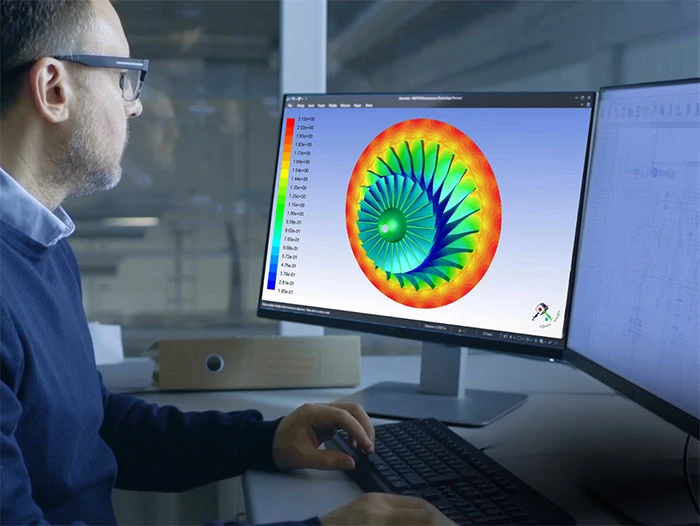
This is where collaboration between simulation consultants, CFD consulting companies, and FEA engineering teams becomes invaluable. Instead of making assumptions or relying on siloed data, organizations can use simulation-driven workflows to evaluate designs holistically.
The result is better accuracy, faster iterations, and products optimized for safety, efficiency, and cost-effectiveness.
Benefits of Partnering with Simulation Experts
Companies that work with outside specialists gain several advantages:
- Faster time to market
- Reduced reliance on prototypes
- More design iterations at lower cost
- Deeper understanding of product behavior
- Stronger decision-making with data-backed insights
- Compliance with regulatory requirements
- Greater confidence in performance predictions
By leveraging experts who understand both CFD and FEA, engineering teams can explore more possibilities and significantly de-risk complex projects.
Who Should Consider These Services?
Any organization designing products that involve structural integrity, fluid movement, heat transfer, or mechanical performance can benefit—from startups to global manufacturers. Industries that rely heavily on simulation include:
- Automotive and EV technology
- Aerospace and defense
- Energy and power systems
- Industrial machinery
- Medical and biotech equipment
- Consumer electronics
- HVAC and environmental systems
- Chemical processing and manufacturing
Even companies that already use simulation software often turn to specialists when they face tight timelines, high complexity, or limited internal resources.
Final Thoughts
The combination of simulation consultants, CFD consulting companies, and FEA engineering is transforming the way products are designed and validated. Instead of waiting for physical test results or dealing with costly redesigns, companies can predict performance with digital accuracy and make improvements early in the process.























Sign in to leave a comment.