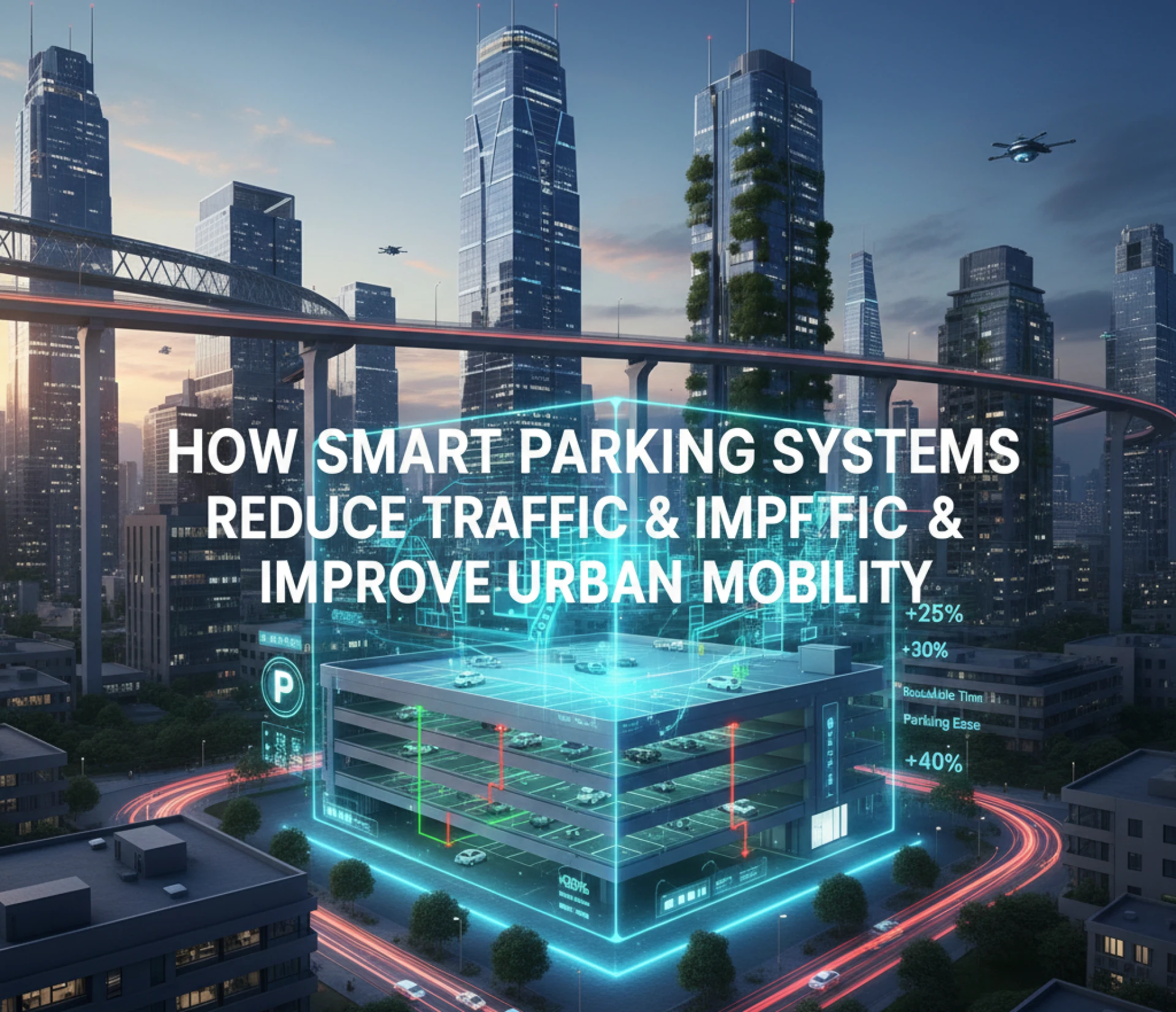

One of the most pressing challenges modern cities face today is traffic congestion. As urban populations continue to expand and vehicle ownership rises steadily, finding a parking space has become a daily frustration for commuters. Drivers often spend long stretches of time circling streets in search of an available spot, unintentionally contributing to traffic buildup, higher fuel usage, and increased stress levels. This is exactly where smart parking systems begin to make a difference.
Smart parking combines digital technologies, sensors, and mobile applications to help both users and city administrators monitor—and in some cases manage—parking availability more efficiently. Instead of relying on guesswork or endlessly checking navigation apps, drivers receive accurate, real-time information about where parking spaces are available. This shift may seem simple, but it has a significant impact on traffic flow and overall urban mobility.
The Hidden Traffic Issue Caused by Parking
A large portion of city traffic is created by vehicles searching for parking. When multiple drivers roam the same neighborhoods looking for open spaces, roads become crowded, intersections slow down, and vehicle emissions increase. Traditional parking systems lack real-time visibility and centralized control, which only intensifies the problem—especially during peak hours.
Smart parking solutions, powered by IoT-enabled devices, turn parking from an unpredictable task into a planned and efficient process.
How Smart Parking Systems Operate
Smart parking systems rely on IoT sensors, cameras, and connected digital platforms to track parking space availability in real time. This data is shared through mobile apps, roadside digital displays, and vehicle navigation systems, allowing drivers to locate and reach an open spot without unnecessary detours.
Many systems also support features such as advance reservations, cashless payments, and automated entry and exit. These capabilities reduce queues, minimize manual intervention, and significantly cut down on idling and circling—resulting in smoother traffic movement.
Reducing Traffic Congestion at the Source
One of the most effective ways smart parking reduces congestion is by eliminating the time spent searching for parking. When drivers know exactly where to go, unnecessary vehicle movement on city roads decreases. This improves traffic flow in busy zones like commercial areas, shopping districts, and event locations.
By integrating parking data with city-wide traffic management platforms, authorities can redirect vehicles, manage peak demand, and distribute congestion more evenly across different areas. Over time, this leads to more balanced traffic patterns and better use of road infrastructure.
Enhancing Urban Mobility
Urban mobility isn’t just about speeding up vehicles—it’s about helping people move more efficiently. Smart parking supports this goal by making transportation choices clearer and more informed. When parking availability and pricing are transparent, commuters are more likely to plan or opt for public transport when demand is high.
In many cities, smart parking systems are also linked with EV infrastructure. Features like real-time charging slot availability support EV charging app development, enabling electric vehicle users to travel with confidence and reduced range anxiety.
Benefits for Cities and Citizens
For city administrators, smart parking provides valuable insights into parking behavior, demand trends, and peak usage hours. This data helps guide infrastructure planning, traffic policies, and future investments. Businesses also benefit—easy parking access increases foot traffic and improves customer satisfaction.
From a technical perspective, most smart parking platforms are built using custom software solutions tailored to a city’s specific regulations, scale, and operational needs. Advanced systems may even leverage generative AI to forecast demand, optimize pricing strategies, and maximize space utilization.
The Role of AI and Automation
Artificial intelligence and automation are playing a growing role in making parking systems more intelligent. AI-powered analytics can anticipate congestion, suggest optimal parking zones, and automate enforcement processes. With tools like AI Copilot development services, city operators gain real-time insights that help them respond faster, allocate resources efficiently, and make data-driven decisions.
Additionally, ChatGPT integration is being explored as a conversational interface, allowing users to ask simple questions about parking availability, pricing, or directions in a more intuitive way.
A Smarter Path Forward
Smart parking systems are no longer just a convenience—they are a necessity for future-ready cities. By reducing unnecessary traffic, lowering emissions, and improving movement within urban centers, these systems contribute to healthier, more livable environments.
As cities continue to grow, adopting smart parking is inevitable. It is a crucial step toward creating sustainable, efficient, and truly smart urban mobility.

































Sign in to leave a comment.