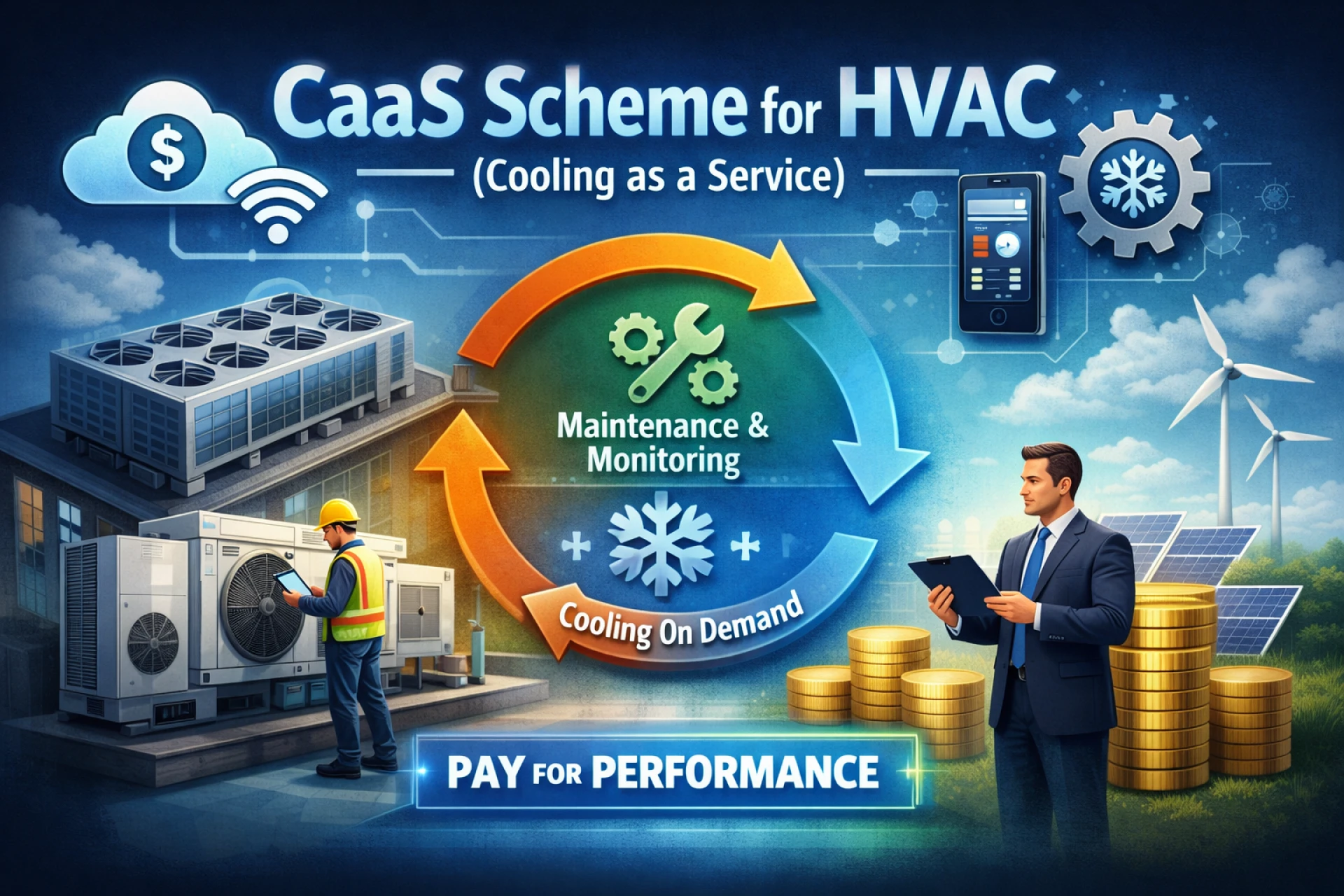

Running a large building or factory means dealing with heat every day. In warm regions, cooling is not optional. It keeps people working, machines safe, and goods protected. The problem is not the cooling itself, but the cost and effort that come with owning HVAC systems. High purchase prices, rising power bills, and sudden repairs create pressure on budgets. The Caas scheme for HVAC offers a different path. Instead of owning machines, businesses pay only for the cooling they use.
Understanding the Service-Based Cooling Model
Caas stands for Cooling as a Service. In this model, the system provider owns the HVAC equipment. They design, install, operate, and maintain it. The building owner does not buy the machines. Payment is based on cooling usage, not equipment cost. This changes cooling from a heavy asset into a managed service.
No Heavy Upfront Spending
Traditional HVAC setups require large capital at the start. Chillers, air handlers, piping, and controls cost a lot. The Caas scheme removes this burden. Systems are installed without large upfront payments.
Built-In Maintenance and Monitoring
In many buildings, systems are serviced only after problems appear. That leads to downtime. This service-based approach focuses on regular care. Sensors and system checks help spot issues early. Small faults get fixed before they grow into failures. Cooling stays steady during high-demand months.
Clear Roles and Fewer Internal Burdens
One part often missed in cooling discussions is the load placed on internal teams. When a business owns HVAC systems, staff must handle vendors, spare parts, service schedules, and fault reports. This takes time away from core work.
With the Caas scheme for HVAC, these roles become clear and limited.
No vendor coordination: One service partner handles design, service, and repairs.
No spare part tracking: Parts are managed by the provider, not your team.
No service planning: Maintenance happens on a fixed plan without reminders.
No emergency stress: Fault response is already defined in the service terms.
Shared Responsibility for Performance
When businesses own HVAC systems, efficiency often drops over time. Under a service-led model, the provider remains responsible for system performance. If efficiency falls, it affects them too. This keeps systems tuned and operating at the right levels throughout their life.
Easier Upgrades Over Time
Technology changes fast. Owned systems can become outdated within years. Replacing them costs more money. The Caas scheme for HVAC allows upgrades as part of the service. Systems can improve without full replacement or fresh capital spending.
Support for Growing Facilities
As buildings expand, cooling needs change. Traditional systems struggle to scale. Under this model, cooling capacity can be adjusted based on demand. This supports growth without redesigning the entire system or adding heavy equipment.
Reduced Operational Risk
Heat affects staff comfort, product quality, and equipment health. Cooling failure can stop work. With a service-based setup, risk shifts away from the building owner. Cooling remains managed by specialists who focus only on system reliability.
Conclusion
This approach is not just about comfort. It is about control. It reduces financial strain, improves system care, and supports stable operations. For buildings facing rising energy costs and constant heat demand, this model offers a steady and practical solution.


























Sign in to leave a comment.