

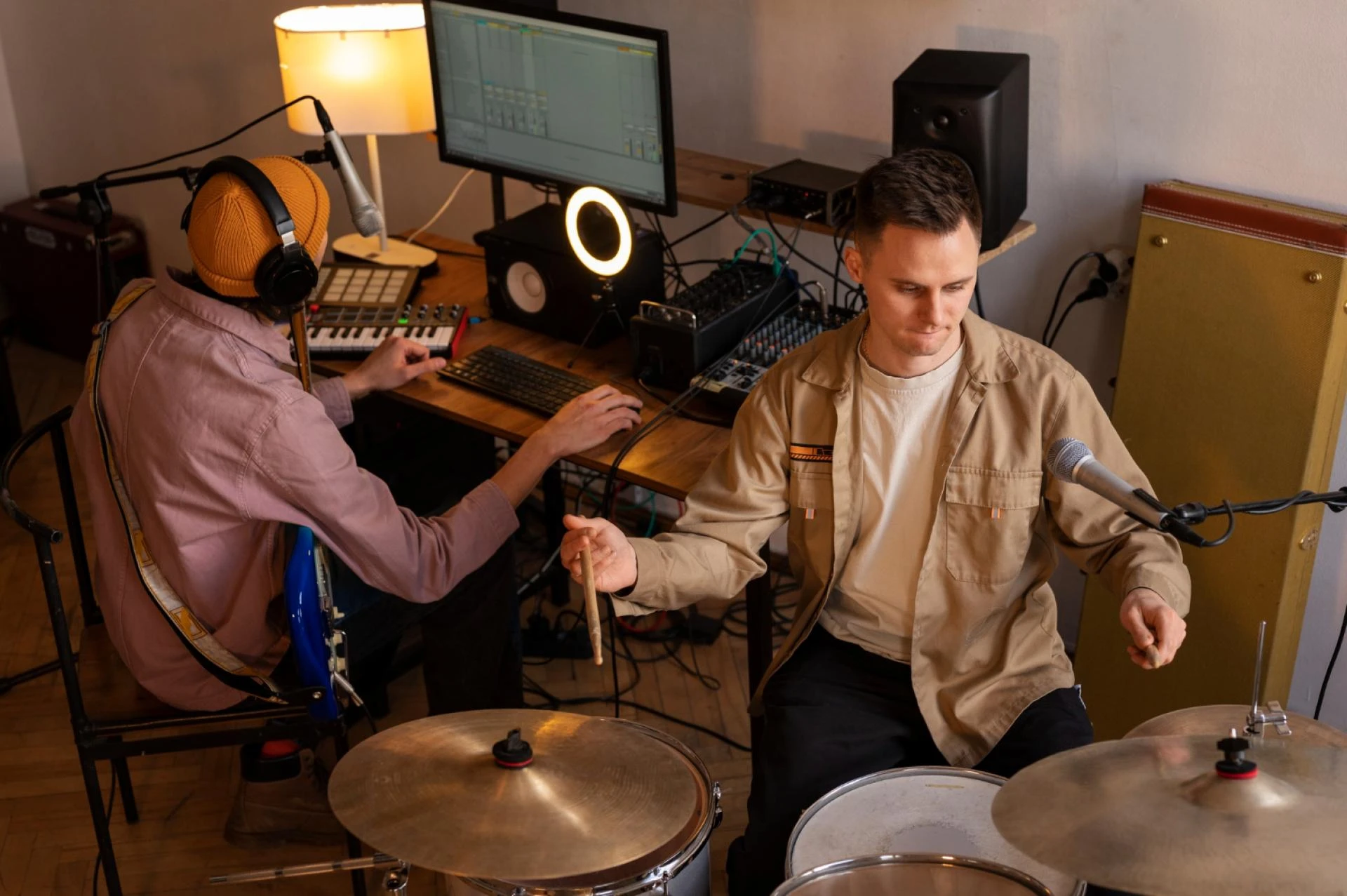
A great interview video is not just about what people say. It is also about how it feels. Silence can make it flat. Poor music can make it distracting. But the right track, used the right way, can bring everything together.
If you want your videos to feel polished and engaging, you need to learn how to add music to interview video content the right way. It is not complicated, but it does need attention to detail.
Let’s walk through it step by step.
Start With Clean Dialogue First
Before you even think about music, fix your audio.
Your interview voice should be clear. No background noise. No sudden jumps in volume. If the dialogue is not clean, music will only make things worse.
Use basic editing tools to:
- Remove background hum
- Normalize volume
- Cut awkward pauses
Good interviews always start with strong audio. This is one of the most important interview editing tips you should follow.
Choose the Right Video Production Music
Music should support the story, not overpower it.
Think about the tone of your interview. Is it emotional? Corporate? Casual? Inspiring?
Your track should match that mood. A serious business interview will feel odd with upbeat pop music. A personal story may need something soft and slow.
When selecting video production music, look for:
- Simple melodies
- No heavy vocals
- Consistent tempo
Keep Music in the Background
This sounds obvious, but it is where most people go wrong.
Music should sit behind the voice. Not compete with it.
Lower the music volume so the speaker is always the focus. A good rule is:
- Dialogue: 100%
- Music: 10–25%
You can adjust depending on the moment, but never let music overpower speech.
This is where audio layering tips come into play. You are not just adding music. You are blending it.
Use Audio Ducking for Smooth Balance
Audio ducking is a simple trick that makes a big difference.
When someone speaks, the music automatically lowers. When they pause, the music rises slightly.
Most editing software like Adobe Premiere Pro or Final Cut Pro has this feature built in.
Why it matters:
- Keeps dialogue clear
- Makes transitions smooth
- Feels more professional
If you want your add music to interview video process to feel polished, this step is essential.
Match Music to Sections of the Video
Not every part of your interview needs the same music.
Break your video into sections:
- Intro
- Main conversation
- Emotional highlights
- Outro
You can:
- Start with a stronger intro track
- Keep the middle minimal
- Add emotional layers where needed
- End with a clean fade-out
This approach is one of the most effective interview editing tips used in professional production.
Fade Music In and Out Properly
Never let music start or stop abruptly.
Use fades.
- Fade in at the beginning
- Fade out during transitions
- Smooth endings
Even a 2–3 second fade can make your video feel more refined.
These small details are part of strong audio layering tips that separate amateur edits from professional ones.
Avoid Overusing Music
More music does not mean better video.
In fact, silence can be powerful. It lets key moments breathe.
Use music when it adds value:
- Emotional statements
- Story highlights
- Scene transitions
Skip it when:
- The message is strong on its own
- The speaker’s tone carries enough weight
Balancing music and silence is a core part of good video production music use.
Test on Different Devices
Your edit may sound perfect on headphones. But what about phones or laptop speakers?
Always test your video on:
- Mobile devices
- External speakers
- Low volume settings
Check if:
- Dialogue is still clear
- Music is not too loud
- Nothing feels distracting
This step ensures your add music to interview video workflow holds up everywhere.
Keep It Simple
You do not need complex sound design.
Most professional interview videos use:
- One or two music tracks
- Clean cuts
- Smooth transitions
Focus on clarity and consistency.
If you overcomplicate things, the video will feel messy.
Where to Find Suitable Tracks
Finding the right track can take time. You need something that fits your tone and does not distract from the message.
Final Thoughts
Learning how to add music to interview video content is not about flashy edits. It is about balance.
Clear voice. Subtle music. Smooth layering.
Follow these simple interview editing tips, use the right video production music, and apply practical audio layering tips. Your videos will instantly feel more professional.
If you want a reliable place to find clean and usable tracks, platforms like Legis Music make it easier to pick music that fits interview-style content without overthinking it.




















Sign in to leave a comment.