
Table of Contents
- Introduction
- Why Do Trees Develop Above Ground Tree Roots?
- How to Tell If Root Exposure Is Cosmetic or Serious
- The Impact of Exposed Roots on Soil and Property
- Seasonal Factors That Worsen Root Exposure
- Practical Steps to Protect Roots in the Ground
- When Removal Becomes the Safer Choice
- Conclusion
- Book a Tree Removal Service Today!
- Frequently Asked Questions
Key Takeaways
- A tree with exposed roots can be harmless or a warning sign depending on soil stability and tree health.
- Above ground tree roots often develop due to erosion, compaction, or species growth habits.
- Visible roots may affect lawn care, drainage, and nearby hardscapes.
- Monitoring soil movement and tree stability is critical after storms or construction.
- Professional assessment helps determine whether preservation or removal is the safest option.
Introduction
A tree with exposed roots can raise immediate concerns for homeowners, business owners, and property managers. Are the roots failing? Is the tree unstable? Will it damage nearby pavement or foundations?
In many cases, visible roots are a natural part of how trees grow. However, surface roots can also signal shifting soil conditions or stress below ground. Understanding the difference between a normal root flare and a developing structural issue allows you to make informed decisions that protect both your landscape and your property.
This guide approaches the issue from a risk assessment and prevention perspective, helping you evaluate when exposed roots are manageable and when professional intervention is necessary.
Why Do Trees Develop Above Ground Tree Roots?
Roots do not always grow deep. In fact, most roots in the ground occupy the top layer of soil where oxygen, moisture, and nutrients are most available.
Several factors contribute to above ground tree roots becoming visible:
1. Natural Growth Patterns
Some tree species develop broad, shallow root systems that spread outward rather than downward. This growth strategy helps trees anchor across a wide area but can lead to visible surface roots as the tree matures.
2. Soil Erosion
Heavy rainfall, poor grading, and runoff gradually wash soil away. Over time, roots that were once protected become exposed. Properties with slopes or inadequate drainage systems are particularly vulnerable.
3. Compacted Soil
High foot traffic, parked vehicles, or nearby construction compress the soil. Compaction reduces oxygen availability, encouraging roots to grow closer to the surface where conditions are more favorable.
4. Improper Planting Depth
If a tree was planted too high, the structural root flare may sit above grade. As the surrounding soil settles, roots become more visible.
Understanding the root cause of exposure is the first step in determining whether it poses a risk.
How to Tell If Root Exposure Is Cosmetic or Serious
Not all visible roots require action. The key is evaluating stability and surrounding conditions.
Signs That May Indicate Minimal Concern
- The tree stands upright with no recent leaning
- Soil around the trunk feels firm
- No cracking or lifting of ground nearby
- The canopy appears healthy and evenly distributed
In these situations, the exposed roots may simply be part of the tree’s natural growth pattern.
Warning Signs That Require Attention
- Noticeable or sudden leaning
- Soil heaving on one side of the trunk
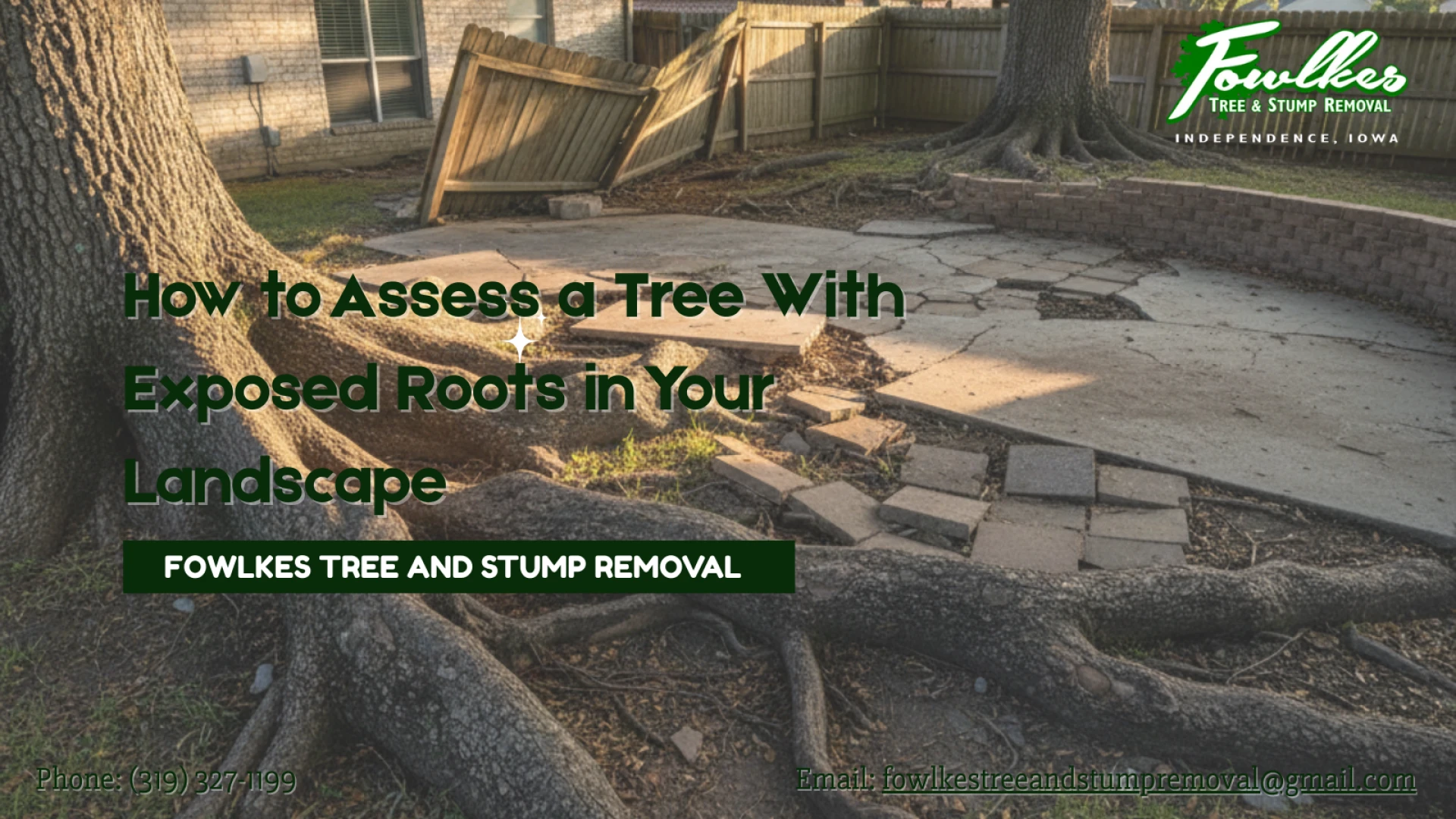
- Cracks forming in nearby sidewalks or driveways
- Root damage from excavation or cutting
- Hollow sounds when tapping the trunk base
If multiple warning signs appear together, the anchoring system may be compromised. At that point, evaluation becomes important for safety reasons.
The Impact of Exposed Roots on Soil and Property
Even when structural failure is not imminent, above ground tree roots can affect your landscape in several practical ways.
Lawn Maintenance Difficulties
Surface roots create uneven terrain that complicates mowing and edging. Over time, this can increase maintenance time and raise trip hazards, particularly in commercial or public-facing properties.
Competition for Water and Nutrients
Roots in the ground compete directly with turfgrass. When roots dominate the upper soil layer, grass may thin out or struggle during dry periods.
Hardscape Interference
Expanding root systems may gradually lift:
- Sidewalks
- Driveways
- Patio pavers
- Retaining walls
While this process is usually slow, it can become costly if ignored.
Seasonal Factors That Worsen Root Exposure
Weather plays a significant role in how roots become visible over time.
Heavy Rainfall
Intense storms accelerate soil erosion, especially in poorly drained areas.
Freeze and Thaw Cycles
In colder climates, soil expands and contracts during seasonal temperature changes. This movement can gradually push roots upward.
Drought Conditions
Prolonged dry periods cause soil to shrink and crack, revealing roots that were previously covered.
Monitoring your landscape after extreme weather events helps you identify changes early.
Practical Steps to Protect Roots in the Ground
If the tree remains stable, there are preventative strategies that reduce further exposure and protect long-term health.
Apply Mulch Properly
A thin layer of mulch around the base can shield exposed roots from temperature extremes and moisture loss. Avoid piling mulch against the trunk, as this can trap moisture and encourage decay.
Improve Drainage
Redirect downspouts and correct grading issues that cause water to flow toward the tree base. Stabilizing soil reduces additional erosion.
Limit Traffic Around the Root Zone
Reduce foot traffic and avoid parking heavy equipment near the tree. Compaction weakens soil structure and stresses the root system.
Avoid Cutting Structural Roots
Removing major roots without proper assessment can significantly reduce stability. Root pruning should only be done under professional guidance.
When Removal Becomes the Safer Choice
While preservation is often possible, there are situations where removal is the responsible decision.
Consider removal when:
- The tree shows progressive leaning
- Structural roots are severely damaged
- Soil anchoring has visibly failed
- The tree poses risk to buildings, vehicles, or power lines
- Storm damage has compromised overall integrity
Tree removal decisions should be based on structural evaluation rather than appearance alone. A thorough inspection assesses trunk condition, root plate stability, canopy weight distribution, and surrounding site factors.
Safety must always take priority when people and property are involved.
Conclusion
A tree with exposed roots is not automatically a problem, but it should never be ignored. Surface roots may simply reflect natural growth patterns, or they may indicate soil instability, compaction, or environmental stress.
By understanding how above ground tree roots develop and how roots in the ground anchor the tree, you can better evaluate potential risks. Regular monitoring, soil management, and professional inspections when warning signs appear help maintain a safe and healthy landscape.
When in doubt, an expert evaluation provides clarity and peace of mind.
Book a Tree Removal Service Today!
If you are concerned about a tree with exposed roots on your property, professional guidance can help you determine the safest course of action.
At Fowlkes Tree And Stump Removal, we evaluate root stability, soil conditions, and overall tree health to provide clear recommendations. If removal is necessary, we use controlled techniques and specialized equipment to protect your surrounding landscape.
Call us at 319-327-1199 or email [email protected] to schedule your assessment today.
Frequently Asked Questions
1. Are above ground tree roots always dangerous?
No. Many trees naturally develop surface roots. Risk depends on soil stability, structural integrity, and surrounding environmental factors.
2. Can I add soil over exposed roots to cover them?
Adding thick soil layers can reduce oxygen flow to roots in the ground. A light mulch layer is safer than burying structural roots.
3. Do exposed roots mean the tree will fall during a storm?
Not necessarily. Storm risk depends on overall anchoring strength, trunk condition, and soil saturation levels.
4. Why do roots become visible years after planting?
Gradual erosion, compaction, or soil settlement can expose roots long after a tree has matured.
5. When should I call a professional about a tree with exposed roots?
Contact a professional if you notice leaning, soil cracking, storm damage, or structural impact to nearby pavement or buildings.

























Sign in to leave a comment.