
Table of Contents
- Introduction
- Understanding What Happens When Trees Hit by Lightning
- Why Lightning Targets Certain Trees
- The Hidden Dangers After a Strike
- A Property Owner’s Step by Step Action Plan
- Repair or Remove: How to Decide
- Insurance, Liability, and Documentation Tips
- Long Term Risk Reduction Strategies
- Conclusion
- Book a Tree Damage Assessment Today
- Frequently Asked Questions
Key Takeaways
- Trees hit by lightning can suffer internal structural damage that is not immediately visible.
- Property owners should prioritize safety and avoid approaching unstable trees.
- Professional assessment helps determine whether pruning, monitoring, or removal is necessary.
- Insurance documentation is critical after storm-related tree damage.
- Preventative inspections reduce long term property risk.
Introduction
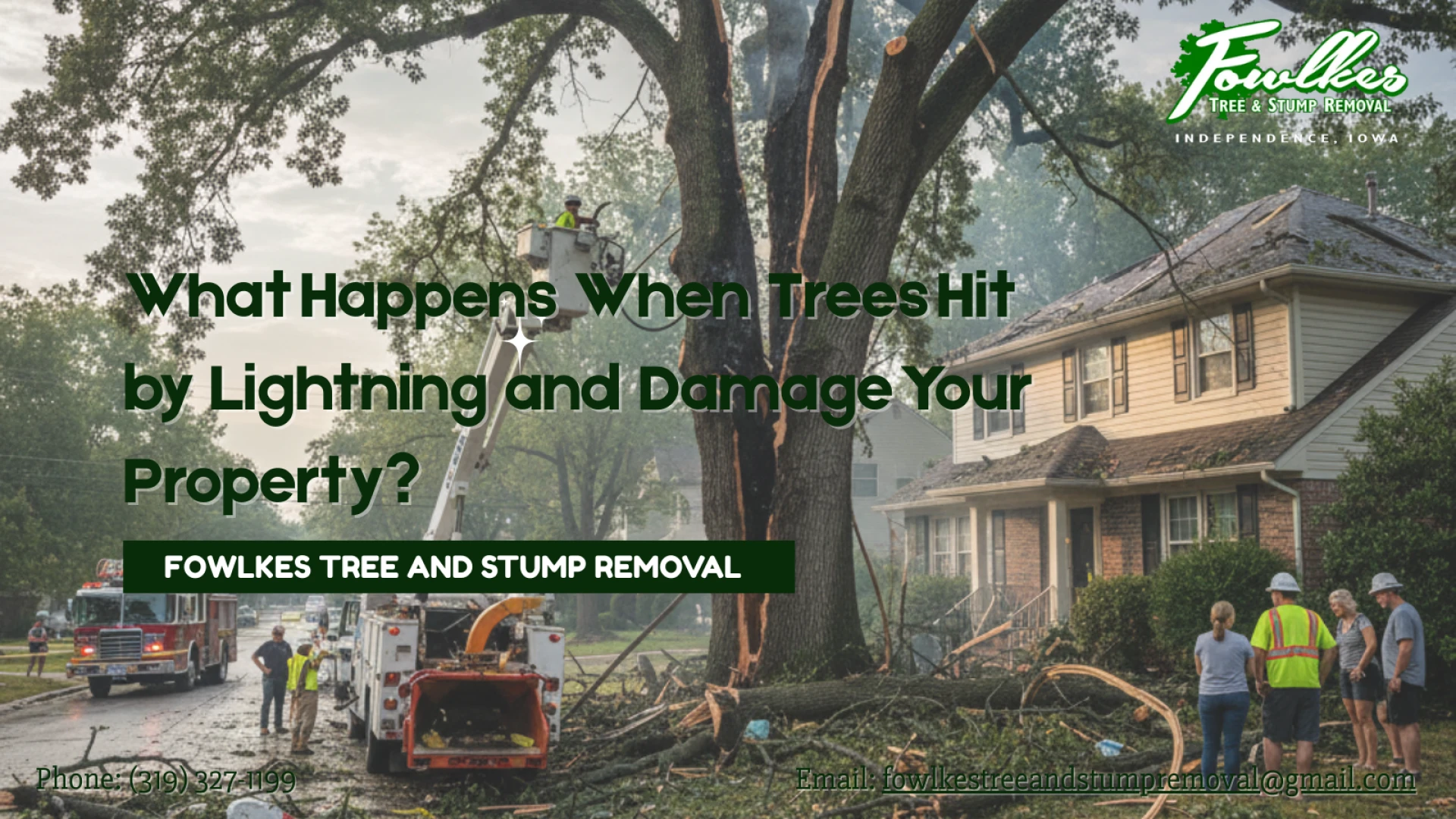
When trees hit by lightning cause damage to your home or commercial property, the situation can feel overwhelming. In the first few hours after a storm, your priority should always be safety and structural assessment. Property owners dealing with trees hit by lightning often underestimate the hidden internal damage that can follow a strike.
Lightning related tree damage is not always obvious. A tree may remain standing yet be structurally compromised. Understanding what happens when you experience this type of storm damage allows you to respond confidently and responsibly.
This guide explains what happens during a lightning strike, what risks to look for, and how to protect your property from further harm.
Understanding What Happens When Trees Hit by Lightning
Lightning releases an enormous amount of energy in a fraction of a second. When it strikes a tree, that energy travels rapidly from the canopy down through the trunk and into the root system.
Instant Internal Heating
Inside every tree is moisture. When lightning passes through, that moisture superheats instantly. The rapid expansion creates pressure that may:
- Split the trunk vertically
- Blow bark outward
- Scatter wood debris around the base
- Damage internal vascular tissue
Even if the tree appears mostly intact, the internal structure may be severely weakened.
Root System Impact
Lightning does not always stop at the trunk. The electrical current often travels into the ground, damaging roots beneath the soil surface. Root damage reduces the tree’s ability to anchor itself, increasing the likelihood of delayed collapse during wind or heavy rain.
Why Lightning Targets Certain Trees
Many property owners ask why lightning strikes some trees but not others. While there is no guaranteed predictor, several factors increase vulnerability.
Height and Exposure
Taller trees are more likely to be struck because lightning seeks the fastest path to the ground. Trees that rise above surrounding structures or open landscapes are natural targets.
Moisture Content
Trees with higher internal moisture can conduct electricity more effectively. During storm season, saturated soil conditions may increase the likelihood of electrical grounding through root systems.
Location on Property
Trees located near:
- Open fields
- Driveways
- Power lines
- Water features
- Property edges
may be more exposed during severe weather events.
Understanding these risk factors helps property owners make informed landscaping and maintenance decisions.
The Hidden Dangers After a Strike
The most serious issue with trees hit by lightning is not always what you see immediately. Structural failure can occur days, weeks, or even months later.
Internal Structural Weakness
A tree that looks stable may have:
- Compromised trunk integrity
- Damaged support fibers
- Fractured internal channels
- Decaying sections triggered by stress
Over time, weakened areas become failure points.
Falling Limb Risk
Lightning can kill sections of the canopy instantly. Dead branches high above your roofline may not fall right away, but wind and gravity eventually bring them down.
Increased Disease Vulnerability
The stress from a strike makes trees more susceptible to pests and fungal infections. Damaged bark creates entry points for decay organisms.
A Property Owner’s Step by Step Action Plan
If you suspect your property has experienced lightning related tree damage, follow a structured approach.
Step 1: Prioritize Immediate Safety
Avoid standing under the affected tree. Keep children and pets away from the area. Do not attempt to inspect damage during active storms.
Step 2: Check for Secondary Hazards
Look for:
- Branches on rooftops
- Damage to siding or fencing
- Obstructed driveways
- Contact with power lines
If power lines are involved, contact your utility provider immediately.
Step 3: Document Everything
Take clear photos of:
- The entire tree
- Close ups of cracks or exposed wood
- Property damage
- Debris distribution
Accurate documentation supports insurance claims and professional evaluations.
Step 4: Schedule a Professional Assessment
A certified tree professional can determine whether the tree can recover or poses an ongoing safety threat. Structural evaluation tools and experience are critical for identifying hidden damage.
Repair or Remove: How to Decide
Not every lightning struck tree requires removal. Some can recover with proper care.
When Monitoring May Be Appropriate
A tree may survive if:
- Damage affects less than half of the trunk circumference
- Structural lean has not developed
- Root system remains stable
- Major limbs are intact
In these cases, pruning and monitoring may be sufficient.
When Removal Is the Safer Option
Removal is often recommended when:
- The trunk is split deeply
- The tree leans toward structures
- Large limbs are hanging or fractured
- Root stability is compromised
- The tree was already declining
In residential areas, proximity to homes, garages, sidewalks, and neighboring properties significantly influences the decision.
Professional removal ensures controlled dismantling to prevent further property damage.
Insurance, Liability, and Documentation Tips
Storm damage often raises insurance and responsibility questions.
Homeowners Insurance Considerations
Many policies cover structural damage caused by fallen trees. Coverage typically depends on:
- The cause of damage
- Policy details
- Maintenance history
Tree removal coverage varies by provider. Always review your specific policy or consult your insurance representative.
Liability Concerns
If a lightning damaged tree falls onto a neighboring property, responsibility may depend on whether you were aware of the risk and whether reasonable steps were taken.
Prompt professional assessment demonstrates responsible property management.
Long Term Risk Reduction Strategies
While lightning cannot be prevented, risk can be reduced through proactive care.
Routine Tree Inspections
Annual inspections help identify:
- Internal decay
- Weak branch connections
- Structural imbalance
- Root instability
Healthy trees are more resilient to storm stress.
Strategic Pruning
Removing dead or weak limbs reduces canopy weight and wind resistance. Proper pruning also improves structural integrity.
Monitoring After Severe Storms
After major weather events, inspect trees for:
- Fresh cracks
- New leaning
- Soil upheaval
- Sudden canopy dieback
Early intervention reduces the chance of delayed property damage.
Conclusion
When trees hit by lightning damage your property, your response should focus on safety, documentation, and professional evaluation. A lightning strike can cause both visible destruction and hidden structural compromise that increases long term risk.
Understanding what happens when trees hit by lightning empowers homeowners, business owners, and property managers to make informed decisions. Acting promptly protects your structures, reduces liability exposure, and ensures that unstable trees are addressed before they become larger hazards.
Book a Tree Damage Assessment Today!
If your property has experienced storm related tree damage, schedule a professional tree damage assessment today. A qualified evaluation helps determine whether pruning, structural support, or full tree removal is the safest path forward.
Contact us to protect your home, business, or managed property before minor damage becomes a serious risk.
Frequently Asked Questions
1. What happens if trees hit by lightning but remain standing?
Even if the tree remains upright, internal damage may weaken its structure. Professional inspection is recommended to assess long term stability.
2. What happens when you miss jury duty due to storm damage emergencies?
While unrelated to tree damage, missing civic obligations like jury duty due to emergencies typically requires proper documentation and communication with local authorities.
3. Can a tree recover after being struck by lightning?
Some trees survive minor strikes if damage is limited. Recovery depends on severity, species, and overall health.
4. How soon can a lightning damaged tree fall?
Failure may occur immediately or months later. Structural weakness combined with wind or saturated soil increases collapse risk.
5. Should I attempt to remove a lightning struck tree myself?
DIY removal is risky. Lightning damaged trees can be unstable and unpredictable. Professional equipment and training significantly reduce safety hazards.



























Sign in to leave a comment.