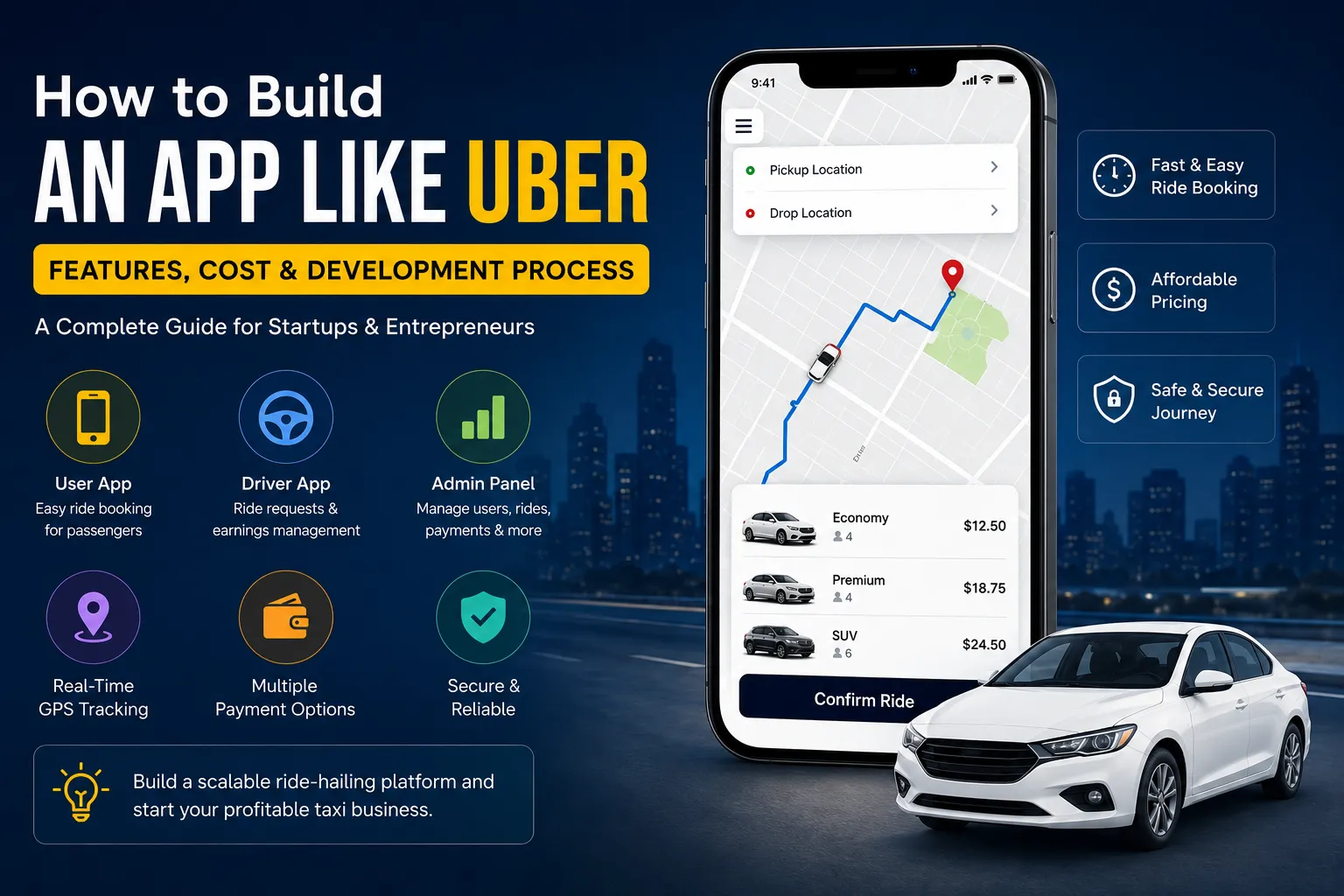

How to Build an App Like Uber in 2026: Features, Cost & Development Process
The ride-hailing industry continues to thrive in 2026, driven by growing urbanization, smartphone adoption, and consumer demand for convenient transportation. Companies like Uber have transformed the way people travel, creating opportunities for startups and entrepreneurs to launch their own ride-booking platforms.
If you're planning to build an app like Uber, understanding the development process, essential features, and expected costs is crucial. This guide will help you navigate everything you need to know before investing in an Uber-like application.
Why Build an App Like Uber?
The global ride-hailing market is expected to continue growing as users increasingly prefer on-demand transportation over traditional taxi services. An Uber-like app offers several business advantages:
- Recurring revenue opportunities
- Scalable business model
- Growing demand for digital transportation services
- Opportunities for local and niche transportation solutions
- Potential expansion into delivery and logistics services
Whether you're targeting a city, region, or specific customer segment, a ride-hailing platform can provide long-term growth opportunities.
Understanding the Uber Business Model
Before starting development, it's important to understand how Uber operates.
The platform connects three primary stakeholders:
Riders
Passengers who use the app to book rides.
Drivers
Service providers who accept ride requests and complete trips.
Admin
The platform owner who manages users, drivers, payments, commissions, and overall operations.
The business typically earns revenue through:
- Commission on completed rides
- Surge pricing
- Subscription programs
- Advertising opportunities
- Premium ride categories
This model creates a scalable ecosystem that benefits both drivers and riders.
Essential Features of an Uber-Like App
A successful ride-hailing platform requires three main modules.
Rider App Features
User Registration
Simple sign-up using email, phone number, or social accounts.
Ride Booking
Users can enter pickup and drop-off locations and request rides instantly.
Fare Estimation
Passengers receive estimated pricing before confirming a trip.
Live GPS Tracking
Real-time driver tracking improves transparency and user confidence.
Multiple Payment Methods
Support for cards, digital wallets, UPI, and cash payments.
Ride History
Users can view previous trips and payment records.
Ratings and Reviews
Passengers can rate drivers and provide feedback.
Push Notifications
Updates for ride confirmations, driver arrivals, and payment receipts.
Driver App Features
Driver Registration
Drivers can create profiles and upload required documents.
Ride Request Management
Accept or decline ride requests based on availability.
Navigation Integration
Built-in navigation helps drivers follow optimized routes.
Earnings Dashboard
Track daily, weekly, and monthly earnings.
Availability Controls
Drivers can switch between online and offline status.
Trip History
Access detailed records of completed rides.
Admin Panel Features
The admin dashboard serves as the control center for the entire platform.
Key functions include:
- User management
- Driver verification
- Ride monitoring
- Commission management
- Payment tracking
- Customer support management
- Business analytics
- Promo code creation
A powerful admin panel helps streamline operations and improve decision-making.
Advanced Features for 2026
To stay competitive, many startups are integrating advanced capabilities into their Uber-like apps.
AI-Based Route Optimization
Artificial intelligence helps reduce travel time and improve route efficiency.
Dynamic Pricing
Automatically adjusts fares based on demand and availability.
In-App Wallet
Allows users and drivers to manage funds directly within the platform.
Multi-Language Support
Essential for businesses targeting diverse regions and international markets.
Ride Scheduling
Passengers can book rides in advance.
Corporate Accounts
Businesses can manage employee transportation through dedicated accounts.
Safety Features
- Emergency SOS button
- Ride sharing with family
- Driver verification systems
- Trip monitoring
These features improve user trust and platform reliability.
Step-by-Step Process to Build an App Like Uber
Step 1: Conduct Market Research
Analyze your target audience and competitors.
Questions to answer:
- Which region are you targeting?
- What transportation challenges exist?
- Who are your competitors?
- What unique value will your platform offer?
Research helps validate your business idea before investing in development.
Step 2: Define Your Business Requirements
Outline:
- Target audience
- Revenue model
- Core features
- Service area
- Launch strategy
Clear requirements reduce development delays and budget overruns.
Step 3: Design the User Experience
A simple and intuitive design is critical.
Focus on:
- Easy ride booking
- Fast navigation
- Clear pricing information
- Minimal user friction
Good design directly impacts user retention.
Step 4: Choose the Right Technology Stack
A reliable technology stack ensures scalability and performance.
Frontend
- Flutter
- React Native
Backend
- Node.js
- Laravel
- Django
Database
- PostgreSQL
- MongoDB
APIs
- Google Maps
- Mapbox
- Twilio
- Stripe
Cloud Infrastructure
- AWS
- Google Cloud
- Microsoft Azure
Step 5: Build an MVP
Instead of launching with every possible feature, develop a Minimum Viable Product (MVP).
An MVP typically includes:
- Rider app
- Driver app
- Admin dashboard
- GPS tracking
- Payments
- Notifications
Launching an MVP helps validate your concept while minimizing initial investment.
Step 6: Testing and Quality Assurance
Before launch, thoroughly test:
- App performance
- GPS accuracy
- Payment processing
- User experience
- Security vulnerabilities
Reliable testing reduces post-launch issues.
Step 7: Launch and Scale
After deployment:
- Gather user feedback
- Monitor performance metrics
- Improve features continuously
- Expand into additional markets
Successful ride-hailing businesses evolve based on real user behavior.
How Much Does It Cost to Build an App Like Uber?
Development costs vary based on complexity and customization.
Basic MVP
Estimated Cost: $10,000 – $30,000
Includes essential ride-booking functionality.
Mid-Level Application
Estimated Cost: $30,000 – $70,000
Includes advanced reporting, wallets, promotions, and enhanced UI.
Enterprise-Level Solution
Estimated Cost: $70,000 – $150,000+
Suitable for large-scale operations with extensive customization and multi-city support.
Common Challenges During Development
Building a ride-hailing platform comes with challenges such as:
- Driver acquisition
- Regulatory compliance
- GPS accuracy
- Payment security
- User retention
- Real-time scalability
Addressing these challenges early can significantly improve long-term success.
Conclusion
Building an app like Uber in 2026 is no longer limited to large technology companies. With the right business strategy, feature set, and development approach, startups can successfully enter the ride-hailing market and create scalable transportation platforms.
The key is to start with a solid MVP, focus on solving real customer problems, and continuously improve the platform based on user feedback. Whether you're targeting local taxi services, corporate transportation, or regional ride-sharing opportunities, an Uber-like app can provide a strong foundation for long-term business growth.
Frequently Asked Questions (FAQs)
1. How much does it cost to build an app like Uber?
The cost typically ranges from $10,000 to $150,000+, depending on features, customization, and project complexity.
2. How long does Uber app development take?
A basic MVP can take 2–4 months, while a fully customized platform may require 6–12 months.
3. What technologies are used to build an Uber-like app?
Popular technologies include Flutter, React Native, Node.js, Django, PostgreSQL, AWS, and Google Maps APIs.
4. Can startups build an Uber-like app?
Yes. Many startups begin with an MVP and gradually add features as the business grows.
5. What are the most important features of a ride-hailing app?
Ride booking, GPS tracking, payment integration, driver management, notifications, and an admin dashboard are considered essential.






























Sign in to leave a comment.