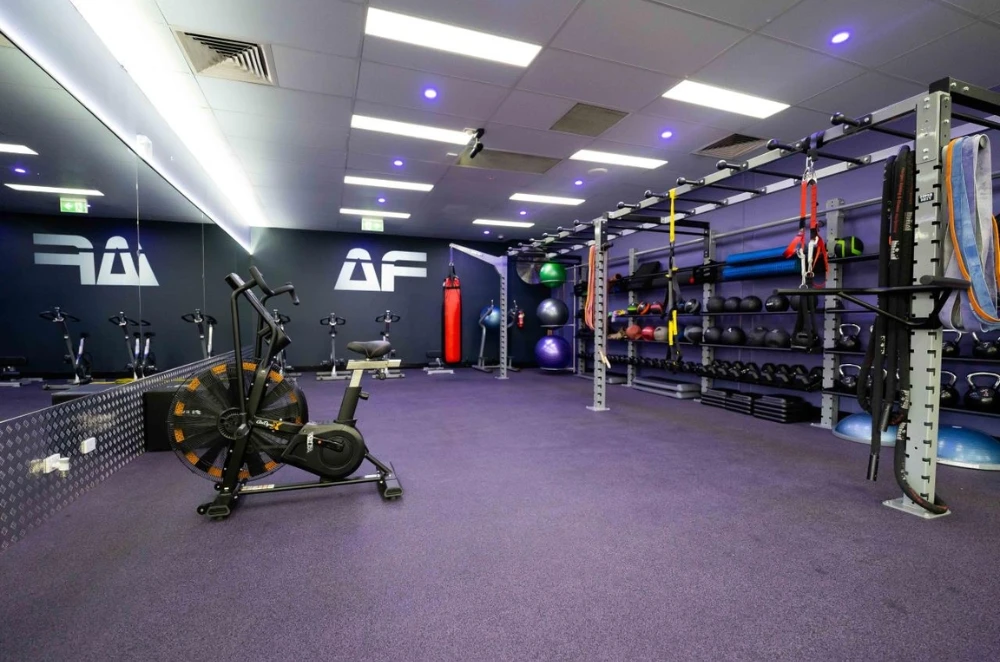

Finding a “24-hour gym near me” is easy.
Finding one you’ll still be using three months from now is the hard part.
A 24/7 schedule is only valuable if it removes the friction that normally knocks routines off track.
The goal isn’t to join the most impressive gym—it’s to join the one that fits your life so well that turning up becomes the default.
This guide breaks down the practical decision factors that matter most, the common mistakes people make when choosing a gym, and a simple 7–14 day plan to pressure-test your choice before you lock it in.
When “24-hour” is a game-changer (and when it isn’t)
A true 24-hour gym shines when life isn’t predictable.
If you work shifts, juggle kids’ schedules, travel for work, or simply function better outside peak times, access matters more than motivation.
But “24-hour” isn’t a magic ingredient on its own.
If the gym is out of the way, feels uncomfortable to enter, or makes you second-guess safety after dark, the extra hours won’t save your routine.
Think of 24/7 access as an enabler, not the reason.
The reason should be: “This makes consistency easier than inconsistency.”
Decision factors that predict whether you’ll keep going
Most people quit a gym because the day-to-day experience is slightly harder than it needs to be.
Use these factors to identify a gym you’ll actually use, not just admire from a distance.
1) Location friction: travel time beats intention
The most important “equipment” is the distance between you and the front door.
A gym that’s 7 minutes away will beat a gym that’s 20 minutes away, even if the second one is objectively nicer.
Check the route at the exact time you’d train.
Peak-hour traffic, school zones, and parking can turn a “quick trip” into a deal-breaker.
If you’re based around Langwarrin, this is the difference between a routine that survives a busy week and one that silently fades out.
If convenience is the make-or-break factor, pull up Anytime Fitness location details and check the real travel time from home and work at the hours you’d realistically train.
2) Access and entry: can you get in without hassle?
A 24-hour gym is only useful if access is genuinely smooth.
Ask how entry works after staffed hours, whether there are busy bottlenecks at the door, and what the lighting is like around the entrance.
You’re not being “overly cautious” by noticing these things.
Anything that creates hesitation at 5:30am or 9:30pm will slowly erode consistency.
3) Cleanliness, maintenance, and “normal” standards
People often focus on fancy features and ignore the basics.
But if a gym struggles with wiping stations, broken attachments, or constantly “out of order” cardio, your sessions become a sequence of small annoyances.
Look for evidence of routines, not promises.
Are surfaces clean, bins not overflowing, bathrooms usable, and equipment stable rather than wobbly?
4) Layout and capacity: does it work at your likely training time?
A gym can be well-equipped and still be frustrating if the layout creates queues.
If all the free weights are in one corner, or the only squat racks are the most popular area, peak times will feel chaotic.
Visit during the times you’d realistically go.
A quiet midday walkthrough tells you almost nothing about the 6–8am rush or the post-dinner peak.
5) The “comfort factor”: will you feel like you belong?
This is the factor people dismiss—and then it becomes the reason they stop showing up.
If you feel judged, lost, or out of place, your brain will find reasons to skip.
A good gym makes it easy to be a beginner, a returner, or a “just trying to stay consistent” person.
That usually shows up in simple things: clear signage, approachable staff during staffed hours, and a culture where people are focused on their own training.
6) Support and onboarding: can you get started without confusion?
A gym can be accessible 24/7 and still be hard to start in.
If the only option is to “figure it out,” you’ll waste your first two weeks feeling unsure.
Look for an onboarding path that matches your confidence level.
Even one short orientation or a basic plan can be the difference between “this is my place” and “I don’t know what I’m doing.”
7) Safety after hours: practical, not paranoid
After-hours training is common in Australia, and plenty of people love the quieter vibe.
Still, it’s worth checking the basics: lighting, entry visibility, camera presence, and how secure the car park feels.
Pick times that make you feel confident, not edgy.
The best routine is the one you can repeat without needing a pep talk first.
Common mistakes people make when choosing a gym
Most gym regret comes from predictable traps.
Avoid these and you’ll save money, time, and the mental load of “starting again.”
Mistake 1: Choosing the gym you wish you used, not the one you will use.
If you’re not currently training, a complex gym an extra suburb away won’t become your new personality overnight.
Mistake 2: Falling for features you won’t use.
A sauna, fancy studio space, or a long list of classes can be great—if you’ll actually attend them.
Mistake 3: Joining on a “big motivation day.”
Motivation is highest on sign-up day and lowest on week three when you’re tired and busy.
Mistake 4: Only visiting once, at the wrong time.
A calm 11am visit won’t reveal the evening crowd, the morning rush, or the equipment pinch points.
Mistake 5: Ignoring the first awkward fortnight.
Most people feel a bit uncertain at first; planning for that phase keeps you from quitting during it.
Operator Experience Moment
After years of watching how routines succeed or fail, the pattern is unglamorous: friction wins.
People don’t drop off because they “lack discipline”; they drop off because the gym stops fitting the week they’re actually having.
When access is easy, the layout is predictable, and you can start a session without negotiating for equipment, attendance becomes automatic.
Practical Opinions (exactly 3 lines)
Convenience beats willpower most weeks.
Choose the gym that makes “just show up” feel simple.
If you’re unsure, test the peak times before you commit.
A simple 7–14 day plan to test your gym choice
You don’t need a perfect program yet.
You need a short test that shows whether the gym fits your life in practice.
Days 1–3: Do two “micro visits”
Keep it easy: 20–30 minutes max.
The point is to learn the entry routine, layout, and comfort level without pressure.
- Visit once at your most likely training time (morning or evening).
- Visit once at your second-most likely time (late night, midday, or weekend).
- Note: parking, entry, lighting, and how easy it was to start.
Days 4–7: Run a repeatable “baseline session” twice
Pick a simple, repeatable workout that touches the basics:
- 5–10 minutes easy cardio warm-up
- 3 strength movements (e.g., leg press or squat pattern, a row, a press)
- 5–10 minutes cool-down
Do the same session twice.
If repeating feels smooth, the gym is probably a good fit.
Days 8–14: Stress-test consistency, not intensity
Now test what will actually happen in real life:
- One day you’re tired
- One day you’re busy
- One day you can’t train at your preferred time
Can you still make it work without it becoming a drama?
If yes, you’re not just choosing a gym—you’re choosing a routine that survives normal weeks.
Local SMB mini-walkthrough (Australia)
A Langwarrin small business owner finishes late and can’t rely on staffed hours.
They pick two realistic training windows: 5:30am and 8:30pm.
They trial the route both ways to see what traffic and parking look like.
They check the entry and lighting after dark, then do a 25-minute “baseline session” twice.
They keep workouts simple: three strength moves and a short cardio finish.
After two weeks, they decide based on consistency, not vibes.
Decision checkpoints before you sign anything
Treat this like a short decision checklist.
If you can’t answer these confidently, delay the commitment and do one more visit.
- Can I get here in under 15 minutes from where I spend most weekdays?
- Do I feel comfortable entering and leaving at my likely times?
- Is the equipment I’ll use available when I’ll use it?
- Is there a straightforward way to start if I’m rusty or new?
- Can I picture myself doing a short session even on a rough day?
If the answers are mostly “yes,” you’re in a good position.
If they’re “maybe,” you’re buying uncertainty—and uncertainty is expensive.
Key Takeaways
- A 24-hour gym helps most when it removes scheduling friction, not when it just sounds convenient.
- Prioritise travel time, entry ease, and peak-time capacity over fancy extras.
- Visit at the hours you’ll actually train; one off-peak tour can be misleading.
- Use a 7–14 day test plan to see if the gym fits real life, not a perfect week.
Common questions we get from Aussie business owners
Is a 24-hour gym worth it if I only train 2–3 times a week?
In most cases it is, if access reduces the “I’ll go tomorrow” problem.
A practical next step is to choose two consistent weekly time slots and test whether those times stay realistic through busy weeks, especially around school runs or late finishes common in Australian suburbs.
What should I look for if I’ll train after hours?
Usually the basics matter most: entry lighting, the feel of the car park, and how easily you can start your session without confusion.
A next step is to do one visit at your latest likely time and walk the full path—car to door to training area—so you can judge comfort in the real conditions.
I’m returning after a long break—how do I avoid overdoing it?
It depends on your starting point and any prior injuries, but most people do best with a simple baseline session and a “leave a bit in the tank” mindset.
A next step is to pick three basic movements and repeat them twice in week one, keeping effort moderate; in Australia, this is especially helpful when summer heat or long workdays can make recovery feel harder.
How can I tell if a gym will be too crowded at the times I can train?
Usually you can’t tell from photos or a midday walkthrough.
A next step is to visit twice at your actual training windows and note whether you can access the equipment you’d rely on (like racks, benches, and cables), because peak-hour patterns vary a lot by suburb and commuter flow.



























Sign in to leave a comment.