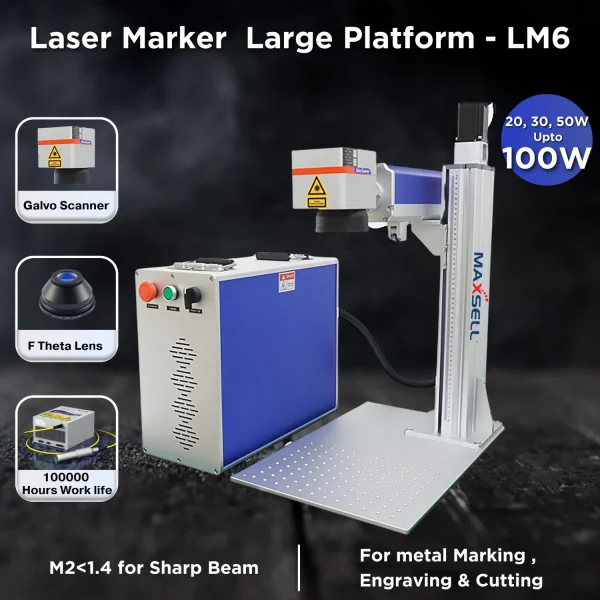
In modern manufacturing and quality control environments, a fiber laser marking machine has become essential for businesses that need fast, accurate, and permanent marking solutions. Whether you’re marking serial numbers, barcodes, logos, expiry dates, or unique identifiers, choosing the right high-speed fiber laser marking machine can significantly impact productivity and product quality. Below are key considerations to help you make an informed decision.
1. Understand Your Application Needs
Before selecting a fiber laser marking machine, clearly define what materials and products you will be marking. Fiber lasers are especially effective on metals like stainless steel, aluminium, brass, copper, titanium, and other reflective surfaces. They also work well on certain plastics — but knowing your materials upfront ensures you choose a machine with the right power and features. High-speed marking makes a big difference in industrial environments where production runs are large and turnaround time matters.
2. Look at Marking Speed and Precision
Speed isn’t just about how fast the machine can run; it’s about how quickly the machine can produce clear, readable marks without compromising quality. A good high-speed fiber laser marking machine delivers crisp, high-contrast, and permanent marks even at faster marking speeds. This is crucial for products requiring traceability codes, barcodes, and fine text. Quality machines — like the ones featured on Maxsell’s product page — can achieve marking speeds suitable for high-volume industrial needs.
3. Evaluate Laser Power and Beam Quality
Laser power determines how deep and clear your marks will be, and beam quality affects precision. Machines with higher power options (for example, 20W up to 100W) and superior beam stability allow for more consistent results across a range of materials and thicknesses. High beam quality also enables intricate detailing and finer marks without overheating or damaging the surface of your product.
4. Consider Software and Control Features
The usability of the software that comes with the fiber laser marking machine is an important factor. A user-friendly interface with industrial functions — as seen in Maxsell’s models — helps operators quickly set up jobs, adjust parameters, and integrate with existing production workflows. Look for software that supports multiple file formats, offers easy positioning tools, and can handle batch processing efficiently.
5. Durability and Maintenance Requirements
A reliable fiber laser marking machine should be built to withstand daily industrial use. Components such as a sturdy housing, effective cooling system, and minimal moving parts contribute to long life and less downtime. Additionally, machines with a solid-state design, like most fiber lasers, tend to require less maintenance compared to traditional marking systems, saving operating costs over time.
6. Safety Features
Safety should never be overlooked. Fiber lasers emit powerful beams, so machines with protective housing, emergency stop buttons, and proper labeling help ensure operator safety. Some systems also include fume extraction or protective enclosures to minimize exposure to dust and particles during marking.
7. Compatibility with Automation
If your production setup involves conveyors, robotic arms, or automated lines, ensure the fiber laser marking machine can integrate with these systems. Features like PLC support, standard communication interfaces, and compatibility with automated feeders can make a big difference in achieving seamless operations. This is especially valuable in high-speed manufacturing environments, where integration enhances consistency and reduces manual handling.
8. After-Sales Support and Warranty
Reliable technical support and a good warranty program are essential in minimizing downtime. As highlighted on Maxsell’s website, comprehensive after-sales service, lifetime online support, and access to OEM spare parts ensure that the machine continues to perform optimally. This support can be a deciding factor, especially for businesses that rely on consistent production flow.
9. Understand Total Cost of Ownership
While price matters, it’s also important to consider long-term costs. A lower purchase price may mean higher maintenance, more downtime, or lower reliability. Evaluate costs associated with power consumption, maintenance, spare parts, and expected lifespan to determine the true value of your investment.
Conclusion
Selecting the right high-speed fiber laser marking machine involves balancing performance, durability, ease of use, and support. By understanding your marking needs and evaluating features like speed, power, software, safety, and maintenance, you can choose a machine that enhances productivity and ensures high-quality, permanent marks. For professional laser marking machines built to deliver consistent, high-speed performance, explore options like those offered by Maxsell, tailored to industrial and commercial needs.


























Sign in to leave a comment.