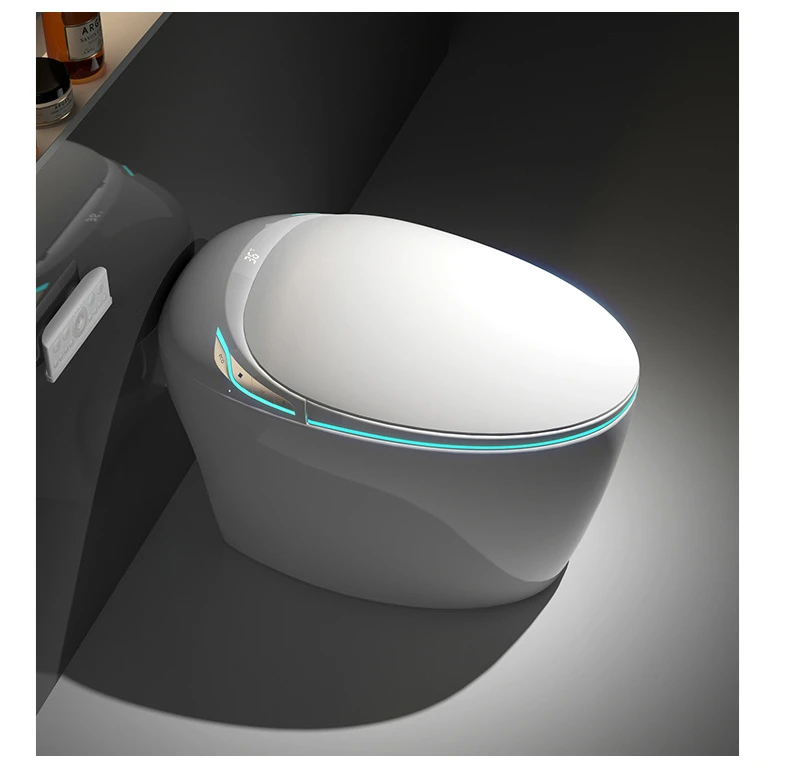

When selecting a smart toilet, it is important to consider two main aspects.
If you want to explore different models, you can view our full collection of smart toilets.
Home Considerations
Material and enamel: The quality of the sanitary material and glazing treatment are essential for durability.
Flushing capacity: The toilet's ability to flush effectively also varies between different smart toilet models.
Considerations Regarding Household Appliances
Smart features and convenience include:
- Automatic lid opening and closing
- Seat sensors
- Temperature control
- Bidet functions
To compare these features across various models, check our smart toilet collection.
Should You Choose Instant Heating or Storage Heating?
Answer: Always opt for a smart toilet with instant heating.
Instant heating provides:
- Fresh water heated on demand
- Consistent temperature
- Higher hygiene standards
Storage heating uses standing water, which may cause temperature drops and bacterial growth.
Instant Heating vs. Storage Heating Explained
Instantaneous heating directly warms the water as it flows, ensuring:
- Water never falls below 30°C on contact
- Temperature reaches 35°C within 3 seconds
- Stable 35–42°C cleaning temperature
Storage heating may fluctuate by up to 5°C and uses a tank of stored water.
Water Pressure Problems With Smart Toilets
The phrase built-in water tank + booster pump refers to the flushing function, not heating.
Smart toilets without built-in tanks require strong water pressure.
Modern smart toilets with built-in tanks are more flexible and recommended, especially when paired with a booster pump.
Are There Quieter Smart Bathrooms?
Systems with built-in tanks and booster pumps may produce noise.
Some manufacturers, like Ortonbaths, have developed water-in-water technology to greatly reduce noise.
Smart Toilet Seat Sensor Issues (Especially for Children)
Some sensors require side contact and may not respond to children.
Brands like KEORH use gravity sensors that activate with just 15 kg of pressure. This ensures safe and reliable use.
Types of Sensors for Smart Toilet Lids and Seats
Smart toilets use:
In-body sensors
- Infrared
- Capacitive
- Laser
- Microwave
External sensors
- Remote control
- App control
- Voice control
- Wave sensors
Laser and capacitive sensors offer the most reliable and consistent performance.
Foam Protection in Smart Toilets
Foam technology provides:
- Improved odor sealing
- Splash prevention
- Cleaner bowl walls
Some advanced smart toilets feature rotating spray nozzles that evenly coat the bowl with foam. Others mix foam with flush water for deeper cleaning.
Are Smart Toilets Waterproof?
Most smart toilets meet the IPX4 waterproof standard, required by national regulations. This ensures protection from water splashes.
Deodorizing and Sterilizing Functions
Deodorizing:
- Activated charcoal
- Diatomaceous earth
- Photocatalytic deodorization
- Water-based deodorization
Sterilization:
- Electrolyzed water
- Plasma
- Ultraviolet (UV-C)
Each method varies in effectiveness, so review product details when selecting a smart toilet.
Is Smart Toilet Cleaning Water Safe for Women?
Yes. Safety measures include:
1. External Water Filtration
Removes:
- Dirt
- Iron particles
- Insect eggs
- Algae or larvae
2. Dual Water Path Design
Separates cleaning water from flushing water.
3. Internal Sterilization
Uses UVC or electrolysis to purify water before it reaches the spray nozzle.
Some advanced models support external water containers for feminine care solutions for sensitive users.



























Sign in to leave a comment.