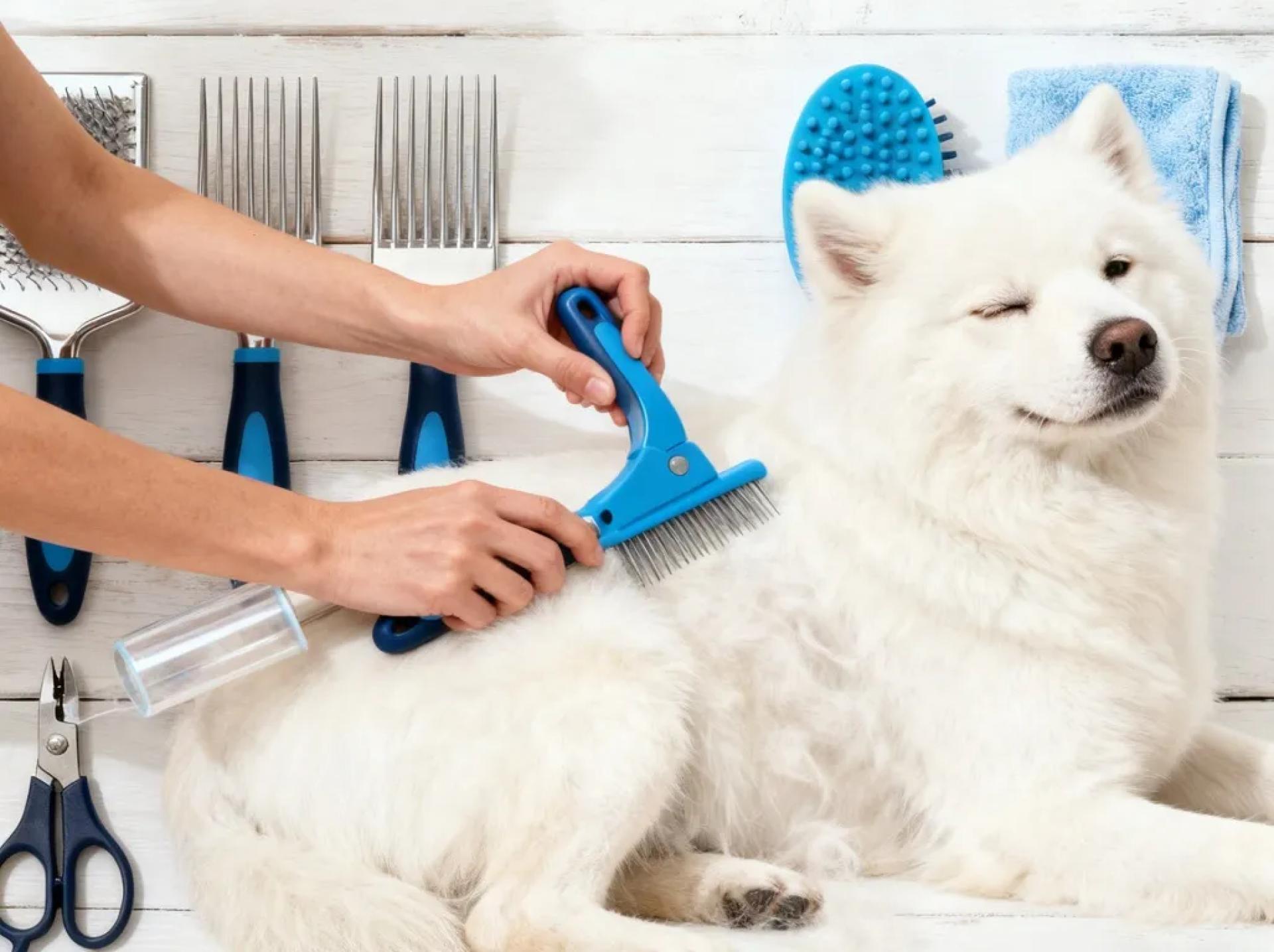

Keeping your dog well-groomed is about more than just appearances. Regular grooming promotes healthy skin and coat, prevents matting, reduces shedding, and gives you the opportunity to check for lumps, parasites, or skin issues. While professional groomers offer excellent services, many pet owners prefer to handle grooming at home. The key to successful home grooming lies in selecting the right tools for your dog's specific needs.
This guide will walk you through everything you need to know about choosing essential dog grooming tools, with special attention to scissors and grinders—two items that can make or break your grooming routine.
Understanding Your Dog's Grooming Needs
Before purchasing any grooming tools, take time to assess your dog's individual requirements. Several factors influence which tools will work best.
Coat type is perhaps the most important consideration. Dogs with long, flowing coats like Shih Tzus or Yorkshire Terriers require different tools than short-haired breeds like Beagles or Boxers. Double-coated breeds such as Huskies and Golden Retrievers present their own unique challenges, often requiring specialized undercoat rakes and deshedding tools.
Size matters as well. A Great Dane's nails demand sturdier clippers than those suitable for a Chihuahua. Similarly, the scissors you use on a Standard Poodle should differ from those designed for toy breeds.
Temperament plays a role too. Anxious dogs may respond better to quieter tools, while patient pups might tolerate more powerful equipment without issue.
Dog Grooming Scissors: Types and Selection Criteria
Grooming scissors are fundamental tools that allow for precise trimming and shaping. However, not all dog grooming scissors are created equal, and understanding the different types will help you make informed choices.
Types of Grooming Scissors
Straight dog grooming scissors are the workhorses of dog grooming. They feature two straight blades and are ideal for general trimming, cutting through thick fur, and creating clean lines. Most groomers recommend straight scissors ranging from 6.5 to 8 inches for medium to large dogs, while 4 to 6-inch scissors work better for small breeds and detail work.
Curved Dog grooming scissors have gently arched blades that follow the natural contours of a dog's body. They excel at shaping rounded areas like the head, hips, and feet. The curve allows groomers to create smooth, flowing lines without the choppy appearance that straight scissors might produce in these areas.
Thinning scissors, also called blending shears, have one serrated blade and one straight blade. They remove bulk without creating harsh lines, making them perfect for blending different coat lengths and softening edges. Thinning scissors come with varying tooth counts—fewer teeth remove more hair with each cut, while more teeth create subtler results.
Chunking scissors are similar to thinning shears but have wider-spaced teeth. They remove larger amounts of fur quickly and are useful for dogs with extremely thick coats that need significant bulk reduction.
What to Look for When Buying Grooming Scissors
Material quality directly impacts performance and longevity. Japanese stainless steel and German steel are considered premium materials, offering exceptional sharpness and durability. Cobalt steel scissors hold their edge longer than standard stainless steel, though they come at a higher price point. Avoid cheap scissors made from inferior metals—they dull quickly, pull hair instead of cutting cleanly, and can cause discomfort for your dog.
Blade sharpness should be assessed before purchase if possible. Quality scissors should cut smoothly through paper without snagging. Convex blades, ground to a razor-sharp edge, provide the smoothest cuts but require more careful handling and professional sharpening. Beveled blades are more forgiving and easier to maintain at home.
Handle comfort matters more than many people realize. Grooming sessions can last 30 minutes to several hours, and uncomfortable handles lead to hand fatigue and cramping. Look for ergonomic designs with offset handles that reduce strain on your thumb and wrist. Some scissors feature cushioned finger rings or adjustable tension screws for customized comfort.
Size appropriateness depends on your hand size and your dog's size. Scissors that are too large become unwieldy and increase the risk of accidents. Those that are too small require excessive hand movements, leading to fatigue and inconsistent results.
Dog Grooming Grinders: A Modern Alternative to Clippers
Nail grinders have revolutionized at-home nail care for dogs. These rotary tools use a spinning abrasive surface to gradually file down nails rather than cutting them. Many dogs and owners prefer grinders over traditional clippers for several reasons.
Benefits of Nail Grinders
Grinders eliminate the risk of cutting into the quick—the sensitive blood vessel inside the nail—because they work gradually. This makes them particularly valuable for dogs with dark nails where the quick is invisible. They also leave nails smooth and rounded rather than sharp-edged, reducing scratches on floors, furniture, and human skin.
Choosing the Right Nail Grinder
Power and speed options vary significantly between models. Variable speed grinders offer more control, allowing you to start slowly with nervous dogs and increase speed for efficient grinding on calm pets. Look for grinders with at least two speed settings. Higher RPM (rotations per minute) grinders work faster but generate more noise and vibration.
Noise level is crucial for noise-sensitive dogs. Some grinders operate nearly silently, while others produce sounds that can frighten anxious pets. If your dog is skittish, prioritize quiet operation even if it means sacrificing some power.
Battery versus corded models each have advantages. Cordless grinders offer freedom of movement and eliminate the risk of your dog getting tangled in cords. However, they require regular charging and may lose power during long sessions. Corded grinders provide consistent power but limit mobility.
Guard attachments help prevent over-grinding and protect the fur around nails from getting caught in the rotating mechanism. Many quality grinders include multiple guard sizes for different nail sizes.
Grit options affect how quickly material is removed. Coarse grits work faster but may feel more abrasive to sensitive dogs. Fine grits take longer but provide smoother finishes and gentler experiences.
Additional Essential Grooming Tools
While scissors and grinders are important, a complete grooming kit includes several other tools.
Brushes and combs form the foundation of coat care. Slicker brushes work well for removing tangles and loose fur from most coat types. Pin brushes are gentler and suited for longer coats. Bristle brushes distribute natural oils and add shine. Metal combs help detect and work through mats that brushes miss.
Deshedding tools are essential for double-coated breeds. These specialized tools reach through the topcoat to remove loose undercoat fur, significantly reducing shedding around the home.
Nail clippers remain useful even if you primarily use a grinder. Guillotine-style clippers work well for small to medium dogs, while plier-style clippers provide more leverage for large breeds with thick nails.
Ear cleaning supplies including gentle cleansing solutions and cotton balls help prevent ear infections, especially in floppy-eared breeds.
Tips for Successful Tool Selection
Start with quality basics rather than buying every tool at once. A good brush, quality scissors, and a reliable nail grinder or clipper will handle most grooming needs. Expand your collection as you identify specific requirements.
Read reviews from other pet owners, particularly those with similar breeds. Their experiences offer valuable insights into how tools perform in real-world conditions.
Consider your own comfort and skill level. Professional-grade tools offer superior performance but often require more expertise to use safely. Beginner-friendly options may sacrifice some precision for ease of use.
Invest in maintenance supplies like scissor oil and grinder replacement bands. Well-maintained tools perform better and last longer, making them more economical over time.
Conclusion
Choosing the right dog grooming tools requires careful consideration of your dog's breed, coat type, size, and temperament, as well as your own skill level and comfort. Quality grooming scissors—including straight, curved, and thinning varieties—enable precise trimming and shaping when selected appropriately for the task at hand. Nail grinders offer a safe, effective alternative to traditional clippers, particularly for owners concerned about cutting into the quick.
By investing in appropriate, high-quality tools and learning to use them properly, you can maintain your dog's health and appearance while strengthening the bond between you. Remember that grooming should be a positive experience for both you and your pet—the right tools make that goal achievable.






















Sign in to leave a comment.