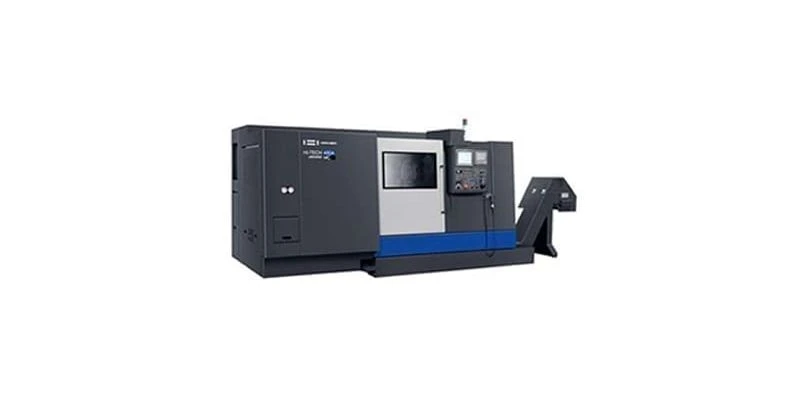
Choosing the right CNC lathe is a critical investment decision for any Australian workshop. The right machine can improve productivity, accuracy, and profitability — while the wrong choice can limit growth and increase operating costs.
What Is a CNC Lathe?
A CNC lathe is a computer-controlled machine tool used for turning, facing, threading, drilling, and boring operations. Unlike manual lathes, CNC lathes offer consistent precision, faster cycle times, and repeatable results — making them ideal for modern manufacturing environments.
CNC lathes are widely used across Australia in industries such as metal fabrication, automotive, mining, agriculture, aerospace, and general engineering.
Key Factors to Consider When Choosing a CNC Lathe
1. Type of Work You Produce
Start by evaluating what parts you manufacture most often:
- Small, high-precision components
- Medium to large shafts or components
- High-volume production runs
- One-off or custom jobs
Your typical workpieces will determine the size, capacity, and configuration of the CNC lathe you need.
2. CNC Lathe Bed Type: Flat Bed vs Slant Bed
Flat Bed CNC Lathes
- Ideal for larger and heavier workpieces
- Simple, robust design
- Cost-effective for general turning applications
Slant Bed CNC Lathes
- Better chip evacuation
- Faster cycle times
- Easier operator access and automation compatibility
Slant bed CNC lathes are often preferred for high-productivity and precision machining.
3. Swing, Turning Length & Capacity
Key capacity specifications to consider include:
- Maximum swing over bed
- Maximum turning diameter
- Maximum turning length
Always allow extra capacity for future jobs — undersizing a machine can quickly become a limitation.
4. Spindle Power & Speed
Spindle performance directly affects cutting capability and surface finish.
Consider:
- Spindle motor power (kW)
- Maximum spindle speed (RPM)
- Through-spindle bore size
Higher spindle power is essential for heavy cutting and tougher materials, while higher RPM is ideal for precision and small-diameter work.
5. Tooling, Turret & Live Tooling Options
Modern CNC lathes can be equipped with:
- Standard turning turrets
- Live tooling for milling and drilling
- Y-axis functionality for complex parts
Live tooling and Y-axis capability allow more operations in one setup, reducing cycle time and improving accuracy.
6. Automation & Bar Feeding
If productivity is a priority, consider automation options such as:
- Bar feeders
- Parts catchers
- Robotic loading systems
Automation is especially valuable for high-volume production and lights-out machining.
7. CNC Control System
A reliable CNC control improves ease of use and production efficiency. Look for:
- Intuitive operator interface
- Strong program editing capabilities
- Compatibility with CAM software
- Remote diagnostics and support
A familiar control system can reduce training time and operator errors.
Why Buy a CNC Lathe from Applied Machinery?
Buying a CNC lathe is about more than just the machine — it’s about long-term support. Applied Machinery provides:
- Australia-wide sales and service support
- Professional installation and commissioning
- Operator training and technical assistance.
We help you choose the right CNC lathe for your workshop, not just the most expensive one.




























Sign in to leave a comment.