

A data breach program should begin long before a crisis email lands in the CEO inbox. That is the thesis, and recent evidence supports it. IBM’s annual Cost of a Data Breach Report has repeatedly shown that the organizations that detect and contain incidents faster tend to lose less money, suffer less operational disruption, and recover trust sooner. The lesson is plain: breach response is not only an emergency function; it is an operating model. If you are just getting started, the most useful mindset is neither panic nor perfectionism. It is disciplined preparation.
What actually catches many teams off guard is not the first alert from an endpoint tool or the first suspicious login from a cloud console. It is the second-order chaos: nobody knows who owns legal review, the security team cannot confirm what data was exposed, backups have not been tested in months, and customer communications are drafted under pressure. That pattern has appeared across public postmortems, regulator findings, and conference talks for years. A modern starter plan therefore has two equal halves: response, meaning what you do when something goes wrong, and prevention, meaning the controls and habits that reduce the chance and impact of failure.
If you want a broader baseline before building your own program, WriteUpCafe’s Comprehensive Guide to Data Breach Response and Prevention in Cybersecurity and What You Need to Know About Data Breach Response are useful companion reads. This guide goes a step further. It is focused on how a team with limited maturity can start, sequence the work, and avoid the mistakes that make breaches worse.
Start with a realistic threat picture, not a generic checklist
Many first-time security programs fail because they begin with a long compliance spreadsheet rather than a threat model. A startup handling customer email addresses, billing data, and support tickets does not face the same breach pathways as a hospital, a SaaS company with privileged cloud access, or a retailer with point-of-sale systems. Before buying tools or writing a runbook, identify what data matters most, where it lives, who can access it, and what would happen if it were stolen, encrypted, altered, or publicly leaked.
Verizon’s Data Breach Investigations Report has consistently shown that a relatively small set of patterns drives a large share of real-world incidents: stolen credentials, phishing, exploitation of vulnerabilities, misuse of privilege, and third-party compromise. That matters because it keeps the starting point practical. You do not need to model every possible attack path on day one. You need to understand the few that are most plausible for your environment. If your company relies heavily on Microsoft 365, Google Workspace, AWS, GitHub, Slack, and a handful of SaaS platforms, then identity security, token protection, misconfiguration review, and logging coverage are likely more urgent than exotic nation-state scenarios.
A short scoping exercise should answer four questions. Which systems hold regulated or sensitive data? Which business processes would stop if those systems became unavailable? Which identities have the power to extract or destroy data? Which vendors could become an indirect breach route? The answers will shape both prevention priorities and response playbooks. This is also where many teams discover that they do not have a current asset inventory, a clean data map, or a list of critical third parties. That is not a reason to pause. It is reason to document the gap and treat it as part of the breach program.
The first serious improvement in breach readiness often comes from knowing what you are protecting and who can touch it, not from buying another dashboard.
For teams building a more structured roadmap, Data Breach Response and Prevention Guide for Modern Teams frames the organizational side well. The point is simple: a breach is rarely only a technical event. It is a business interruption, a legal issue, a trust problem, and sometimes a board-level crisis.
Build the minimum viable incident response plan first
If prevention reduces risk, response determines whether a bad day becomes a catastrophe. A starter incident response plan does not need to be a 60-page binder. It does need clear ownership, decision rights, and tested actions. The most important early choice is to define who leads the incident. In some companies that is the CISO or head of security; in smaller teams it may be an infrastructure lead or engineering manager. What matters is that the role is explicit and supported by legal, IT, communications, HR, and executive leadership.
Your first plan should cover the classic phases: preparation, identification, containment, eradication, recovery, and lessons learned. But the useful detail sits underneath those headings. What log sources will you check first? Who can disable compromised accounts after hours? How do you preserve evidence without contaminating it? When does legal privilege apply? Which regulator or customer notification clocks might start once a breach is confirmed? Different jurisdictions impose different deadlines, and privacy counsel should be involved early if personal data is implicated.
A practical starter pack for response includes:
- An incident severity matrix that distinguishes suspicious events from confirmed breaches and ties each level to escalation rules.
- A contact tree with primary and backup responders across security, IT, legal, communications, HR, executive leadership, cyber insurance, and forensic support.
- Core runbooks for the most likely scenarios: credential compromise, ransomware, exposed cloud storage, lost device, business email compromise, and third-party notification.
- Evidence handling guidance covering logs, screenshots, host isolation, chain of custody, and decision logging.
- Communication templates for employees, customers, regulators, and partners, reviewed in advance by legal and communications teams.
Actually, one of the most common weaknesses in early response programs is overemphasis on malware and underemphasis on identity. According to multiple public investigations in recent years, attackers often move through federated identity, OAuth grants, API keys, session theft, and privileged cloud roles without dropping noisy malware. Your runbooks should therefore include steps for revoking tokens, rotating secrets, checking impossible travel and unusual MFA events, reviewing admin role changes, and examining mailbox forwarding rules.
CIO argued in Why ‘assume breach’ is no longer enough: The case for prevention-first security that security leaders should not stop at resilience and detection. That is a useful corrective. Response matters, but if the same basic pathways remain open, your incident plan becomes a recurring operating expense rather than a safety net.
Prevention begins with identity, patching, and data minimization
When newcomers ask where to begin on prevention, they often expect a complex answer. Usually it is much more grounded. Start with identity, patching, and data minimization because these three areas repeatedly show up in breach reporting and enforcement actions. Identity is first because compromised accounts are still one of the fastest routes to sensitive data. Every admin account should use phishing-resistant multi-factor authentication where feasible, ideally passkeys or hardware-backed methods. Privileged access should be limited, time-bound where possible, and reviewed on a schedule. Shared admin accounts should disappear. Dormant accounts should be removed. Service accounts and API keys should be inventoried and rotated.
Patching remains stubbornly important because attackers continue to exploit known vulnerabilities after public disclosure. CISA’s Known Exploited Vulnerabilities catalog has made this point for years: the problem is often not zero-days alone, but slow remediation of flaws already being used in the wild. A small team should classify internet-facing assets, track critical software versions, and set service-level targets for remediation. If patching a system quickly is impossible, compensating controls such as network isolation, access restrictions, or temporary feature shutdowns should be documented.
Then there is data minimization, a control that is less glamorous than endpoint tooling but often more powerful in breach reduction. If you do not collect unnecessary data, do not retain it longer than needed, and do not replicate it across uncontrolled stores, there is simply less to steal. This includes support exports, old S3 buckets, spreadsheet copies of customer records, and long-forgotten test databases. According to regulators in Europe and North America, excessive retention regularly worsens breach impact because historical data that no longer serves a business purpose still falls into the incident scope.
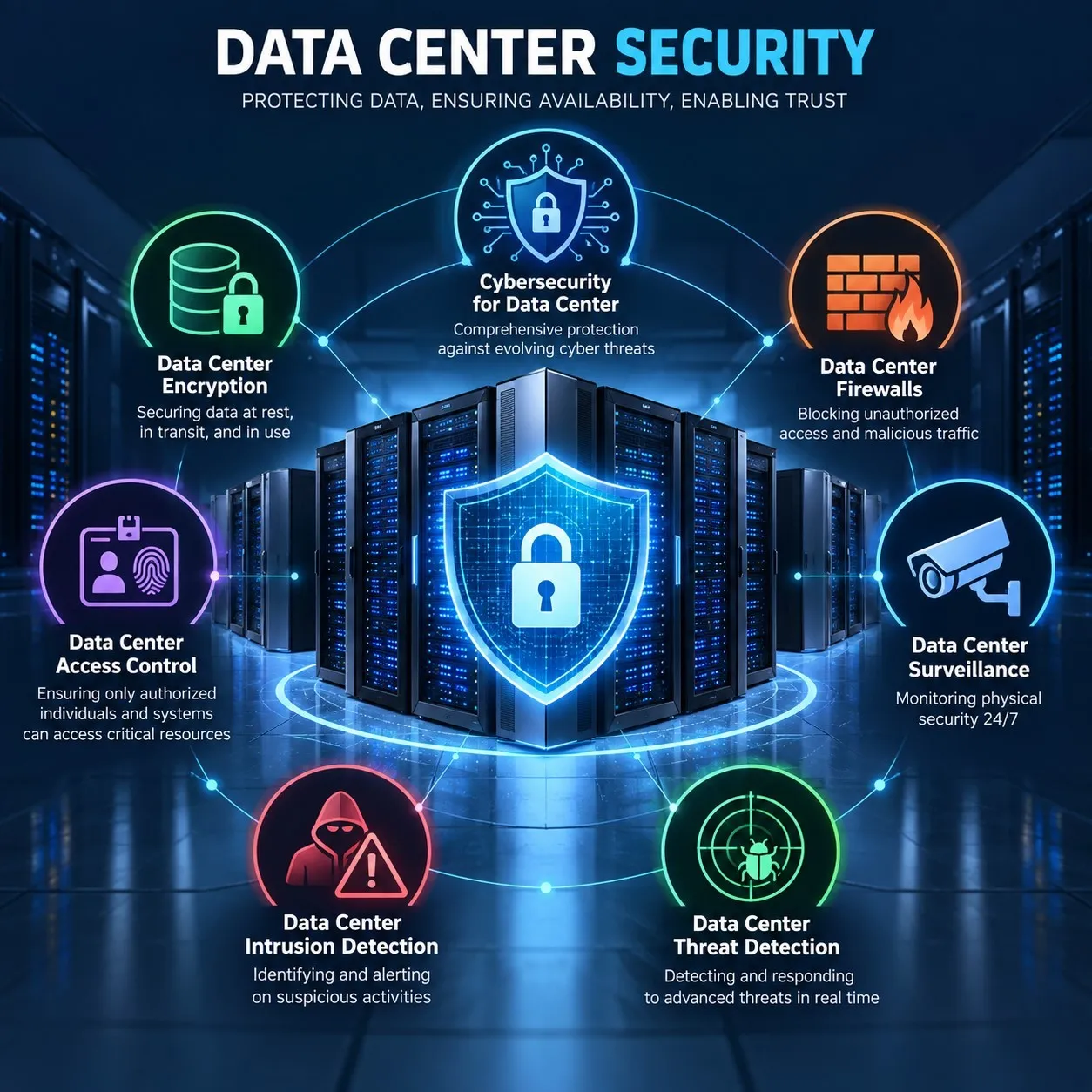
- Require strong MFA for admins and remote access.
- Review privileged roles monthly and remove excess access.
- Patch internet-facing systems on an accelerated schedule.
- Encrypt sensitive data at rest and in transit.
- Reduce retention windows for logs, files, and customer records where legally appropriate.
- Segment backups and test restoration under realistic conditions.
- Monitor for impossible travel, token abuse, mass downloads, and unusual admin changes.
These controls are not theoretical. They are the kind that repeatedly shorten investigations and limit blast radius. A company that can prove which exact identities touched a dataset, when a secret was rotated, and whether segmented backups are clean is already in a stronger position than one that only knows an alert fired.
Prevention is not a promise that no breach will happen. It is a way to make common attacker paths slower, noisier, and easier to contain.
Detection and logging are where many starter programs either mature or fail
A breach you cannot see is a breach you cannot scope. That sounds obvious, yet logging is where many organizations discover their program is more aspirational than operational. Cloud audit logs may not be retained long enough. Endpoint telemetry may cover laptops but not servers. SaaS applications may generate useful events that nobody forwards centrally. Database access logs may exist but not tie cleanly to user identities. During a live incident, these gaps turn basic questions into guesswork: Was data merely viewed or actually exfiltrated? Which accounts were used? Did the attacker persist after password resets?
The minimum useful logging strategy should prioritize systems that can answer those questions. That means identity providers, email systems, endpoint detection, VPN or zero-trust access platforms, cloud control planes, object storage, databases holding sensitive data, and high-risk SaaS applications. Retention matters too. If suspicious activity is discovered weeks after initial access, a seven-day log window is effectively no window at all. Many teams starting from scratch choose a SIEM or security data lake too early, before they know which detections matter. A better sequence is to define a handful of high-value detections and ensure the required telemetry exists.
Examples of starter detections include impossible travel, repeated MFA failures followed by success, admin role elevation, OAuth consent grants to unfamiliar applications, mailbox forwarding rule creation, mass file downloads, unexpected geographic access to production systems, and backup deletion attempts. Actually, these are not only technical indicators; they are operational triggers. Each one should map to an action: investigate within one hour, disable account if confirmed, preserve logs, notify incident lead, and assess whether sensitive data was reachable.
Response quality improves sharply when teams practice with real signals. Run a tabletop exercise on a stolen admin session. Simulate a cloud bucket exposure. Test whether the on-call engineer can find the right logs at 2 a.m. and whether legal can be reached quickly. Many post-incident reviews show that organizations owned the right tools but had never rehearsed the coordination required to use them under pressure. That is why maturity is not measured only by tooling depth. It is measured by how quickly a team can move from alert to decision.
What changed recently, and why 2026 planning looks different
The breach response and prevention conversation has shifted in the last two years for three reasons. First, attackers increasingly target identity and cloud control planes rather than only endpoints. Second, AI has made phishing, pretexting, and reconnaissance cheaper and more scalable, even if the underlying breach mechanics remain familiar. Third, regulators and customers now expect stronger evidence of governance, not just technical remediation after the fact.
In 2026, several practical changes stand out. More organizations are moving toward phishing-resistant authentication for privileged users. Security teams are also paying closer attention to non-human identities: service accounts, workload identities, API tokens, machine certificates, and CI/CD secrets. These are often over-permissioned and poorly inventoried, which makes them attractive to attackers and difficult to investigate. Cloud-native forensics has also become more central. Teams now need competence in reviewing IAM changes, storage access patterns, container activity, and SaaS audit trails alongside traditional endpoint evidence.
Another recent development is the stronger push for prevention-first thinking. The CIO piece cited earlier reflects a wider industry mood: resilience alone is not enough if organizations normalize repeated compromise. Boards increasingly ask not only how quickly the team can recover, but why basic control failures were left open. That changes budget conversations. Identity governance, data security posture management, attack surface management, and backup isolation are easier to justify when framed as breach cost reduction rather than abstract hygiene.
There is also more scrutiny of third-party exposure. Major incidents over the past few years have reminded security leaders that a supplier’s weakness can become your notification problem. Vendor risk programs are therefore becoming more operational. Instead of annual questionnaires alone, mature teams track which vendors process sensitive data, what integrations they hold, whether they support strong authentication, and how quickly they will notify customers of a suspected breach.
For readers who want a more trend-focused angle, WriteUpCafe’s Data Breach Response and Prevention Guide for 2026: Strategies and Insights and The Future of Data Breach Response and Prevention Guide in 2026 add useful context. The immediate takeaway is that a starter program in 2026 must treat identity, cloud, and third-party dependencies as first-order breach domains.
A practical 90-day plan for teams starting from zero or near-zero
Most organizations do not need a grand transformation memo first. They need a 90-day plan with owners, dates, and a narrow set of measurable outcomes. The purpose of the first quarter is not full maturity. It is to establish control over the basics so that the next incident is less confusing and less expensive.
Here is a sensible sequence:
- Days 1–15: name an incident lead, create a responder contact list, identify critical systems and sensitive data stores, and confirm how to reach legal counsel after hours.
- Days 16–30: enable or verify MFA on admin accounts, review privileged access, inventory internet-facing assets, and document current backup locations and restoration procedures.
- Days 31–45: centralize high-value logs from identity, email, endpoint, and cloud platforms; define five to ten priority detections; set minimum retention targets.
- Days 46–60: draft runbooks for credential compromise, ransomware, cloud storage exposure, and third-party notification; prepare internal and external communication templates.
- Days 61–75: run one tabletop exercise and one technical drill, such as revoking a compromised account and restoring a critical system from backup.
- Days 76–90: fix the most serious gaps found in testing, assign OKRs for the next quarter, and present a concise risk update to leadership.
The OKRs matter because they turn security intention into managed execution. Examples include reducing privileged accounts by 40 percent, achieving 100 percent MFA coverage for admins, cutting critical patch time on internet-facing assets to seven days, or validating restoration for the top three business services. These are measurable, board-readable, and directly connected to breach reduction.
Actually, the biggest win in the first 90 days may be cultural. Teams stop treating incidents as rare lightning strikes and start treating them as operational scenarios that can be prepared for, rehearsed, and improved through postmortems. Every exercise should end with a short after-action review: what happened, what slowed us down, what evidence was missing, and which owner will fix it by when. That discipline compounds.
Common mistakes that make breaches worse
Some errors recur so often that they deserve explicit warning. The first is resetting passwords without understanding session persistence, OAuth grants, or token theft. Attackers can sometimes retain access after a password change if tokens are not revoked or if alternate authentication paths remain intact. The second is restoring systems from backups that have not been checked for integrity or latent compromise. Recovery without validation can reintroduce the attacker’s foothold.
A third mistake is poor scoping. Teams often announce too much too early or too little for too long because they lack confidence in what data was affected. This is where disciplined evidence collection matters. Preserve logs, snapshot systems where appropriate, and document decisions. A fourth mistake is excluding communications and customer support from planning. Even a technically contained breach can become a reputational crisis if customers receive vague, inconsistent, or delayed answers.
Then there is the temptation to treat every security product as breach prevention. Tools help, but they do not substitute for ownership, process, and tested recovery. According to Reuters reporting on major cyber incidents over the years, the organizations that recover best usually combine technology with executive coordination, external expertise, and clear customer communication. That pattern is consistent across sectors.
Finally, do not skip the postmortem. A breach that ends without a blameless but rigorous review is likely to repeat. Ask what control failed, why it failed, why it stayed unfixed, and what signal could have surfaced it earlier. Good postmortems improve architecture, staffing, vendor expectations, and leadership decision-making. They also create the evidence trail that boards and regulators increasingly expect.
The durable takeaway: start small, but start in the right order
The most useful way to begin a data breach response and prevention program is to accept that you are building a system, not a document. The system has to know what data matters, which identities can reach it, how suspicious activity is detected, who takes command during an incident, how evidence is preserved, how recovery is validated, and how lessons are turned into control changes. That sounds like a lot because it is. But it is manageable when sequenced correctly.
Begin with a realistic threat picture. Stand up a minimum viable response plan. Lock down identity and privileged access. Patch the systems attackers can reach. Reduce excess data. Improve logging where it answers scoping questions. Rehearse. Then review and tighten. That order is more effective than trying to buy maturity in one procurement cycle.
Industry reporting keeps returning to the same conclusion. The organizations that handle breaches best are not necessarily the ones with the flashiest tooling. They are the ones that prepared for ordinary failure modes, assigned ownership, and practiced under imperfect conditions. If you are at the beginning, that should be encouraging. You do not need omniscience. You need disciplined first steps, a clear operating cadence, and leadership willing to treat breach readiness as a core business function rather than a side project.
That is how teams actually get started: by replacing vague concern with a concrete plan, then improving the plan every quarter.






























Sign in to leave a comment.