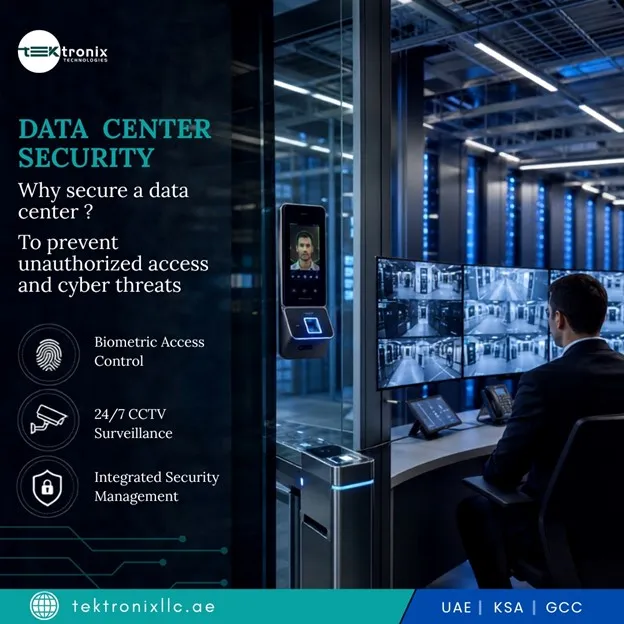

Every UAE company, regardless of size, now depends on a data center somewhere — whether it's an on-premise server room in their own office tower or a rack in a colocation facility across the city. Robust Data Center Security is what stands between that infrastructure and the physical or digital threats capable of taking an entire organization offline, exposing customer records, or breaching regulatory obligations in a single incident.
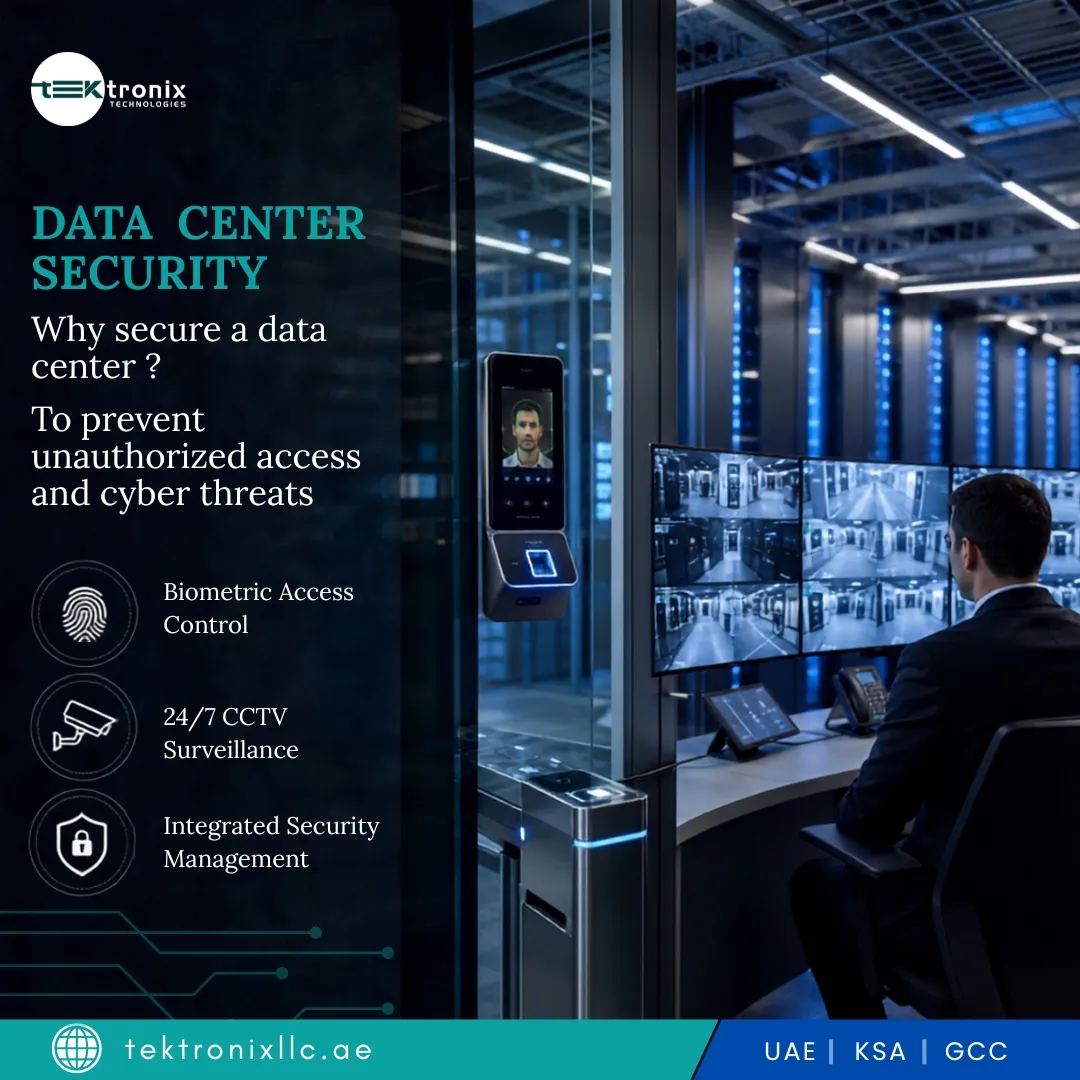
As UAE businesses accelerate their shift toward cloud-connected operations, digital banking, and government e-services, the data center has quietly become one of the most business-critical assets any office can own or lease space within. A breach or outage no longer just disrupts IT — it can halt operations, trigger regulatory penalties, and damage customer trust in ways that are difficult to reverse.
Why Data Center Security Has Become a Board-Level Priority in the UAE
Data centers sit at an unusual intersection of physical and digital risk. A single unauthorized person walking into a server room can do as much damage as a remote attacker breaching a firewall — pulling a drive, planting a rogue device, or simply disrupting power and cooling systems. For UAE offices running their own on-premise infrastructure, or leasing colocation space, both categories of risk need to be addressed together rather than treated as separate departments' problems.
Regulatory pressure has intensified this focus. UAE data protection requirements, along with sector-specific rules for banking and healthcare, increasingly expect organizations to demonstrate not just that customer data is encrypted, but that the physical facility housing that data has documented, auditable access controls and monitoring in place — making data center security a compliance requirement as much as an operational one.
Cybersecurity for Data Center Environments: Where Physical and Digital Security Meet
A modern facility cannot treat physical guards and firewalls as separate disciplines. Comprehensive Cybersecurity for Data Center operations means aligning network security policy with physical access policy, so that a compromised badge or an unmonitored rack door carries the same weight in an incident response plan as a detected network intrusion.
This convergence is particularly important for UAE offices operating hybrid environments — some workloads on-premise, others in cloud or colocation facilities. Security teams need consistent policy and monitoring across every location housing sensitive infrastructure, rather than a strong security posture at headquarters undermined by a weaker one at a secondary site or leased data hall.
Core Layers of a Complete Data Center Security Strategy
A properly secured facility layers several distinct protective measures, each addressing a different category of risk. No single control — however strong — is sufficient on its own.
Data Center Encryption for Protecting Information at Rest and in Transit
At the data layer itself, Data Center Encryption ensures that even if physical media is stolen or network traffic is intercepted, the underlying information remains unreadable without the correct decryption keys. Strong encryption practices cover data both at rest on storage drives and in transit between servers, racks, and connected offices, closing the gap that physical security alone cannot address.
Data Center Firewalls for Controlling Network Traffic at the Perimeter
On the network side, Data Center Firewalls inspect and filter traffic entering and leaving the facility's network segment, blocking unauthorized connections before they reach critical systems. Modern deployments typically segment the network into distinct zones, so a compromise in one area of the facility cannot automatically cascade into full access across every connected system.
Data Center Access Control for Restricting Physical Entry
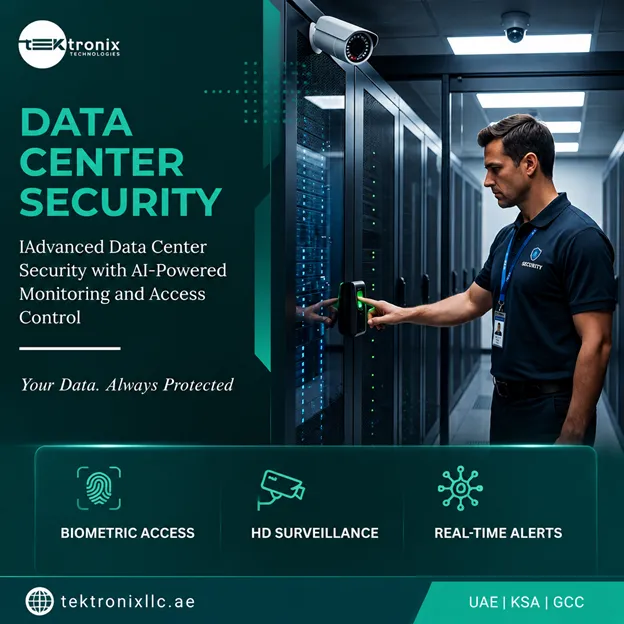
At the building level, Data Center Access Control governs who can physically enter the facility, and which specific racks, cages, or server rooms they are authorized to reach. Biometric verification, mantrap entry vestibules, and role-based access schedules are common in higher-tier facilities, ensuring that even authorized staff can only reach the specific zones relevant to their role rather than the entire building.
Data Center Surveillance for Continuous Visual Monitoring
Comprehensive Data Center Surveillance combines strategically placed cameras covering entry points, server aisles, and loading docks with analytics capable of flagging unusual behaviour automatically — a camera left unmonitored is far less valuable than one paired with software that can alert security staff to a person lingering near a restricted rack or a door propped open outside scheduled hours.
Data Center Intrusion Detection for Identifying Unauthorized Access Attempts
Layered Data Center Intrusion Detection systems monitor both the physical perimeter — fence sensors, door contacts, vibration detection — and the network perimeter for signs of unauthorized probing or access attempts, giving security teams an early warning before a breach fully materializes rather than only a record of what happened afterward.
Data Center Threat Detection Powered by Behavioural Analytics
Beyond simple intrusion alerts, modern Data Center Threat Detection platforms use behavioural analytics to spot patterns that fall outside normal operations — an employee badge used at an unusual hour, a sudden spike in outbound network traffic, or repeated failed access attempts across multiple doors — correlating physical and digital signals that would be missed if each system were monitored in isolation.
Key Benefits of a Layered Data Center Security Approach
UAE organizations that invest in a comprehensive, layered security strategy for their data center infrastructure typically report measurable gains across several areas:
- Reduced risk of both physical theft and unauthorized network access
- Stronger compliance posture supporting UAE data protection and sector-specific audits
- Faster detection and response to unusual activity before a breach fully develops
- Clear, auditable records supporting insurance claims and regulatory reporting
- Greater confidence among clients and partners handling sensitive shared infrastructure
- Reduced downtime risk from both malicious activity and accidental facility incidents
Data Center Security UAE: Meeting Regional Compliance and Climate Demands
Deploying Data Center Security UAE-wide involves considerations specific to the region — from designing physical security measures resilient to the country's high ambient temperatures and dust conditions, to aligning documentation with UAE data protection and sector-specific regulatory frameworks that increasingly expect demonstrable physical security controls alongside cybersecurity policy.
For organizations operating across multiple emirates, consistency matters as much as individual site strength — a security policy that is rigorously enforced at one facility but loosely applied at another creates a weak link that undermines the organization's overall security posture, regardless of how strong any single location's controls may be.
Data Center Security Abu Dhabi: Serving the Capital's Government and Financial Sector Demands
Abu Dhabi's concentration of government entities, sovereign wealth institutions, and major financial services firms creates particularly demanding requirements for facility security. A Data Center Security Abu Dhabi deployment typically needs to demonstrate rigorous, auditable physical controls alongside cybersecurity measures, reflecting the compliance expectations common among the capital's most regulated organizations.
For facilities in Abu Dhabi supporting critical national infrastructure or sensitive financial data, layered security combining access control, surveillance, and intrusion detection gives compliance teams a defensible position when demonstrating security maturity during regulatory reviews, sovereign audits, or third-party risk assessments.
The Business Case: Cost of a Breach Versus Cost of Prevention
Organizations often underestimate the true cost of a data center security incident until they model it directly. Beyond immediate remediation, a breach typically involves regulatory reporting obligations, potential fines, customer notification costs, and lasting reputational damage that can affect new business for years afterward — costs that dwarf the ongoing investment required to maintain a properly layered security program.
For UAE organizations weighing the cost of upgrading facility security against the cost of doing nothing, the comparison becomes particularly stark once cyber insurance requirements are factored in. Many insurers now require documented physical security controls as a condition of coverage, meaning inadequate data center security can directly translate into higher premiums or reduced coverage availability, independent of whether an incident ever occurs.
Data Center Security Considerations Across Different Facility Types
Security requirements differ meaningfully depending on how an organization's infrastructure is housed. A company running its own on-premise server room within a corporate tower typically needs to align its security posture with the broader building's access control and visitor management systems, while a business leasing space in a colocation facility must coordinate its own equipment security with the facility operator's shared building-wide controls.
Multi-tenant colocation environments add a further layer of complexity, since one tenant's cage or rack must remain fully isolated from another's, both physically and on the network. This typically requires dedicated access credentials per tenant, individually monitored cage-level surveillance, and network segmentation strict enough to prevent any possibility of cross-tenant visibility, even when facility-wide systems are shared.
Typical Deployment Process for Data Center Security Upgrades
Introducing or upgrading security across an existing data center facility generally follows a structured process designed to avoid disrupting live operations.
1. Risk assessment: reviewing existing physical and network security controls against current threats and compliance requirements.
2. Perimeter and access control design: mapping entry points, racks, and cages requiring restricted physical access.
3. Surveillance and sensor placement: positioning cameras and intrusion detection sensors across entry points and critical zones.
4. Network segmentation and firewall configuration: aligning digital access policy with the new physical security layout.
5. Staff training and incident response planning: ensuring security and IT teams understand escalation procedures for both physical and digital alerts.
Because most facilities cannot tolerate downtime during a security upgrade, phased installation — working zone by zone rather than shutting down the entire facility at once — is standard practice for live data center environments.
Integrating Physical and Digital Security Under One Unified Platform
Data center security delivers its full value only when physical and digital controls are managed as one coordinated system rather than separate silos. Linking access control logs with network monitoring dashboards means a security team can immediately correlate a badge entry with any subsequent unusual network activity from that zone, rather than investigating each system's alerts independently after the fact.
This is where Tektronix's data center security solutions stand out for UAE organizations — the platform is designed to bring access control, surveillance, and intrusion detection into a single monitored environment, helping facility and security teams avoid the fragmented, hard-to-correlate security stack that often results when these systems are sourced and managed separately.
What to Look for When Choosing a Data Center Security Partner
Facilities and security managers evaluating vendors should look for a provider with demonstrated experience securing live, operational data center environments specifically, rather than general commercial office security. Experience with network segmentation, biometric access control, and analytics-driven surveillance are all practical differentiators worth confirming, along with the vendor's ability to support phased installation without disrupting existing operations.
Local support responsiveness is especially critical for data center environments, where any prolonged security system outage carries operational and compliance risk far beyond a typical office building, making 24/7 regional support availability a key evaluation criterion.
Why UAE Organizations Trust Tektronix for Data Center Security
Tektronix has deployed physical and integrated security infrastructure across data centers, colocation facilities, and critical operational environments throughout the UAE, giving the team direct, hands-on experience with the compliance, uptime, and integration demands unique to data center security projects. Every deployment is supported end-to-end, from initial risk assessment and design through installation, staff training, and ongoing local maintenance.
For organizations across Dubai, Abu Dhabi, and the wider Emirates evaluating perimeter security solutions for data center facilities, this regional deployment experience translates into a smoother rollout, fewer integration surprises, and a support team already familiar with how UAE data center operators manage risk day to day.
Conclusion
A modern UAE office can no longer treat Data Center Security as a secondary concern behind network firewalls alone. Layered Data Center Access Control, Data Center Surveillance, and Data Center Intrusion Detection work together with Data Center Encryption and Data Center Firewalls to close both physical and digital gaps. As demand for proven Data Center Security UAE and Data Center Security Abu Dhabi deployments grows, partnering with an experienced local provider remains the fastest path to a compliant, resilient facility.
Frequently Asked Questions
1. What is data center security and why does it matter for UAE offices?
It is the combination of physical and digital controls — access restrictions, surveillance, encryption, and network security — that protect a facility housing critical business infrastructure from both physical intrusion and cyberattacks.
2. How does cybersecurity for a data center differ from general office network security?
Data center cybersecurity typically involves tighter network segmentation, more rigorous monitoring, and direct alignment with physical access controls, since the facility concentrates an organization's most critical infrastructure in one location.
3. Why is access control considered a compliance requirement rather than just a security feature?
UAE data protection and sector-specific regulations increasingly expect organizations to demonstrate documented, auditable physical access controls around any facility storing sensitive data, not just encryption and network security policy.
4. Can data center security systems be upgraded without disrupting live operations?
Yes. Most deployments use a phased, zone-by-zone installation approach specifically to avoid downtime in facilities that cannot tolerate a full operational shutdown during a security upgrade.
5. How long does a data center security upgrade typically take in the UAE?
Timelines depend on facility size and the extent of network integration required, but a phased upgrade covering access control, surveillance, and intrusion detection can usually be completed within several weeks once the initial risk assessment is finished.
For more information contact us on:
Tektronix Technology Systems Dubai-Head Office
+971 50 814 4086
+971 55 232 2390
Office No.1E1 | Hamarain Center 132 Abu Baker Al Siddique Rd – Deira – Dubai P.O. Box 85955



























Sign in to leave a comment.