
Windscreen damage might seem like a minor inconvenience until winter rolls in. Cold mornings, damp conditions, and limited visibility turn even the smallest chip into a real hazard. For drivers across Sydney, mobile windscreen repair isn’t just a convenience — it’s a seasonal necessity.
As the temperature drops, glass contracts. That tiny stone chip that held up through autumn? It can quickly spread into a spider crack as soon as the mercury dips. That’s why booking a qualified mobile windscreen technician at the first sign of damage can make all the difference in both safety and cost.
Why winter makes windscreen chips worse
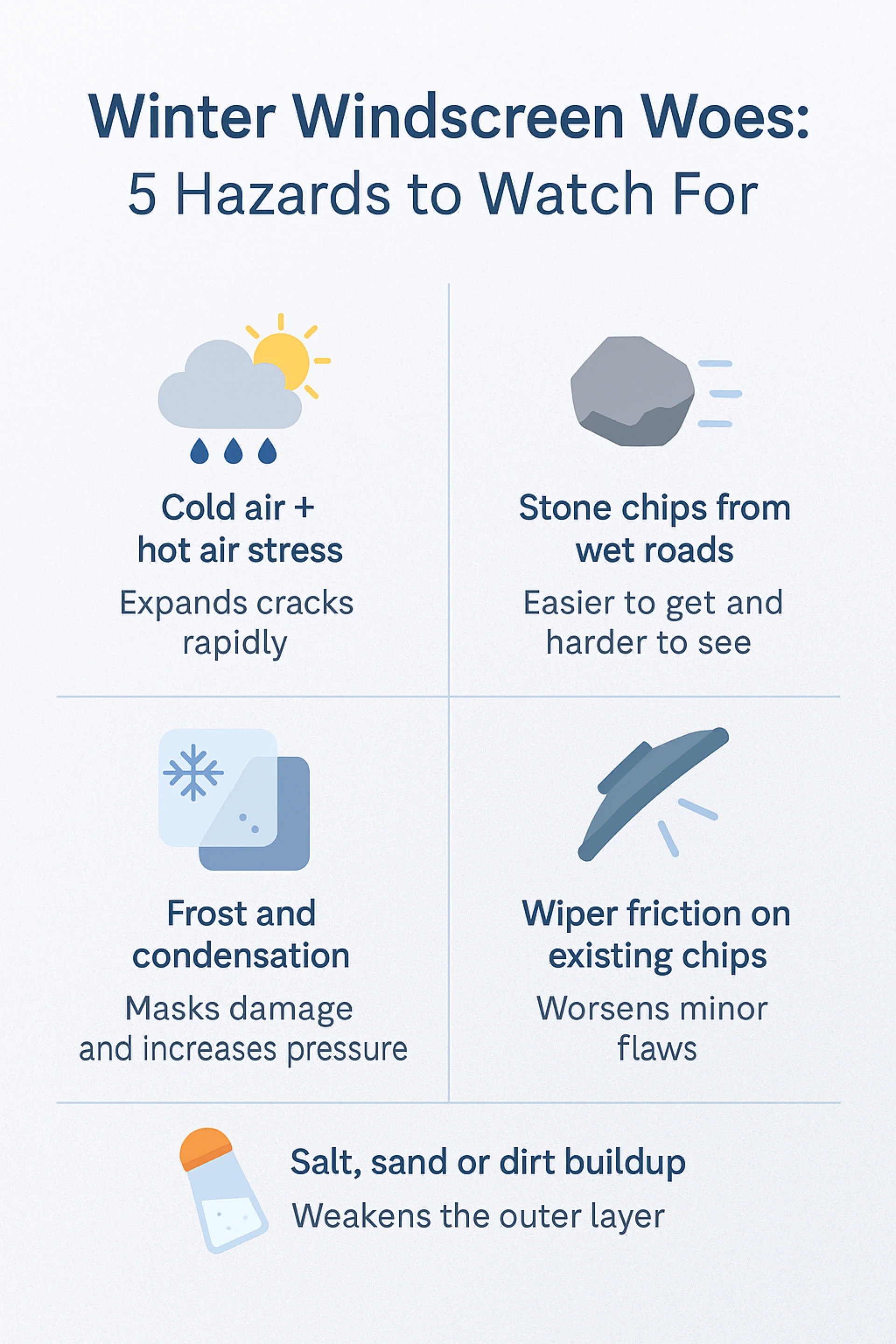
Colder temperatures amplify the stress already placed on your windscreen. It’s not just the chill — it’s the constant shift between hot interior air and cold exterior glass.
Here's how winter impacts windscreen integrity:
- Rapid temperature changes cause glass to expand and contract
- Cold air stiffens the glass, reducing its flexibility under pressure
- Rain and frost magnify existing weaknesses in the outer layer
- Windscreen wipers push debris into chips, making them worse
- Heating the cabin from inside causes thermal stress fractures
Chips that might’ve held steady in warmer months can grow overnight in winter, often without you noticing until it’s too late.
Spotting small damage before it spreads
Many drivers delay repairs because they assume small chips are harmless. But winter makes early detection more urgent, and mobile repair makes it easier to act quickly.
Signs to act on immediately:
- Star-shaped or bullseye marks on the glass
- Tiny cracks extending from the edge of the screen
- Chips in the driver’s line of sight
- Moisture or fog forming inside the chip
- A light scattering or distortion of vision near the crack
If you notice any of these, don’t wait. A quick mobile fix now prevents a costly windscreen replacement later, especially during the busy winter service season.
Safety risks of ignoring winter windscreen damage
Driving with a compromised windscreen doesn’t just reduce visibility — it weakens the entire structure of your vehicle. And in winter, that can turn a simple drive into a real risk.
How damaged windscreens affect safety:
- Increased glare from low-angle winter sun
- Reduced structural support during collisions or airbag deployment
- Impaired defogging and demisting efficiency
- A greater chance of water ingress through cracks
- Higher risk of complete failure under stress (potholes, cold snaps)
Australian road safety standards reinforce the importance of maintaining windscreen integrity, especially in colder seasons. Government resources on vehicle safety during winter reinforce the link between visibility, vehicle condition, and driver safety.
Why mobile repairs are the best winter solution
Getting your car to a shop on a frosty morning or in rainy weather isn’t just inconvenient — it’s potentially unsafe. That’s where mobile repair services really shine.
Benefits of mobile windscreen chip repair in winter:
- No need to drive with impaired vision
- Repairs completed at home, work, or on the roadside
- Faster turnaround in unpredictable weather
- Technicians can assess another potential cold-weather risk
- Lower risk of missing a growing crack due to travel delays
With so many drivers working from home or navigating school holiday logistics, mobile repair eliminates the need to rearrange your day or wait for warmer weather.
What to expect from a mobile windscreen technician
Not all technicians offer the same level of care or service. Winter adds an extra layer of complexity, and the best professionals are prepared for it.
Here’s what to expect:
- Inspection of chip depth, moisture level, and temperature conditions
- Use of resin products that cure in cooler climates
- On-site protection from rain or condensation during repair
- Safe curing methods, often using portable UV lamps
- Clear guidance on drive-away times and post-repair care
With the right setup, even cold-weather mobile repairs are just as effective as workshop jobs — and much more practical during Sydney’s wet season.
Simulated experience: When I waited too long
A couple of winters ago, I noticed a small chip after a road trip up north. It looked harmless — barely the size of a fingernail. I ignored it, thinking I’d sort it after the school term break. One chilly morning, I turned on the defrost... and heard the glass crack.
By the time I got out, the chip had spread halfway across the screen. What would’ve cost under $150 turned into a full windscreen replacement. Lesson learned: mobile repairs exist for a reason, especially in winter.
More than glass: the broader safety impact
A clean, intact windscreen improves more than visibility — it protects the entire vehicle ecosystem. That’s why some experts provide windscreen safety tips during colder months.
That includes:
- Checking washer fluid and nozzle operation
- Replacing tired wipers or misaligned blades
- Ensuring your windscreen heating/demisting works properly
- Cleaning the inside glass to reduce fogging
- Verifying visibility around sensors (especially for newer vehicles)
It’s not just about the glass — it’s about the entire view through it.
Simple prevention for seasonal damage
While you can’t stop every flying rock or stray branch, you can reduce your windscreen’s exposure to seasonal wear.
Try these habits:
- Avoid sudden hot air on a cold windscreen — use gradual defrost
- Park under cover during frost, hail, or storms
- Use a soft brush (never a scraper) to remove frost or debris
- Don’t slam doors — it creates pressure inside the cabin
- Keep wipers clean and replace them each year before winter
Even better, schedule a seasonal inspection and keep an eye out for minor chips during weekly car checks.
Fast fixes, long-term peace of mind
Worried that a repair won’t hold up? Modern resin formulas and curing methods used by mobile techs are highly durable and weather-resistant. In fact, the best mobile technicians, who also specialise in mobile windscreen repairs during winter, choose products tested for Australian seasonal shifts, including intense heat and sudden cold snaps.
Mobile chip repairs done correctly will:
- Restore structural integrity
- Prevent further cracking
- Resist moisture and cold damage
- Remain optically clear
- Avoid expensive replacements for minor issues
- It’s quick, effective, and tailored for the conditions your car faces in winter
Final thoughts: Act early, drive safely
Winter road safety starts before you hit the ignition. A chip-free windscreen means better visibility, stronger structural support, and less stress behind the wheel.
Don’t wait for a crack to spread or the weather to get worse. Booking a mobile windscreen technician now means you’ll stay protected through rain, frost, and everything Sydney’s coldest months can throw at your windscreen.






























Sign in to leave a comment.