

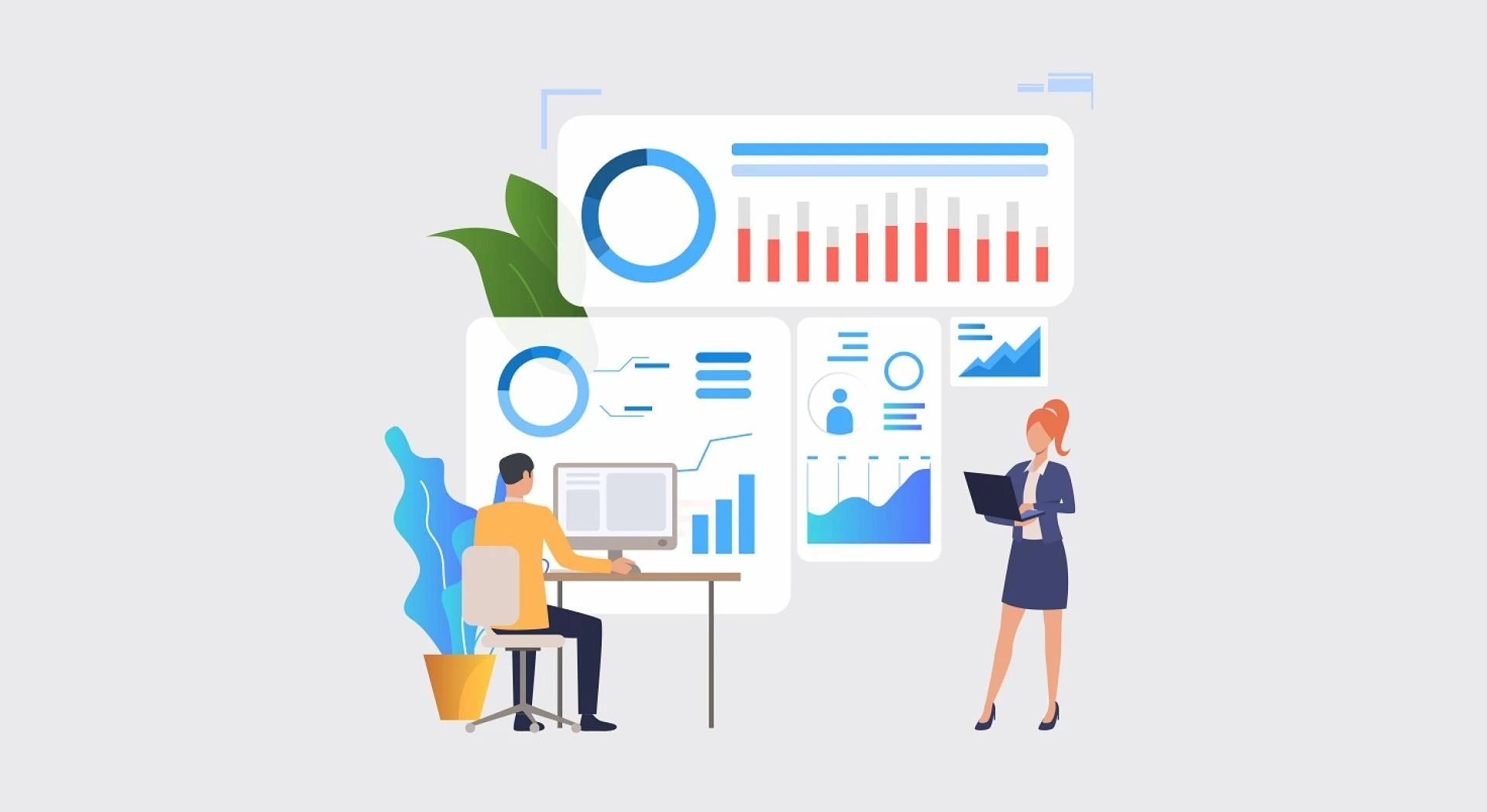
In today's digital world, customers expect quick responses, personalized services, and seamless interactions on every platform they use. On the other hand, businesses are under constant pressure to deliver experiences that not only satisfy customers but also retain them. This is where smart analytics plays a crucial role. It helps in understanding what customers want and delivering it effectively. By turning vast amounts of customer data into actionable insights, smart analytics enable businesses to make informed decisions, improve engagement, and create experiences that truly resonate with customers.
Understanding Smart Analytics and Its Role
Smart analytics uses AI, machine learning, and predictive analytics to analyze data and find meaningful patterns. It helps organizations understand why something happened and what will happen next, unlike traditional analysis, which only focuses on what has already happened. Customer feedback, social media activity, web behavior, and purchasing history help companies turn raw data into valuable insights to improve customer satisfaction.
For example, brands using smart analytics to study purchase behavior can detect buying patterns, predict future needs, and recommend relevant products, helping them increase sales and enhance customer satisfaction. Companies investing in data analytics services gain deeper visibility into these trends, allowing them to anticipate customer expectations and respond with accuracy.
Personalization at Scale
Personalization has become a critical driver of customer experience, and smart analytics makes it scalable. Companies no longer have to use a one-size-fits-all approach. Now, they can use data to personalize every interaction. Whether customization is achieved through email recommendations, dynamic web content, or product suggestions, analytics ensures each customer feels valued.
Streaming services like Netflix or Spotify are great examples. They apply smart analytics to analyze viewing or listening history and tailor recommendations and interfaces. This data-driven personalization approach not only retains users but also strengthens emotional attachment to the brand.
Improving Customer Journey Mapping
Each customer journey is personalized, with several touchpoints starting from discovery to purchase to post-sales support. With smart analytics, businesses can track the journey, revealing where customers are most engaged and where they drop off.
Understanding the behavioral data enables businesses to recognize and resolve issues. For example, if a customer leaves their shopping cart, analytics can resolve the issues during checkout and fix them promptly. The outcome is an enhanced customer experience that aligns with expectations. Business intelligence services play a key role here by integrating data from various systems and providing a comprehensive customer journey perspective, which enables organizations to make faster and more customer-focused decisions.
Enhancing Customer Support and Engagement
Customer support plays an essential role in shaping experiences. Smart analytics provide support teams with insights that enable them to resolve problems in a timely and efficient manner. Businesses, with the help of predictive analytics, can solve customer issues before they arise.
Smart analytics allows chatbots and virtual assistants to add significant value to customer interactions. They can understand sentiment, analyze previous interactions, and provide real-time personalized responses.
Leveraging Predictive Insights for Retention
Smart analytics has the ability to predict future events. A company can easily determine the customers who are at risk of leaving and take timely action to retain them. By tracking engagement levels, purchase rate, and feedback, the analytics can suggest changes to the offer, promotions, or marketing campaigns to re-engage the dissatisfied customers.
In sectors such as banking and telecommunications, predictive analytics is used to assess the likelihood of a customer churning in the future by analyzing transaction trends and the customer’s service usage patterns. It allows the team to personalize retention programs, such as offering discounts and loyalty programs to strengthen the relationship and reduce attrition.
Measuring Experience with Real-Time Feedback
Traditional feedback mechanisms do not capture how customers feel in the moment. Smart analytics takes sentiment tracking to the next level by enabling real-time monitoring of customer emotions. Companies can use natural language processing (NLP) and sentiment analysis to interpret feedback from reviews, chats, and social media mentions.
If a brand detects negative sentiment around a product launch, it can quickly address the issue by improving the product or clarifying misunderstandings through transparent communication. This responsiveness builds credibility and shows customers that their voices matter.
Building a Data-Driven Culture
Integrating smart analytics to improve customer experiences requires organizations to develop a data-driven culture. Leaders must ensure that teams across departments, i.e., marketing, sales, customer support, and product, work together using shared insights.
Training employees to use analytical tools and encouraging data-driven decision-making helps create a more agile, customer-centric organization. When every decision is backed by evidence instead of assumptions, customer experiences naturally improve.
Conclusion
Enhancing customer experiences is a data-driven strategy powered by smart analytics. From predicting preferences and personalizing interactions to improving service delivery and preventing churn, analytics helps businesses stay one step ahead. In a marketplace where every customer counts, leveraging smart analytics is a necessity. By turning insights into actions, businesses can create experiences that are not only smarter but also more human.


























Sign in to leave a comment.