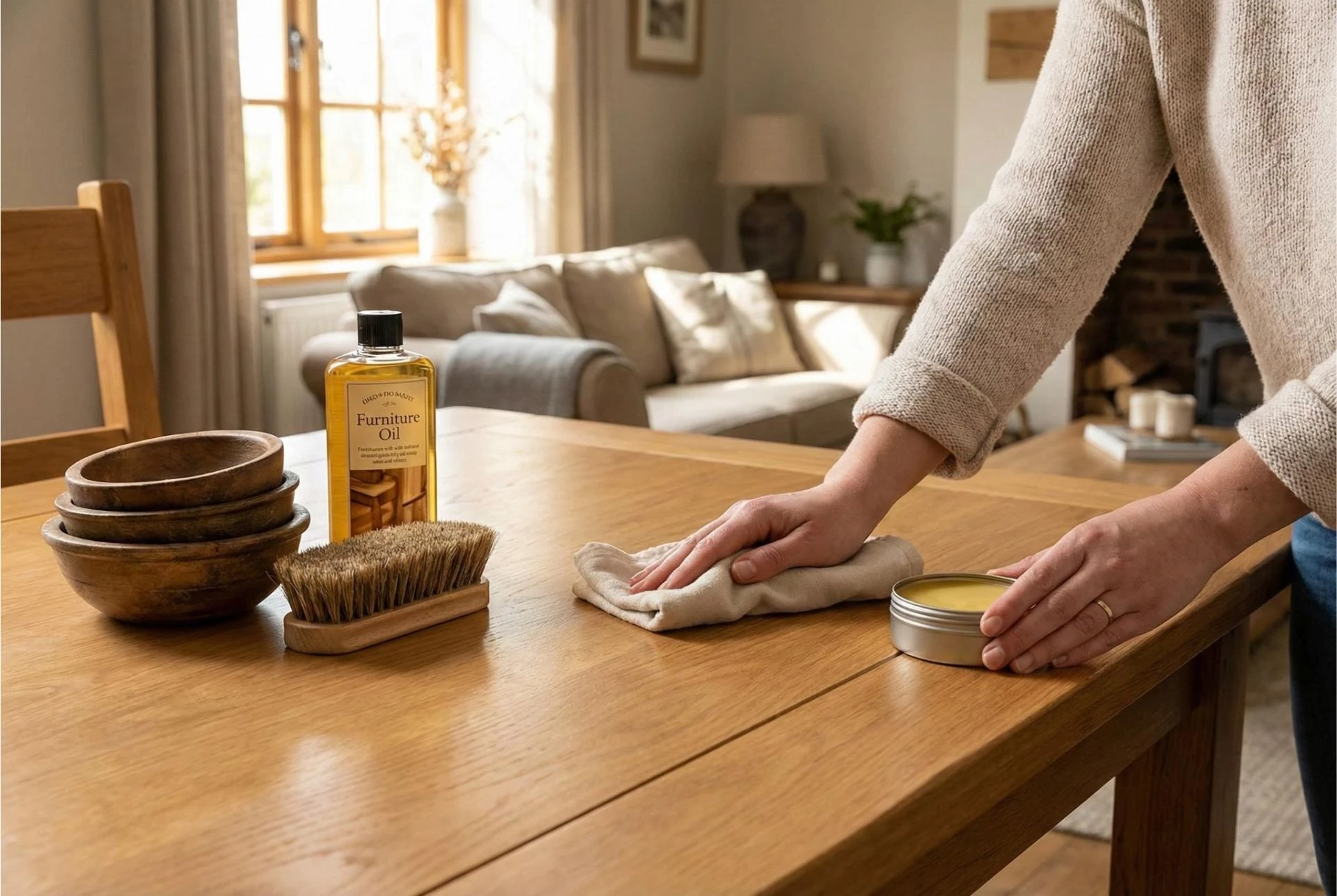

Timber furniture and joinery are living investments. Because wood is a natural material, it reacts to its environment—expanding, contracting, and breathing. If you ignore it, it cracks and fades. If you treat it right, it develops a rich patina and lasts for decades.
Here is the straight guide on keeping your timber in top condition.
The Core Routine: Clean, Protect, Nourish
To maintain timber products, you need a routine that balances gentle cleaning with deep nourishment.
1. Dust Weekly Dust is abrasive. Over time, allowing dust to build up creates microscopic scratches that dull the finish.
- Use a soft, lint-free cloth or a microfiber duster.
- Avoid feather dusters as they can scratch delicate finishes.
- Wipe in the direction of the grain to capture dirt trapped in the texture.
2. Clean Spills Immediately Wood is porous. Water, wine, and oil will seep into the grain if left sitting, causing warping or permanent staining.
- Blot spills instantly with a dry cloth. Do not rub, as this pushes the liquid deeper.
- For sticky spots, use a damp cloth with mild dish soap. Wring it out until it is almost dry before touching the wood.
- Never use harsh chemical cleaners or all-purpose sprays containing ammonia. These strip the protective oil or varnish.
3. Feed the Wood (Oiling and Waxing) Most timber furniture needs to be "fed" to prevent drying out. The frequency depends on the finish.
- Oiled Wood: Apply a specialized furniture oil (like Danish oil or linseed oil) every 3 to 6 months. Apply a thin coat, let it soak for 10 minutes, and wipe off the excess.
- Varnished/Lacquered Wood: These surfaces are sealed, so they don't accept oil. Instead, use a quality paste wax once a year to add a protective shine and fill minute surface scratches.
Controlling the Environment
The biggest enemies of timber are sun and moisture variance. You can prevent 90% of damage just by placing your furniture correctly.
Manage Humidity
Wood behaves like a sponge. In high humidity, it swells. In dry air, it shrinks.
- The Danger Zone: Rapid changes cause splitting and joint failure.
- The Fix: Keep your home humidity between 40% and 60%. Do not place timber furniture directly next to radiators, fireplaces, or air conditioning vents. The concentrated dry heat or cold air will warp the timber.
Block UV Light
Direct sunlight acts like bleach. It breaks down the chemical bonds in the wood, leading to discoloration and a brittle surface.
- The Fix: Move furniture out of direct sunbeams or use blinds during the harshest part of the day.
- Rotation: If a table is partially in the sun, rotate it every few months so the fading is even, rather than patchy.
Troubleshooting Common Issues
Even with care, accidents happen. Here is how to handle them without calling a professional.
- White Water Rings: This usually means moisture is trapped in the finish, not the wood. Try applying a little non-gel toothpaste on a cloth and gently rubbing the spot. Alternatively, use a hairdryer on a low setting to draw the moisture out.
- Small Scratches: For minor surface scratches, use a walnut meat (the nut itself). Rub the meat over the scratch; the natural oils in the nut will often darken the scratch and blend it back in.
- Ink Stains: Dip a cotton swab in a little rubbing alcohol and dab the stain carefully. Do not wipe, or you will spread the ink.
FAQ
How often should I oil my timber furniture?
You should oil timber furniture every 3 to 6 months. If the wood looks dry or lighter in color than usual, it is time to oil it.
Can I use olive oil on wood?
No. Olive oil and other cooking oils can go rancid (rot) inside the wood, causing bad smells and sticky surfaces. Always use oils specifically designed for furniture, such as mineral oil, Danish oil, or Tung oil.
Does central heating damage wood furniture?
Yes. Central heating dries out the air, which can cause wood to shrink and crack. Keep furniture away from heat sources and consider using a humidifier in winter.
What is the best way to clean sticky residue off wood?
Mix a small amount of mild dish soap with warm water. Dip a soft cloth in, wring it out completely so it is just damp, and wipe the area. Dry it immediately with a separate cloth.



























Sign in to leave a comment.