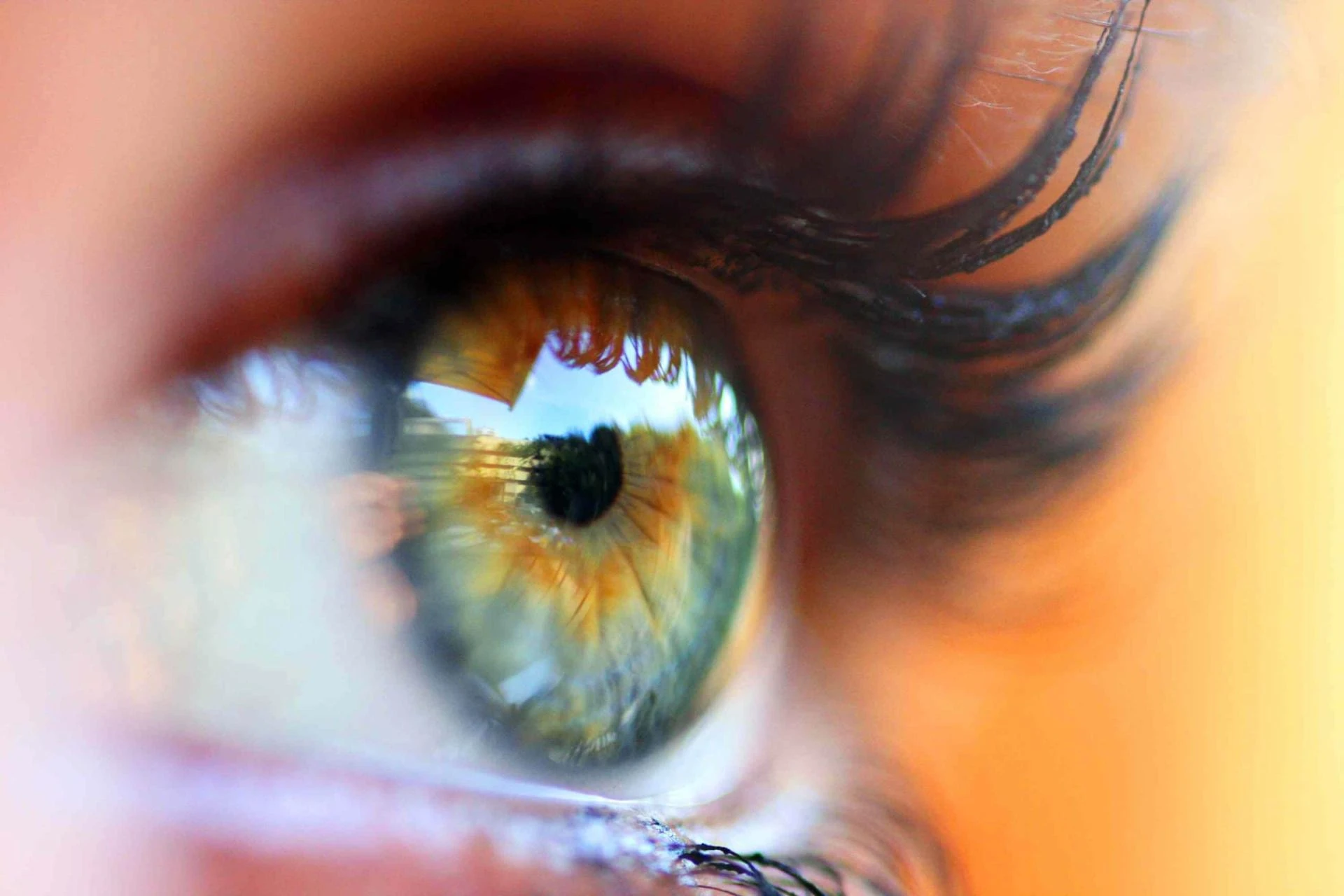

Specific alignments define the ease you'll sense in your eyeglasses - PD or Pupillary Distance being the most important one. It's a form of pupillary evaluation and evaluates the distance between the centers of pupils of your eyes.
Introduction:
PD or Pupillary Distance is the actual distance between the pupils of your eyes. Measured in millimeters (mm), it determines the accuracy with which you'll look through your eyeglasses. To see with the most excellent clarity through your eyeglasses, it should be noted that the optical centers of each of the lenses of your eyeglasses should align with the center of your pupils.
Pupil measurement has also been accepted as one of the most critical parameters indicating latent neuro-ophthalmological problems. Thus it is essential to learn about the intricacies of this metric.
Range of PD:
Pupillary evaluation allows variations from person to person. It could be because PD can change during childhood and adulthood. On that note, the average PD of an adult can be between 54-74 mm. There can also be slight variations between the PD of men and women. It could be between 52mm-75mm for men, and for women, it could be anywhere between 53mm-74mm. When it comes to kids, PD can have a range of 43-58 mm.
Types of PD measurements:
Monocular PD: Monocular PD allows a slight shift when it comes to pupil measurement. It's the distance between the middle of the bridge of your nose and the center of one of the pupils of your eyes.
Binocular PD: Binocular PD is the exact measure of the distance between the centers of the pupils of your eyes.
What are the pathological and diagnostic implications of Pupillary Distance measurement?
When it comes to neuro-ophthalmology, pupil diameter measurement is a fundamental procedure that precedes further treatment. It is one of the essential diagnostic processes used by ophthalmologists, clinicians, neurological surgeons, and others to determine various underlying physiological and pathological deviations, especially those associated with the head and the brain.
Pupillary distance measurement offers insights into the following conditions.
Horner's syndrome
Relative Afferent Pupillary Defect (RAPD) or Marcus Gunn Pupil
Cranial third nerve palsy
Argyll Robertson Pupil
Adie's Pupil
Surgical or psychological trauma, etc.
How to measure your PD?
Generally, pupillary distance is measured by an ophthalmologist because it is a critical parameter in determining the presence of abnormalities in the optic or neural status of a human. There are specific standards in terms of pupil measurement, and any deviation from those will imply that there are pathological problems that have occurred in the individual.
Often, these anomalies tend to be neuro-ophthalmological abnormalities and trauma responses.
Even though your optician does pupil diameter measurement before you're fitted with new eyeglasses or by ophthalmologists during the diagnosis of neurological problems, you can also measure pupil size at home. Here are some steps you may follow to measure your PD at home:
Stand about 8-12 inches away from a mirror.
Keep your face still and hold a rule against your eyebrows.
Begin with your right eye. Close your right eye and align the center of the pupil of your left eye with the zero of the ruler.
Look straight and close your left eye and open the right one.
Note the measure on the ruler that aligns with the center of the pupil of your right eye.
Repeat 2-3 times to ensure you're calculating with precision.
How can a friend measure your PD?
Your friend can measure your PD on your behalf. However, the following steps have to be followed:
Keep both of your eyes open and still.
Ask your friend to put the zero of the ruler on the center of one pupil.
Keeping the ruler still, measure the distance between this pupil and the other one.
Repeat a few times to attain clarity in your measurements.
Conclusion:
Evaluating your PD can help you find a perfect pair of glasses. It offers you clarity of vision and ensures you're comfortable with the pair of eyeglasses you're getting. But most people are unaware that pupil measurement indicates the presence of cranial injuries that have caused alterations in the neurological pathways of the brain and the eyes. Thus, pupil distance measurement will also lead to the evaluation of optic or neurological concerns.
































Sign in to leave a comment.