
Qualifying for a traditional mortgage can be challenging for borrowers with nontraditional income sources in Michigan. Many lenders require consistent W-2 income, strict debt-to-income ratios, and multiple years of tax returns. As a result, many homebuyers are turning to a Non-QM mortgage in Michigan for flexible financing solutions that better reflect their true financial strength.
A Non-QM mortgage gives borrowers more flexibility when proving income and financial stability. Instead of relying solely on tax returns, lenders may review bank statements, assets, or alternative income documentation. This option can help qualified buyers who may not meet conventional mortgage guidelines.
If you are considering a Non-QM mortgage, understanding the qualification process is the first step toward securing approval.
What Is a Non-QM mortgage in Michigan?
A Non-QM mortgage is a non-qualified mortgage designed for borrowers who do not meet standard agency loan guidelines. These loans are especially useful for self-employed individuals, real estate investors, and high-income professionals with complex finances. Unlike traditional mortgages, a Non-QM mortgage may allow:
- Bank statement income verification
- Asset-based qualification
- Interest-only payment options
- Flexible debt-to-income ratios
- Alternative credit evaluation
These benefits make a Non-QM mortgage attractive for borrowers with strong earning potential but nontraditional financial records.
Income Requirements for a Non-QM mortgage
Income verification is one of the most important parts of qualifying for a Non-QM mortgage . Traditional lenders usually focus on W-2 forms and tax returns. However, self-employed borrowers often write off business expenses, which lowers taxable income.
With a Non-QM mortgage, lenders may use alternative methods to review earnings.
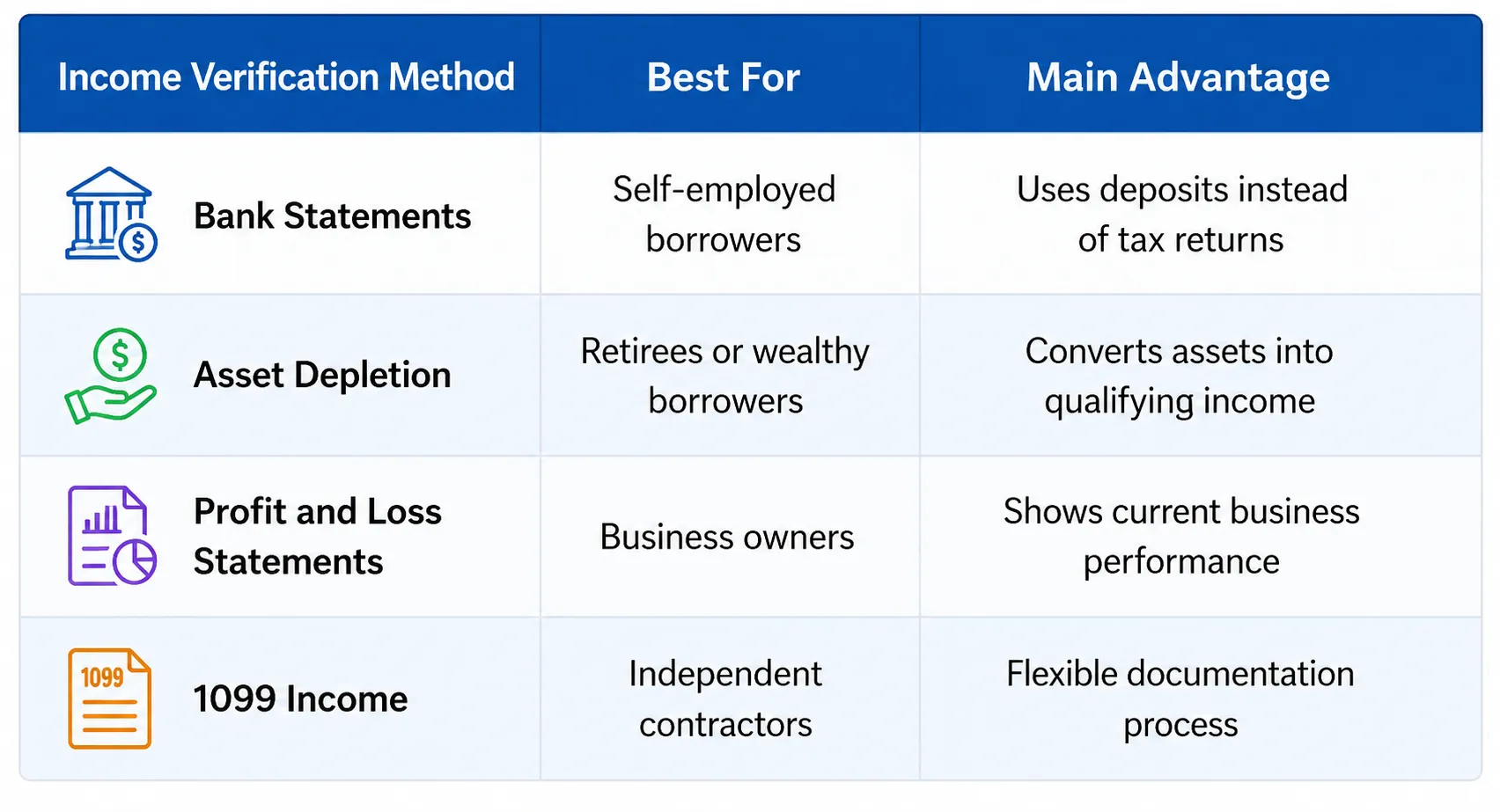
Most lenders offering a Non-QM mortgage prefer to see consistent deposits and stable business activity over the last 12 to 24 months.
Credit Score and Down Payment Expectations
Although qualification standards are more flexible, lenders still want financially responsible borrowers. Your credit score and down payment can strongly affect approval chances and loan terms for a Non-QM mortgage.
Typical Qualification Guidelines
- Minimum credit score often starts around 620
- Higher scores may reduce interest rates
- Down payments typically range from 10% to 20%
- Larger reserves may improve approval odds
Borrowers seeking a Non-QM mortgage should also avoid major recent credit issues such as bankruptcies or foreclosures unless enough recovery time has passed.
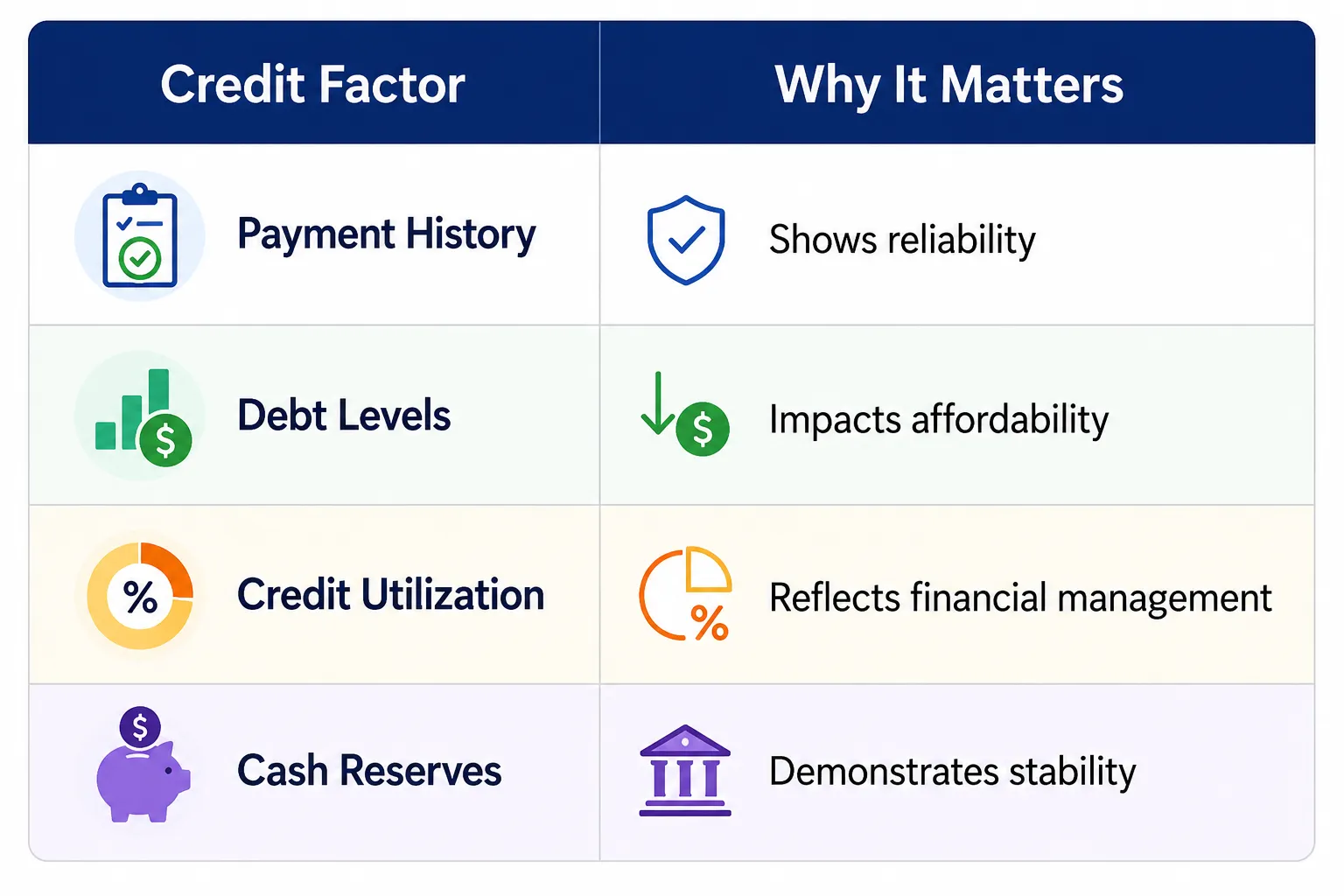
Improving these areas before applying for a Non-QM mortgage can strengthen your application significantly.
Debt-to-Income Ratio and Financial Stability
Debt-to-income ratio, often called DTI, measures how much of your monthly income goes toward debt payments. While conventional loans can be strict, a Non-QM mortgage usually provides more flexibility. Many lenders still prefer borrowers who can show:
- Stable monthly cash flow
- Healthy business revenue
- Emergency savings
- Consistent banking activity
If you have fluctuating income, a Non-QM mortgage lender may average earnings over time instead of focusing on a single month.
For self-employed professionals like doctors or business owners, this flexibility is often a major advantage.
Tips to Improve Approval Chances
Preparing properly before applying for a Non-QM mortgage can make the process smoother and faster.
Smart Steps Before Applying
- Organize bank statements and financial records
- Reduce outstanding debt where possible
- Avoid large unexplained deposits
- Maintain consistent income patterns
- Improve your credit score before application
- Save for a larger down payment
Working with an experienced lender who understands Non-QM mortgage programs is also important. Specialized lenders know how to evaluate complex income situations more effectively than traditional banks.
Why Self-Employed Borrowers Choose Non-QM Mortgage Loans
Traditional mortgage rules often fail to reflect the financial reality of entrepreneurs and independent professionals. A successful business owner may have strong cash flow but limited taxable income due to deductions. For many self-employed borrowers, bank statement loans in Michigan provide an alternative way to qualify by using bank deposits instead of traditional income documentation.
That is why many borrowers prefer a Non-QM mortgage option. These loans focus more on real financial strength rather than rigid paperwork standards. A Non-QM mortgage can help:
- Doctors with private practices
- Real estate investors
- Consultants and freelancers
- Small business owners
- Independent contractors
For many borrowers, this financing solution creates opportunities that conventional loans may deny.
Final Thoughts
Qualifying for a Non-QM mortgage requires preparation, strong financial documentation, and the right lending partner. While these loans offer flexibility, lenders still want proof that borrowers can responsibly repay the mortgage.
By improving your credit profile, organizing income records, and maintaining stable finances, you can greatly increase your approval chances. Whether you are exploring a Non-QM mortgage, bank statement financing, or a 1099 mortgage in Michigan, working with an experienced lender can help you find the right solution for your unique financial situation.




















Sign in to leave a comment.