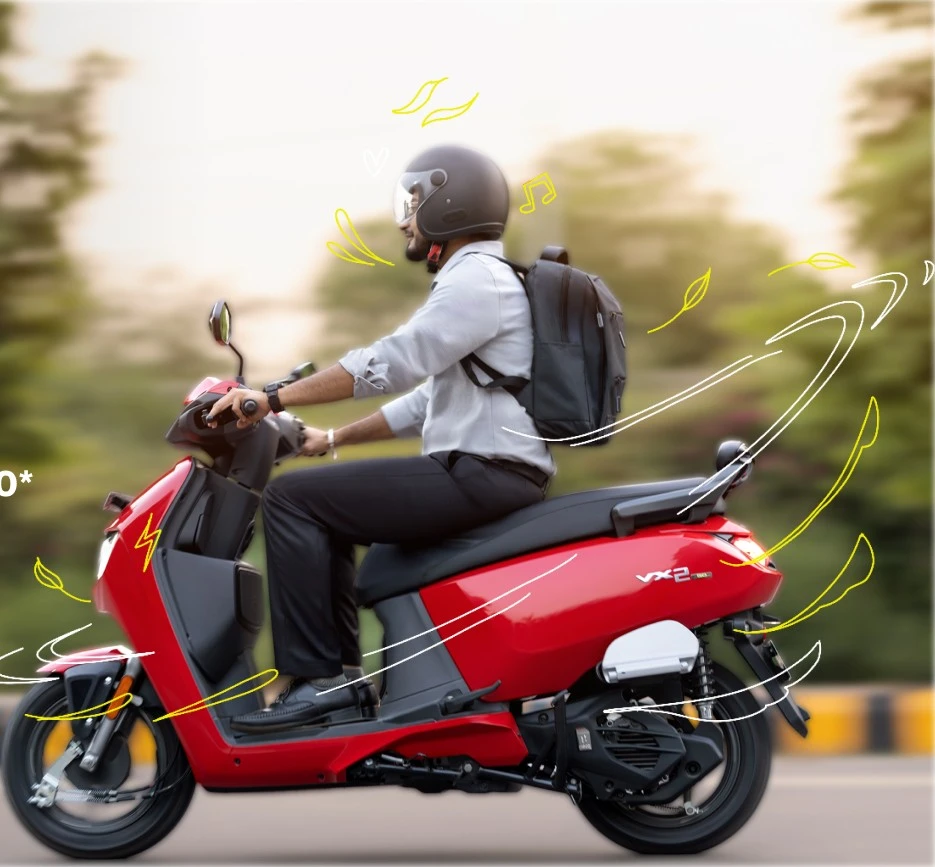

Setting up home charging for my electric scooter was one of those tasks I kept putting off, thinking it would be complicated. Turns out, it's actually simpler than getting a new DTH connection, and way more rewarding.
The Beauty of Plug-and-Play Charging
Most modern electric scooters, including my VIDA, are designed to work with regular household sockets. No need for special wiring or calling an electrician to install fancy charging stations. The portable charger that comes with the scooter plugs into any standard 5A socket: the same one you use for your phone charger or table fan.
What makes the VIDA particularly convenient is its removable battery system. Instead of worrying about whether there's a plug point near my parking spot, I can pop out the battery and charge it indoors. Last week, when it was pouring outside, I charged the battery right next to my study table while working from home. It felt oddly satisfying, like charging a really big power bank.
For scooters with fixed batteries, ensure your parking area has access to a socket. This might mean running an extension cord or getting a socket installed near your usual parking spot: definitely doable, but requires a bit more planning.
Setting Up Your Charging Routine
The key to stress-free electric scooter ownership is to build charging into your daily routine, not treat it as a separate chore. I've found that plugging in twice a week covers my usual daily commute of about 25-30 km, especially when I stick to Eco mode during traffic-heavy stretches.
Here's what works for me: I charge one battery overnight while keeping the spare ready to go. In the morning, I swap them out; it takes all of 30 seconds. It's become as automatic as grabbing my wallet and keys.
If you're living in an apartment without dedicated parking, removable batteries are a game-changer. My colleague who lives on the third floor of an old building simply carries his battery upstairs each night. "It's lighter than my laptop bag," he says, and honestly, he's not wrong.
Practical Setup Considerations
Before you start charging regularly, check that your electrical setup can handle it. Most household wiring is perfectly fine for scooter charging, but if your building is really old or the sockets feel loose, it's worth having an electrician take a look. Better safe than sorry.
Keep your charger in a dry, well-ventilated spot. I initially kept mine in a corner that got damp during monsoons, and I learned that lesson quickly when the charger started acting up. Now it lives on a small shelf in my bedroom, and the battery sits on the floor nearby while charging.
One thing I wish I'd known earlier: invest in a good extension cord with multiple sockets. This way, you don't have to unplug other devices to charge your scooter's battery. A small thing, but it eliminates those minor daily irritations.
When Home Charging Isn't Enough
Even with a solid home charging routine, there are days when you need more juice. Maybe you're planning a longer ride or forgot to charge the night before. This is where fast-charging stations come in handy.
VIDA has over 4600+ charging stations across 250+ cities, and they can get you from 0-80% in about an hour. I've used them a few times when visiting relatives in other cities, just enough time to grab lunch while the scooter charges.
The beauty of having both options is the flexibility. Home charging handles your daily needs, while fast-charging stations are there for those longer adventures or emergency top-ups.
Making It Work for You
Setting up home charging isn't just about the technical setup: it's about creating a system that fits your lifestyle. Some riders prefer charging every night, while others do it twice a week. Some keep their charger permanently plugged in, while others store it away after each use.
The important thing is consistency. Once you find a routine that works, stick with it. Your future self will thank you when you never have to worry about running out of charge halfway to work.
Home charging has genuinely made electric scooter ownership feel effortless. It's one less thing to think about, and honestly, that peace of mind is worth its weight in petrol savings.



Sign in to leave a comment.