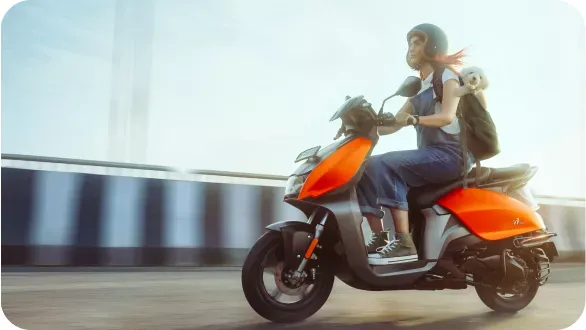

When my colleague asked me last month, "Yaar, electric scooter lena chahiye ya petrol wala?" I realised most of us are still thinking about this wrong. We're obsessing over that initial sticker price without doing the actual math that matters.
Let me break down what three years of ownership really costs, because that's where the rubber meets the road.
The Upfront Reality Check
Yes, electric scooters cost more initially. A decent electric like the VIDA VX2 Plus will set you back around ₹95,000, while a comparable petrol scooter starts at ₹85,000. That ₹10,000 difference is real, but here's what most people miss—subsidies under schemes like EMPS can knock off a chunk of that premium. Factor in the 5% GST on electrics versus 18% on petrol scooters, and suddenly that gap isn't as scary.
But the real story begins after you swipe that card.
Daily Running Costs: Where Math Gets Interesting
This is where I had my lightbulb moment. My daily commute is about 25 km, pretty standard for most city riders. With petrol at ₹105 per litre and my old scooter giving around 45 km per litre, I was spending roughly ₹58 every day just on fuel. That's ₹1,740 a month, or about ₹21,000 a year just to keep moving.
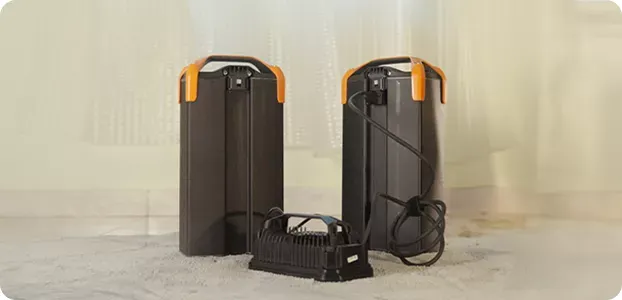
Switch to electric, and the numbers flip dramatically. Charging at home costs me around ₹15-20 for a full charge that gives me 100+ km range. Even if I charge every alternate day, that's barely ₹300 a month. Over a year? About ₹2,500. The difference is staggering—₹18,500 saved annually just on fuel costs.
Do the math for three years, and that's ₹55,500 in your pocket instead of the petrol pump's.
The Maintenance Game Changer
Here's something I didn't expect: my electric scooter barely needs maintenance. No oil changes every few months, no spark plug replacements, no air filter cleanings. The occasional tyre check and brake adjustment is about it. My annual maintenance budget dropped from ₹4,500-5,000 to maybe ₹1,500.
My petrol scooter needed servicing every 3,000 km. With electric, I've gone 8,000 km with just basic checks. Fewer moving parts really do mean fewer headaches.
The Three-Year Reality
Let me put this in perspective with actual numbers. Over three years of typical riding (about 9,000 km annually):
Electric scooter total cost: ₹95,000 (purchase) + ₹7,500 (charging) + ₹4,500 (maintenance) = ₹1,07,000
Petrol scooter total cost: ₹85,000 (purchase) + ₹63,000 (fuel) + ₹15,000 (maintenance) = ₹1,63,000
That's a ₹56,000 difference. Suddenly, that higher upfront cost looks like an investment, not an expense.
The Convenience Factor
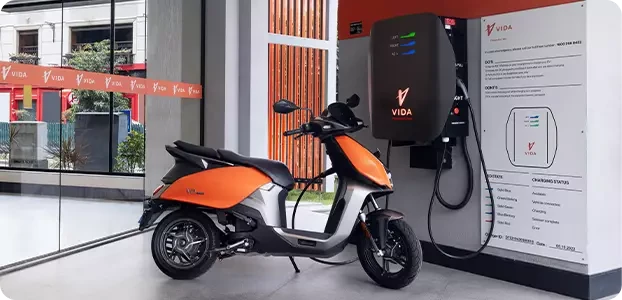
Beyond money, there's the convenience angle. Charging at home means no more petrol pump queues, no more "tank khaali ho gaya" moments in traffic. I plug in my VIDA like I charge my phone, set it and forget it.
Sure, there are days when I wish charging was as quick as filling a tank, but for daily city riding, overnight charging works perfectly. Range anxiety? With 100+ km on a full charge, it's rarely an issue for urban commutes.
The Bottom Line
The real cost conversation isn't just about purchase price; it's about total ownership over time. Electric scooters cost more upfront but save significantly on running costs. If you're a daily commuter doing 20-30 km rides, the math strongly favours electric after the second year.
The transition isn't just about saving money; it's about changing how we think about transportation costs. Instead of daily fuel expenses, you're looking at monthly electricity bills that barely register.
What's your daily commute like? The answer to that question might just solve the electric versus petrol debate for you.



























Sign in to leave a comment.