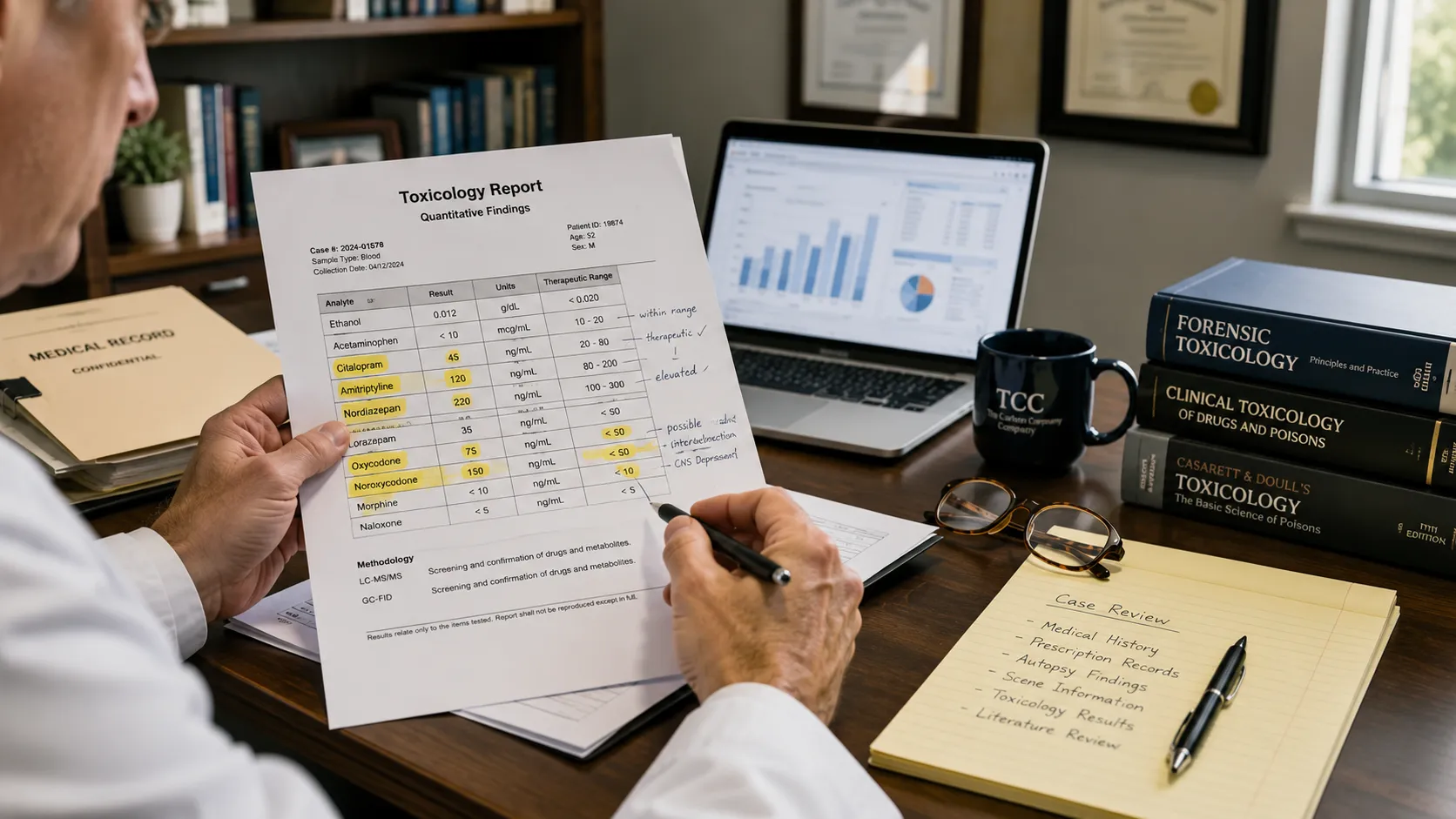

Receiving a postmortem toxicology report after the loss of a loved one can be overwhelming. Whether you're a family member searching for answers, an attorney preparing for litigation, or an investigator reviewing forensic evidence, the report often contains technical terminology and laboratory findings that are difficult to understand without specialized knowledge.
Many people assume the report will provide a straightforward explanation of what happened. In reality, toxicology findings are only one part of a much larger forensic investigation. A detected drug, alcohol level, or chemical substance does not automatically explain the cause of death, nor does a negative result rule out every possibility. Medical history, autopsy findings, underlying health conditions, scene investigation, and other evidence must all be considered before meaningful conclusions can be reached.
Professionals at The Carlson Company regularly help families, attorneys, investigators, and healthcare professionals better understand complex toxicology findings by reviewing laboratory reports within the broader medical and forensic context. Understanding what a postmortem toxicology report can and cannot tell you is the first step toward asking informed questions and making well-supported decisions.
This guide explains what these reports typically include, why they are often misunderstood, and what factors influence their interpretation.
Why Understanding a Toxicology Report Matters
A postmortem toxicology report provides valuable scientific information about substances that were present in the body at the time samples were collected. These findings may help determine whether drugs, alcohol, prescription medications, poisons, or other chemicals played a role in an individual's death.
However, laboratory testing answers only part of the investigation.
A toxicology report identifies what substances were detected, but it does not automatically explain:
- Whether a detected substance caused or contributed to death
- Whether the concentration was expected for that individual
- Whether multiple drugs interacted with one another
- Whether an underlying medical condition influenced the outcome
- How the laboratory findings relate to the autopsy and investigative evidence
Without considering these additional factors, it is easy to misunderstand the significance of the results. This is one reason why postmortem toxicology consulting services can be valuable when laboratory findings are complex, disputed, or require interpretation alongside autopsy records and other supporting evidence.
Instead of viewing toxicology results in isolation, they should always be evaluated as one piece of the overall forensic investigation.
What is a Postmortem Toxicology Report?
A postmortem toxicology report is a scientific laboratory document that identifies drugs, alcohol, medications, toxins, poisons, and other chemical substances detected in biological samples collected after death. The report is prepared following laboratory analysis and serves as an important source of information during death investigations.
Depending on the circumstances of the case, testing may be performed on one or more biological specimens, including:
- Blood
- Urine
- Vitreous humor (fluid from the eye)
- Liver tissue
- Kidney tissue
- Gastric contents
- Hair or other available biological samples
Each specimen can provide different information. Blood may reflect substances circulating within the body, while stomach contents may indicate recent ingestion of medications or chemicals. Tissue samples can provide additional insight depending on the substance being investigated.
It's important to understand that the report documents laboratory findings—it does not independently determine the cause or manner of death. Those conclusions are reached only after toxicology findings are evaluated alongside autopsy results, medical history, and investigative evidence.
What Information Does a Postmortem Toxicology Report Include?
Although report formats vary between laboratories, most contain several standard sections that explain how the testing was performed and what the laboratory identified.
Case Information
The report generally begins with administrative information confirming the identity of the case and the specimens submitted for analysis.
This section may include:
- Case or laboratory reference number
- Date of testing
- Requesting agency
- Type of specimens received
- Chain-of-custody information
These details help ensure the laboratory findings are accurately linked to the correct investigation.
Specimens Analyzed
The report identifies which biological samples were tested.
Common postmortem specimens include:
- Peripheral or central blood
- Urine
- Liver tissue
- Vitreous fluid
- Gastric contents
- Hair
The type of specimen analyzed is important because substances may be present at different concentrations depending on the sample. Forensic professionals interpret each result within the context of the specific specimen rather than comparing all sample types equally.
Laboratory Findings
This section lists the substances identified during testing.
Depending on the case, findings may include:
- Prescription medications
- Over-the-counter medications
- Alcohol
- Controlled substances
- Drug metabolites
- Toxic chemicals
- Environmental contaminants
Where appropriate, measured concentrations and units of measurement are also reported.
Although this is often the first section readers focus on, the presence of a substance alone does not explain its significance. A medication may have been taken exactly as prescribed, while another substance may require additional evaluation before determining whether it contributed to the individual's death.
Reading a Report Is Not the Same as Interpreting It
One of the most common misconceptions is that anyone can determine what happened simply by reading the laboratory results.
In reality, interpreting toxicology findings requires much more than reviewing a list of detected substances or comparing concentration levels with information found online.
Experienced forensic specialists evaluate laboratory findings alongside numerous case-specific factors, including:
- The individual's medical history
- Prescription and medication records
- Autopsy findings
- Known health conditions
- Circumstances surrounding the death
- Potential drug interactions
- The type of biological specimen analyzed
- Published scientific literature and toxicological reference data
Only after these factors have been considered can laboratory findings be placed into their proper medical and forensic context.
For example, a medication detected within a reported therapeutic range may still have contributed to death when combined with another drug or a significant underlying medical condition. Conversely, a concentration that appears unusually high may not necessarily indicate an overdose if postmortem changes affected the specimen or if the individual had developed tolerance during long-term treatment.
This is why experienced toxicologists avoid drawing conclusions based solely on individual laboratory values.
Five Things People Often Misunderstand About Toxicology Reports
Even when a report appears straightforward, several common misconceptions can lead to incorrect assumptions about the findings.
1. A Detected Drug Is Not Automatically the Cause of Death
Finding a drug during laboratory testing simply confirms that it was present in the analyzed specimen. It does not establish that the substance caused or contributed to the individual's death.
2. Higher Drug Levels Do Not Always Mean an Overdose
Drug concentrations must be interpreted within the context of the individual's health, prescription history, tolerance, sample type, and other medical findings. Similar concentrations may have very different significance from one person to another.
3. A Negative Toxicology Result Does Not Answer Every Question
Some substances degrade after death, while others require specialized laboratory methods for detection. A negative result does not necessarily eliminate every possible explanation.
4. Multiple Substances Can Influence One Another
Several medications or chemicals that may be relatively safe on their own can produce very different effects when combined. Evaluating potential drug interactions is an important part of forensic interpretation.
5. Toxicology Findings Must Be Considered Alongside the Autopsy
Laboratory findings represent only one component of a comprehensive death investigation. Medical history, autopsy findings, scene investigation, and toxicology results must all be evaluated together before determining the cause and manner of death.
When Should You Consider an Independent Toxicology Review?
In many cases, the findings presented in a postmortem toxicology report are consistent with the overall investigation. However, there are situations where the results raise additional questions or appear difficult to reconcile with the reported cause of death or the known circumstances surrounding the case.
An independent toxicology review may be appropriate when:
- The cause of death remains unclear.
- Multiple drugs or medications were detected.
- The toxicology findings appear inconsistent with the autopsy results.
- Family members have unanswered questions about the laboratory findings.
- Attorneys require an expert review for litigation or case preparation.
- Insurance or probate matters depend on accurately interpreting the toxicology results.
An independent review does not repeat the laboratory testing. Instead, it involves evaluating the toxicology report alongside supporting records—including autopsy findings, medical history, prescription records, and investigative information—to determine the significance of the laboratory findings within the context of the entire case.
Why Toxicology Reports Should Never Be Viewed in Isolation
One of the biggest mistakes people make is treating a toxicology report as the final answer to what caused a person's death.
In reality, toxicology is just one component of a comprehensive forensic investigation. Experienced forensic professionals consider laboratory findings together with numerous other sources of information before reaching any conclusions.
These may include:
- Autopsy findings
- Medical history
- Prescription and medication records
- Emergency medical records
- Scene investigation reports
- Witness statements, when available
- Circumstances surrounding the death
Each piece of evidence contributes to a more complete understanding of the case.
For example, a drug concentration that appears significant on paper may have little clinical relevance when viewed alongside the individual's medical history. Likewise, substances detected during testing may represent routine prescription use rather than a contributing factor in the death.
Looking at the complete forensic picture helps prevent isolated laboratory findings from being misunderstood or taken out of context.
Why Expert Interpretation Matters
While a postmortem toxicology report provides valuable laboratory data, determining the significance of those findings requires scientific expertise.
Experienced toxicology consultants evaluate far more than a list of detected substances. Their review may include questions such as:
- Are the reported drug concentrations consistent with prescribed use?
- Could interactions between multiple medications have influenced the outcome?
- Do the toxicology findings support the reported cause of death?
- Are the laboratory findings consistent with the autopsy?
- Are there alternative explanations that should be considered?
Answering these questions often requires reviewing medical records, autopsy reports, prescription history, and investigative documentation in addition to the toxicology report itself.
This comprehensive approach provides a clearer understanding of how laboratory findings fit within the broader medical and forensic context.
Conclusion
A postmortem toxicology report is an important part of many death investigations, but it is not intended to provide all the answers on its own.
While the report identifies drugs, alcohol, medications, toxins, and other chemical substances detected during laboratory testing, interpreting those findings requires careful consideration of the individual's medical history, autopsy findings, investigative evidence, and the circumstances surrounding the death.
Understanding what a toxicology report can—and cannot—tell you helps prevent common misunderstandings and allows families, attorneys, investigators, and healthcare professionals to make more informed decisions. When laboratory findings are complex, unexpected, or have significant legal or medical implications, obtaining an expert review can provide valuable scientific context and a more complete understanding of the case.
Frequently Asked Questions
What is a postmortem toxicology report?
A postmortem toxicology report is a laboratory document that identifies drugs, alcohol, medications, toxins, poisons, and other chemical substances detected in biological samples collected after death. The findings help support medical and forensic investigations.
Does a toxicology report determine the cause of death?
No. A toxicology report provides laboratory findings, but the cause of death is determined only after considering those findings alongside the autopsy, medical history, investigative evidence, and other relevant information.
Why can toxicology reports be difficult to interpret?
The significance of laboratory findings depends on many factors, including drug concentrations, prescription history, underlying medical conditions, sample type, potential drug interactions, and the circumstances surrounding the death.
What information is included in a postmortem toxicology report?
Most reports include case information, the biological specimens analyzed, laboratory methods used, substances detected, and measured concentrations where applicable.
When should someone seek an independent toxicology review?
An independent review may be beneficial when toxicology findings are difficult to understand, multiple substances were detected, the cause of death remains uncertain, or additional scientific interpretation is needed for legal, insurance, or investigative purposes.
Can prescription medications appear in a toxicology report?
Yes. Prescription medications are commonly identified during postmortem toxicology testing. Their presence alone does not indicate misuse or that they contributed to the individual's death.





























Sign in to leave a comment.