
Anyone who has baked pizza at home eventually runs into this question: why does dough behave so differently from one recipe to the next? A lot of it comes down to hydration, the ratio of water to flour by weight.
The math is simple: water weight divided by flour weight, times 100. So 1,000 grams of flour with 650 grams of water works out to 65% hydration. Even a five point shift changes how the dough feels, stretches, and bakes.
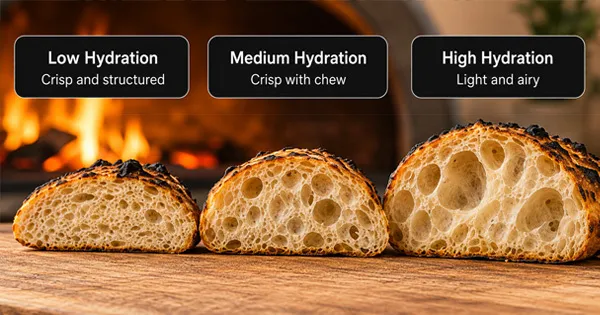
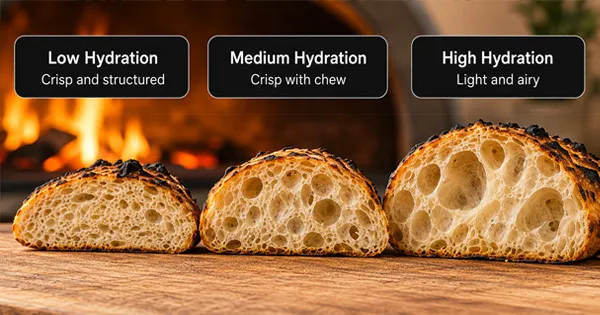
Lower hydration, around 55 to 62%, tends to be firmer and easier to shape, which makes it a good starting point for beginners, though it won't produce the big, irregular air pockets seen in artisan crusts. Medium hydration, roughly 63 to 68%, is often the more forgiving middle ground: soft enough to stretch, but still manageable, with a decent balance of chew and crispness. Push past 69% and the dough gets sticky and harder to control, but with the right flour it can produce a lighter, more open crumb and stronger oven spring.
Hydration alone doesn't decide the outcome. Flour strength, fermentation time, mixing, and oven temperature all interact with it, so two doughs at the same hydration percentage can turn out quite differently depending on those other factors. Baking heat especially plays a role, since high temperatures convert the dough's water to steam quickly, which drives the blistering and char associated with wood fired pizza.
For wetter, high hydration dough, resist the urge to add more flour when it feels sticky. Resting, stretch and fold, and gentle shaping build enough strength to hold the water without losing the open structure that makes the extra hydration worthwhile.
There's no single correct hydration level. It depends on the crust you're after and how comfortable you are handling wetter dough. For anyone who wants to go deeper, ilFornino has a longer breakdown of the different hydration ranges along with a dough calculator for working out flour, water, yeast, and salt amounts: How Dough Hydration Transforms Your Pizza





























Sign in to leave a comment.