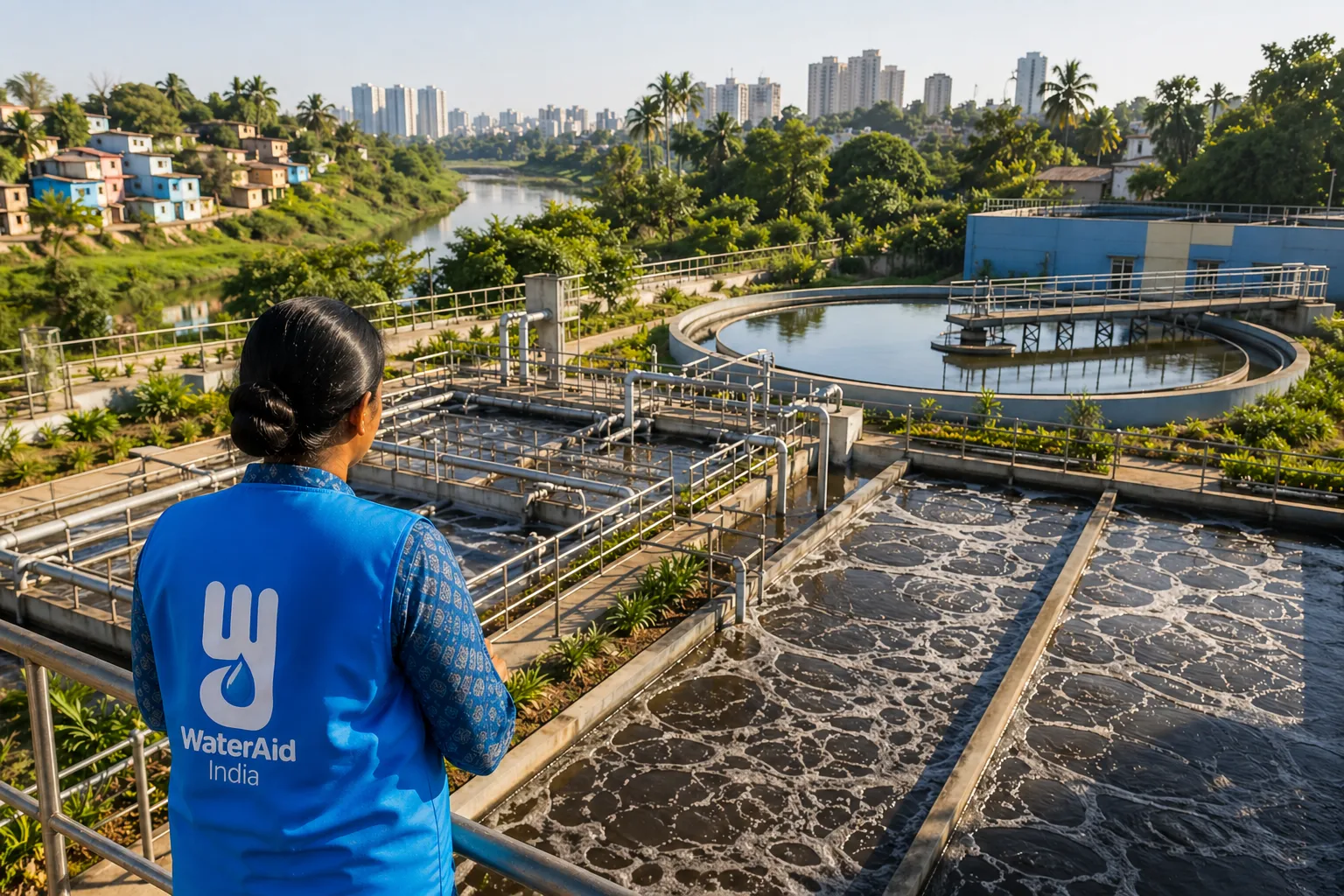

India is home to more than 1.4 billion people, yet a significant portion of the country's wastewater domestic, industrial, and agricultural flows untreated into rivers, lakes, and groundwater reserves. This crisis sits at the intersection of public health, urban planning, and environmental degradation. WaterAid India, the country's branch of the global nonprofit WaterAid, has been working for decades to confront this challenge through community-driven interventions, policy advocacy, and partnership with governments and civil society organisations.
The Scale of the Problem
India generates an estimated 72,368 million litres of sewage per day from urban areas alone, according to the Central Pollution Control Board. Yet the country's treatment capacity covers barely a fraction of this volume. In rural areas, the gap is even wider fecal sludge from pit latrines and septic tanks routinely enters local water bodies untreated, contaminating drinking water sources and fuelling outbreaks of waterborne diseases like cholera, typhoid, and diarrhea. The health burden falls heaviest on women, children, and marginalized communities who lack access to safe sanitation infrastructure.
WaterAid India's Approach
WaterAid India operates across multiple states including Uttar Pradesh, Odisha, Bihar, Jharkhand, and Rajasthan focusing on both urban and peri-urban contexts where sanitation gaps are most acute. Its strategy for wastewater and sewage treatment operates on three interconnected levels: infrastructure support, capacity building, and systemic policy change.
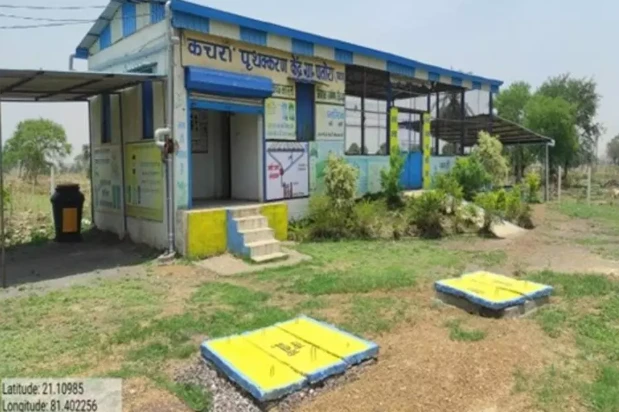
At the infrastructure level, WaterAid India has supported the construction and rehabilitation of Faecal Sludge and Septage Management (FSSM) systems in smaller towns and cities where large-scale sewage treatment plants (STPs) are neither financially viable nor technically feasible. These decentralised treatment facilities process fecal sludge from households that rely on onsite sanitation systems the reality for the vast majority of India's non-sewered population. By working with urban local bodies (ULBs), WaterAid helps municipalities design affordable, context-specific solutions that can be maintained locally without depending on specialised technical expertise.
Faecal Sludge Management as a Game-Changer
One of WaterAid India's most impactful contributions has been championing FSSM as a credible, scalable alternative to conventional sewerage networks. In cities like Nanded in Maharashtra and several towns in Odisha and Uttar Pradesh, WaterAid-supported FSSM systems are operational collecting, transporting, treating, and safely disposing or reusing fecal sludge. These plants convert what was once an environmental hazard into treated effluent that meets basic standards before discharge, and in some cases, into biosolids usable as agricultural compost.
This model is particularly well-suited to India's secondary and tertiary cities, where dense populations, informal settlements, and limited municipal budgets make conventional sewerage expansion impractical over the short to medium term.
Policy Advocacy and Capacity Building
Beyond infrastructure, WaterAid India has invested significantly in shaping the policy environment. The organisation has engaged with the Ministry of Housing and Urban Affairs, contributed to national sanitation frameworks under the Swachh Bharat Mission, and collaborated with state governments on FSSM guidelines and regulations. Ensuring that sanitation service delivery is embedded within city sanitation plans rather than left to ad hoc interventions has been a consistent advocacy priority.
Training programmes for municipal engineers, health officials, and sanitation workers are equally central to WaterAid India's work. Technical knowledge of wastewater management is often absent at the local governance level, and WaterAid addresses this by building in-house capacity within ULBs, making long-term sustainability of interventions far more likely.
Inclusion and Gender Justice
WaterAid India ensures that its wastewater programmes are designed with social equity in mind. Women and girls bear a disproportionate share of the burden when sanitation systems fail from health risks during menstruation to safety concerns when open defecation remains prevalent. WaterAid integrates gender-sensitive design and community engagement into its projects, ensuring that the voices of women and marginalised groups shape both infrastructure decisions and service delivery models.
Looking Ahead
As Indian cities continue to grow, the pressure on wastewater systems will only intensify. Climate change is compounding the challenge, with erratic rainfall patterns increasing both flooding which can overwhelm treatment infrastructure and drought, making wastewater reuse economically and environmentally critical. WaterAid India's work to mainstream decentralised treatment, fecal sludge management, and inclusive sanitation governance is positioning the country to meet these pressures with practical, people-centred solutions.
The road ahead is long, but the groundwork being laid today is reshaping how India thinks about its water future.













Sign in to leave a comment.