
When winter temperatures drop and summer heat arrives, homeowners want one system that can handle both extremes without driving up energy costs. Hyper Heat mini split installation offers a practical solution for homes that need dependable heating and cooling, particularly in climates where conventional heat pumps may struggle during freezing weather.
Unlike standard systems that can lose heating capacity as outdoor temperatures fall, hyper heat technology is designed to deliver reliable warmth in colder conditions. It can also provide efficient cooling during warmer months, making it an attractive option for bedrooms, additions, older homes, garages, and spaces without existing ductwork.
For homeowners considering mini split heat pump installation, understanding how the technology works, what installation involves, and when professional assistance is necessary can make the decision much easier.
What Makes Hyper Heat Mini Split Installation Different?
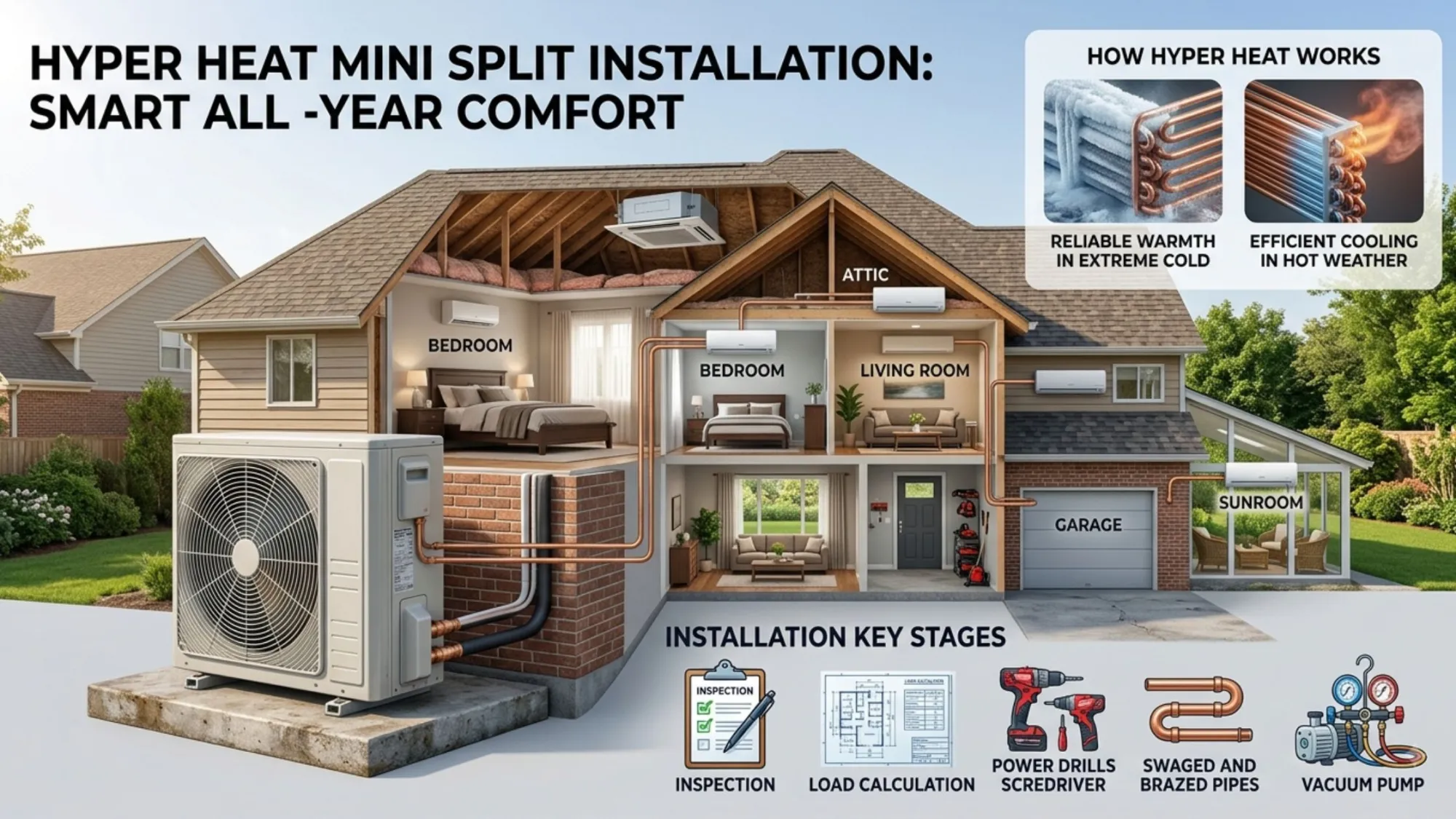
The biggest advantage of hyper heat mini split installation is its ability to maintain useful heating performance when outdoor temperatures become extremely cold. Traditional heat pumps may require supplemental heating as temperatures fall, while advanced hyper heat models are specifically engineered to operate effectively in colder climates.
These systems use an outdoor compressor connected to one or more indoor air-handling units. Because they do not depend on a large network of ducts, they can deliver conditioned air directly into individual rooms.
That design offers several benefits:
- Efficient heating and cooling: One system can serve multiple comfort needs throughout the year.
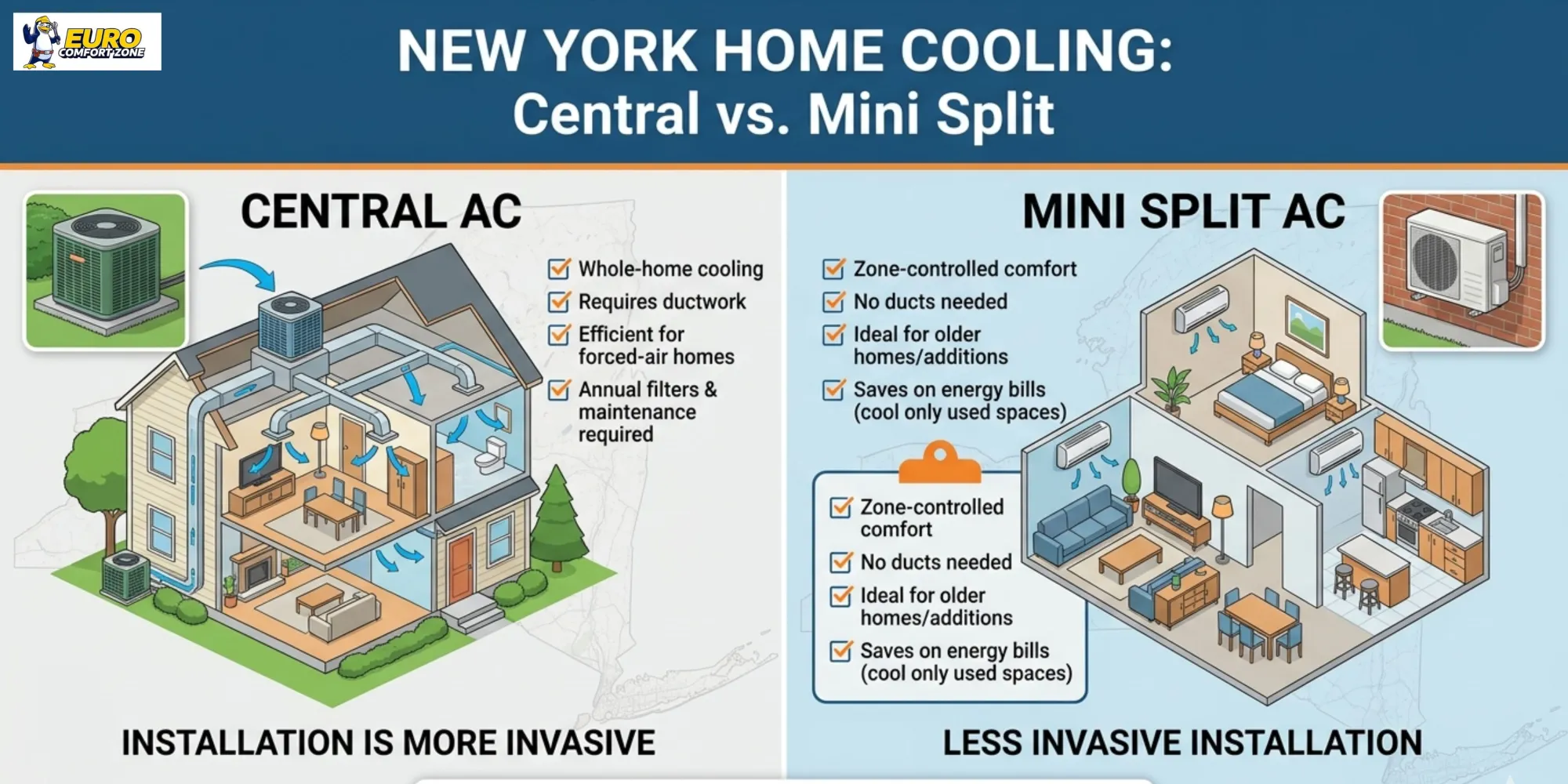
- Zone-based temperature control: Individual rooms can often be adjusted independently.
- Reduced duct losses: Direct delivery can avoid energy losses associated with poorly insulated ductwork.
- Flexible installation: Indoor units can be positioned where heating or cooling is needed most.
- Better comfort in challenging spaces: They can work well for additions, converted rooms, and areas that are difficult to connect to central HVAC.
Why Homeowners Are Choosing Hyper Heat HVAC Systems
Energy efficiency is only part of the appeal. Modern hyper heat HVAC systems are designed around comfort, flexibility, and year-round operation.
For example, a homeowner with a finished attic may not want to extend an existing duct system just to condition one area. A properly sized mini split can provide that space with independent heating and cooling.
The same approach can work for a home office, sunroom, workshop, or room addition.
Another advantage is temperature control. Instead of heating or cooling the entire house to accommodate one occupied room, zoning allows homeowners to focus energy where it is actually needed.
However, the equipment itself does not guarantee good performance. Correct sizing, refrigerant-line installation, electrical work, condensate management, airflow planning, and commissioning all matter. This is why professional installation is important.
What to Expect During Mini Split Heat Pump Installation
A quality mini split heat pump installation begins before the equipment is mounted. An experienced HVAC professional should evaluate the property's layout, insulation, windows, existing heating and cooling equipment, electrical capacity, and expected heating and cooling loads.
The installation generally involves several key stages.
1. Selecting the Right System
Capacity should be based on the space rather than simply choosing the largest available unit. Oversized equipment can cycle inefficiently, while an undersized system may struggle to maintain comfortable temperatures.
2. Positioning Indoor and Outdoor Components
Indoor heads need appropriate placement for effective air distribution. The outdoor unit also requires adequate clearance and a suitable location that supports airflow and service access.
3. Connecting Refrigerant and Electrical Lines
Refrigerant lines, wiring, and drainage must be installed according to manufacturer specifications and applicable local requirements. Small installation errors can eventually contribute to leaks, poor performance, or premature component failure.
4. Testing and Commissioning
After installation, the system should be checked for proper operation, airflow, temperature performance, drainage, and controls. Homeowners should also receive guidance on operation and routine maintenance.
Installation Is Only Half the Equation
Even a high-quality system needs regular care. Filters should be cleaned or replaced according to manufacturer recommendations, indoor coils should remain clean, and the outdoor unit should be kept free of leaves, dirt, and other obstructions.
Professional inspections can also identify developing issues before they become expensive failures.
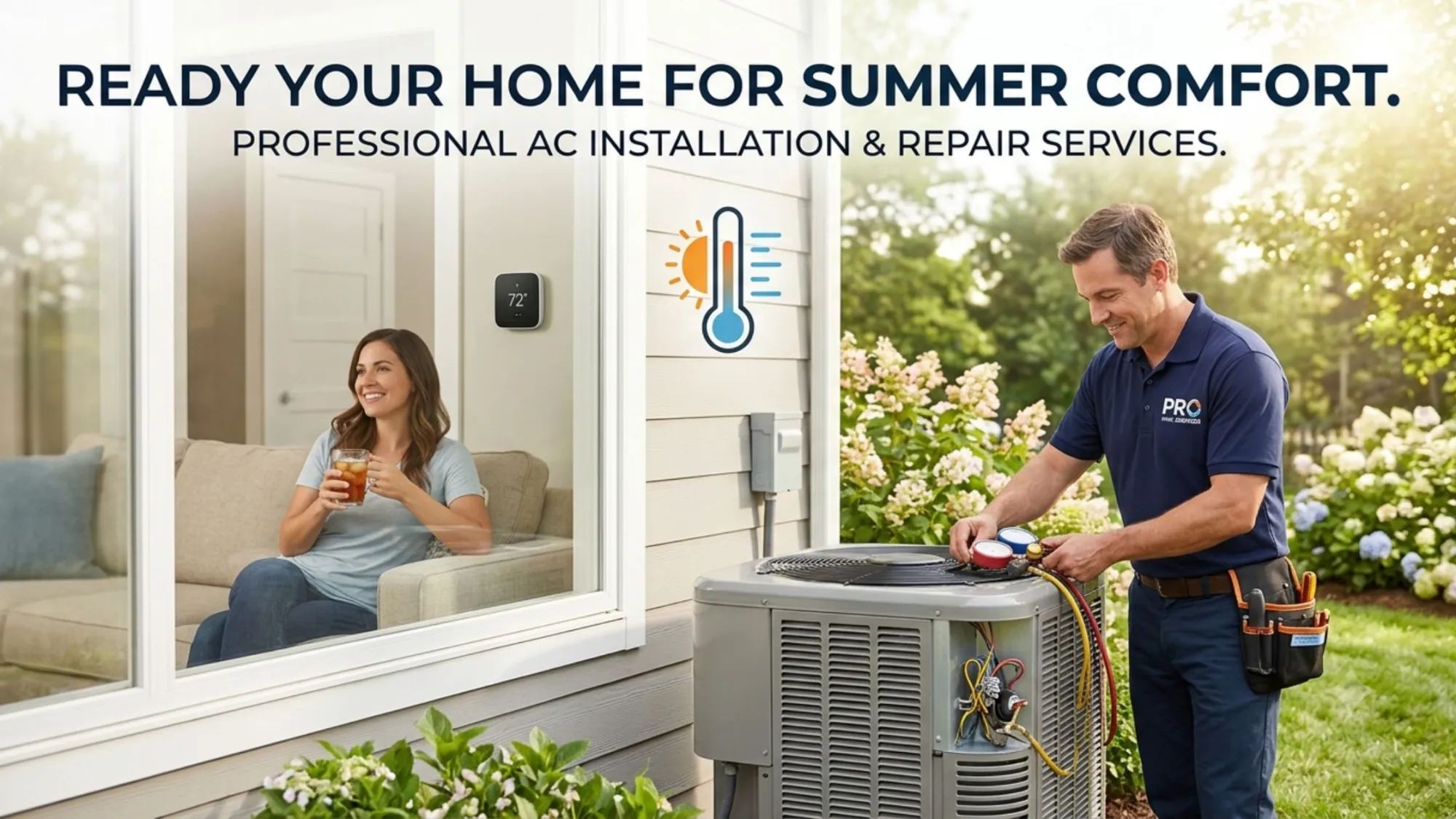
If an existing cooling system begins making unusual noises, producing weak airflow, leaking water, or struggling to maintain the desired temperature, contacting home ac repair services promptly can prevent a minor issue from becoming a major breakdown.
The same principle applies when seeking ac repair and service. A professional technician can diagnose the underlying problem rather than repeatedly treating the symptoms.
When Repair Makes More Sense Than Replacement
Not every HVAC problem requires a new system. A relatively newer unit with a minor electrical, drainage, or airflow problem may simply need repair.
Homeowners searching for affordable ac repair should look beyond the initial price and consider the quality of diagnosis, replacement parts, workmanship, and expected system life.
On the other hand, frequent breakdowns, escalating energy bills, declining comfort, and an aging system may indicate that continued repairs are no longer economical. In those situations, discussing a modern heat-pump solution with a qualified HVAC professional may be worthwhile.
Is Hyper Heat Right for Your Home?
Hyper Heat mini split installation can be an excellent option when a property needs efficient heating and cooling without extensive ductwork. It is particularly useful for zoned comfort, additions, older homes, and rooms that have historically been difficult to condition.
Still, every property is different. Climate, insulation, electrical service, room size, building design, and homeowner expectations should all be considered before selecting equipment.
The best approach is to have a qualified HVAC professional assess the property and recommend a properly sized system rather than choosing equipment based solely on advertised capacity.
Frequently Asked Questions
1. What is hyper heat technology?
Hyper heat technology is designed to help certain heat-pump systems maintain heating performance in very cold outdoor temperatures. Exact operating ranges and capacity vary by model.
2. How long does mini split installation take?
Installation time depends on the number of indoor units, accessibility, electrical requirements, and building layout. A straightforward single-zone installation may take considerably less time than a multi-zone project.
3. Can a hyper heat mini split cool a home in summer?
Yes. These systems are designed to provide both heating and cooling, allowing one system to support year-round indoor comfort.
4. Does a mini split require ductwork?
No. Mini split systems generally deliver conditioned air through indoor air handlers connected to an outdoor unit, eliminating the need for conventional duct networks.
5. Should homeowners install a hyper heat system themselves?
Professional installation is strongly recommended. Refrigerant handling, electrical connections, equipment sizing, drainage, and commissioning require appropriate knowledge, tools, and compliance with applicable regulations.
A Comfortable Home Starts With the Right System
Choosing a heating and cooling system is about more than purchasing equipment. Proper sizing, installation, maintenance, and timely repairs all influence long-term comfort and efficiency.
For homeowners dealing with cold winters, difficult-to-condition rooms, or aging HVAC equipment, hyper heat mini split installation deserves serious consideration. With professional assessment and installation, this technology can provide flexible year-round comfort while reducing dependence on traditional ducted systems.




























Sign in to leave a comment.