
Summer in New York is no joke. Whether you're dealing with the sweltering heat on Long Island or trying to cool down a home that's never had ductwork, getting your air conditioning situation sorted before temperatures spike is one of the smartest things you can do. But between the different system types, the permits, and the dozens of contractors promising the best deal in town, it's easy to feel overwhelmed.
This guide is here to cut through the noise — so you can make a confident, informed decision about your home's comfort.
Central AC vs. Mini Split: Which One Is Right for Your Home?
This is the first question most homeowners face, and the answer depends entirely on your home's layout and existing infrastructure.
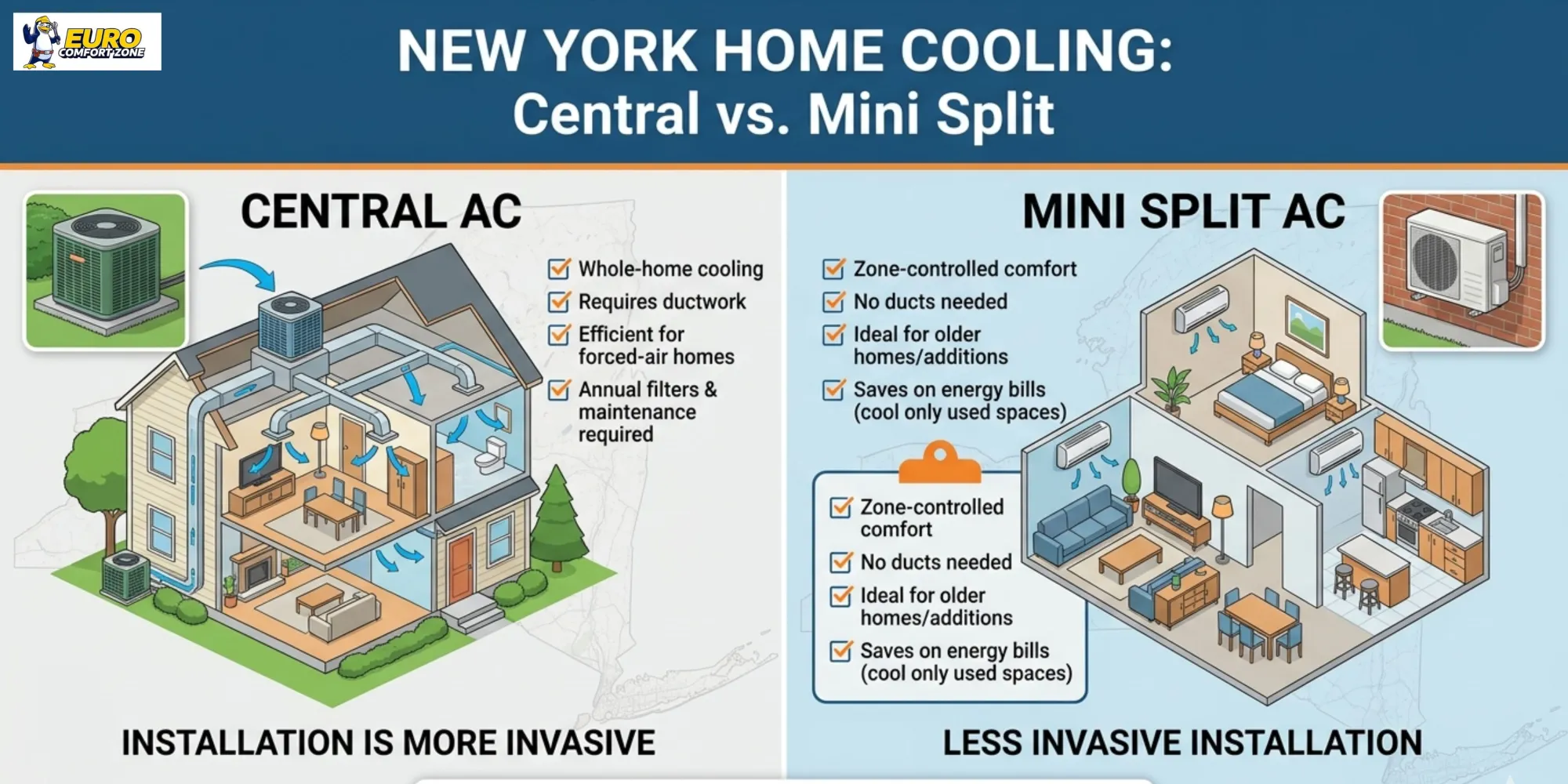
Central air conditioning works through a network of ducts that distribute cooled air throughout your entire home from a single unit. If your home already has ductwork from a forced-air heating system, installing central air conditioning is usually the most efficient route. It keeps things clean, quiet, and consistent room to room. That said, central ac maintenance in NY is an ongoing commitment — filters need replacing, refrigerant levels need checking, and coils need cleaning at least once a year to keep efficiency where it should be.
Mini split AC installation, on the other hand, is ideal for homes without existing ductwork, older construction, additions, or situations where you want zone-controlled comfort. A mini split has an outdoor compressor connected to one or more indoor air handlers — no ducts required. Installation is less invasive, and you only cool the spaces you're actively using, which can mean real savings on your energy bill.
Neither option is universally better. A licensed HVAC professional can assess your home and tell you which system actually makes sense for your layout and budget.
What Happens During an AC Installation?
A lot of homeowners don't realize how involved a proper installation actually is. Here's a simplified rundown of what a quality central air conditioning install looks like:
- Load calculation — A good contractor doesn't just guess at unit size. They calculate your home's cooling load based on square footage, ceiling height, insulation, window placement, and local climate. An oversized unit cycles on and off too quickly, leaving your home humid and uncomfortable. An undersized one runs constantly and never quite gets there.
- Equipment selection — Once the load is calculated, your contractor recommends a unit (or units) that match your home's needs and your efficiency goals.
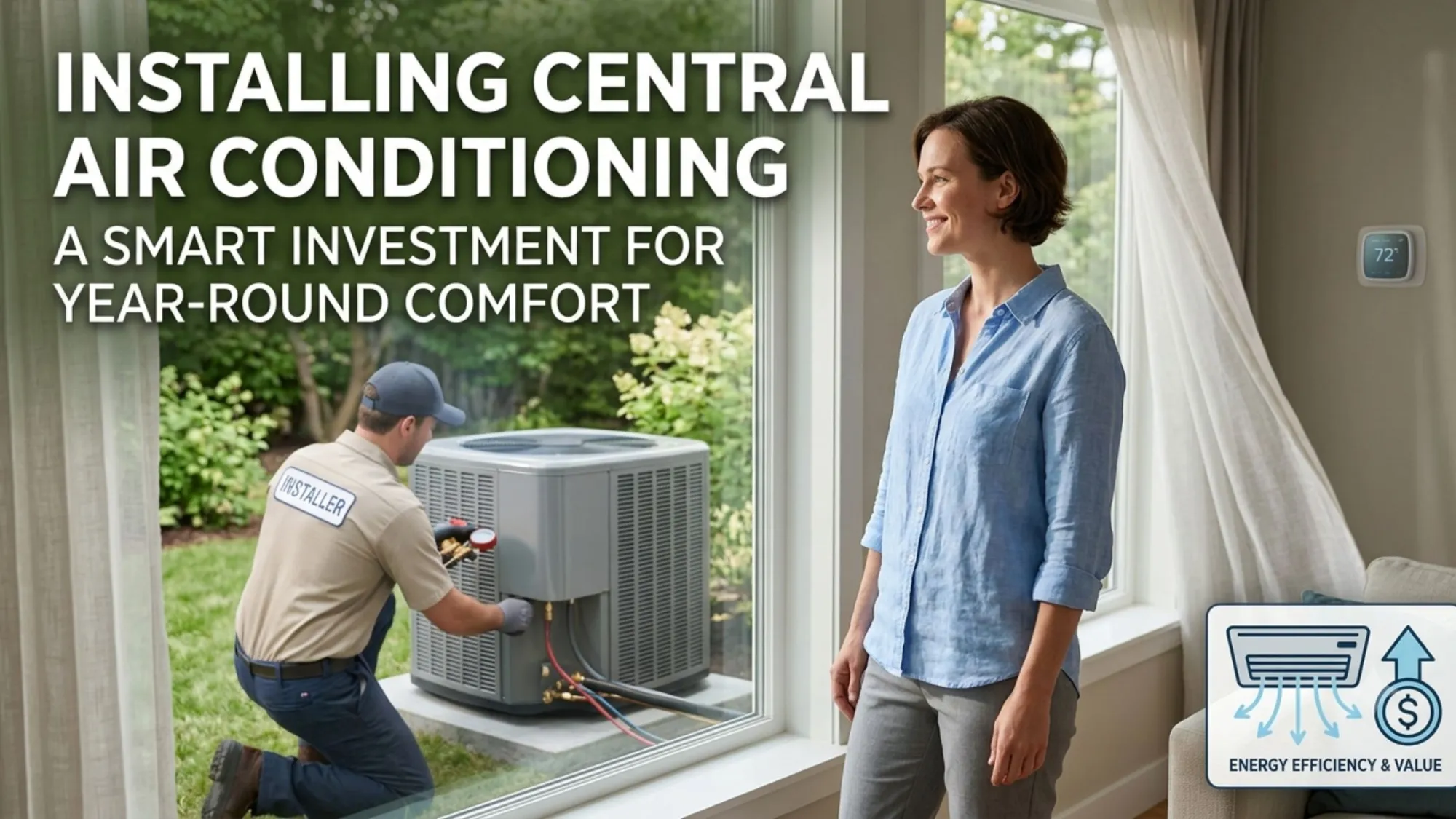
- Installation day — For central systems, this means placing the outdoor condenser, installing the air handler, connecting refrigerant lines, and integrating with your existing ductwork or installing new ducts if needed. For mini splits, it's cleaner: mounting indoor heads, running refrigerant lines through a small wall penetration, and wiring the system.
- Testing and commissioning — Before they leave, a professional should verify refrigerant charge, airflow, thermostat operation, and electrical connections. This step is often skipped by corners-cutting crews — and it's where problems start.
The Hidden Cost of Skipping Maintenance
A lot of homeowners treat their AC like a set-it-and-forget-it appliance. That works fine — until it doesn't.
Skipping annual central AC maintenance in NY is one of the top reasons systems fail prematurely. Dirty coils make the system work harder. Low refrigerant causes compressor strain. Clogged drains lead to water damage. Most of these issues are inexpensive to address during a tune-up and become very expensive once they become emergencies.
The math is simple: a yearly maintenance visit costs a fraction of what emergency air conditioning installation and repair costs when a neglected system breaks down in July.
How to Choose the Right Local HVAC Contractor
This might be the most important decision in the entire process. The equipment brand matters less than the quality of the installation — and a poor installation will cause problems no matter how good the equipment is.
When evaluating local HVAC contractors, look for:
- Licensing and insurance — In New York, HVAC contractors must be licensed. Always ask for proof before any work begins.
- Experience with your system type — Not every contractor is equally comfortable with ductless systems, boilers, or heat pump installations. Ask specifically about their experience with what you're getting.
- Written estimates — Any reputable contractor will give you a detailed written quote. Verbal estimates leave room for surprises.
- References or reviews — Online reviews are a reasonable starting point, but don't underestimate the value of asking a neighbor who they've used.
- Guarantees — Quality contractors stand behind their work. Ask what's covered after installation and for how long.
Be cautious of any contractor pushing you toward the most expensive option immediately, or one who quotes suspiciously low. Both are red flags.
Don't Wait Until It Breaks
The worst time to deal with air conditioning installation and repair is mid-August when every HVAC company in the area has a two-week wait. The best time is right now — or at the latest, early spring — when contractors have availability, lead times on equipment are shorter, and you're not making decisions under pressure.
Whether you're replacing an aging central system, adding ductless comfort to a new addition, or simply trying to get ahead of your first summer without AC, taking the time to understand your options and work with a qualified, local team makes all the difference.
Your home should be a place of comfort, not a guessing game. Choose wisely, maintain consistently, and don't be afraid to ask the hard questions before signing anything.
Euro Comfort Zone serves homeowners across Nassau and Suffolk County with professional HVAC installation, maintenance, and repair. Their licensed technicians specialize in central air systems, ductless mini splits, and year-round comfort solutions.






















Sign in to leave a comment.