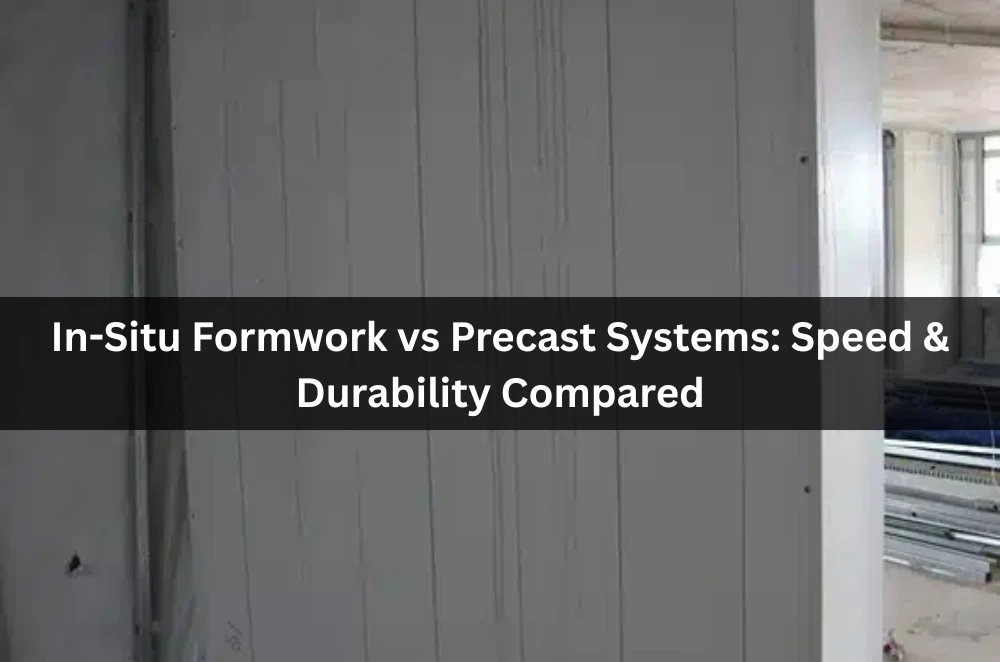

Site teams juggle time, budget, and structural performance every week, and the formwork decision shapes all three. In-situ pours can move with the building’s geometry; precast arrives crisp and fast but needs cranes and careful staging. The trick is translating drawings into dependable walls that still meet programme pressure. In practice, that means starting with durable wall solutions as a lens: think of durability not as a single property, but as the sum of mix design, formwork quality, curing control, and the realities of site logistics. I’ll share how that plays out under real deadlines.
Defining the methods and their trade-offs
Both systems aim for dimensional accuracy and long service life, but they get there differently. Understanding the mechanics behind each approach helps avoid false choices and sets realistic expectations for programme and finish quality.
- In-situ formwork: Casts concrete directly on site, adapting to complex footprints and continuous reinforcement runs.
- Precast elements: Delivers factory-cast panels or modules with tight tolerances and predictable lead times.
- Interface management: Coordinates joints, embeds, and penetrations so follow-on trades meet clean edges.
- Curing control: Balances strength gain and surface integrity against schedule compression.
From a specification perspective, safety and workmanship are anchored by guides such as concrete construction standards that frame good practice for formwork setup, stripping, and worker protection. Those principles keep decisions grounded when pressure ramps up.
Where precast shines—and where it hits limits
Precast is a machine for certainty: weather-independent casting, repetitive accuracy, and potentially fewer site hours. Yet not every site can absorb the logistics—turning radii, street closures, set-down space—and not every design wants the jointing it implies.
- Speed potential: Gains arrive through parallel manufacturing while foundations progress on site.
- Finish predictability: Smooth factory forms reduce remedial work and patching after erection.
- Cranage realities: Heavy lifts require clear access, coordination, and contingency for wind holds.
- Tolerance stacking: Panel-to-panel joints add alignment demands that ripple into fit-out.
I’ve stood with a foreperson watching a crane idle as wind limits held for hours; the day’s neat plan slid. That’s not failure—just a reminder that speed on paper becomes logistics in the lane. In contrast, a curved stair core poured in place avoided splice-heavy geometry and came out cleaner than expected.
Why in-situ still earns its keep on complex geometry
On irregular sites or with strongly articulated façades, in situ remains agile. The form can bend to the architect’s line, reinforcement can continue through corners, and penetrations can be coordinated with less cutting after the fact. That agility supports long-term performance in ways that aren’t always obvious on a programme chart.
- Continuity advantages: Continuous reinforcement paths reduce joint vulnerability and water ingress risk.
- Thermal mass tuning: Monolithic pours simplify energy modelling and temperature lag calculations.
- Detail flexibility: On-the-spot adjustments absorb minor design shifts without remanufacturing.
- Finish options: With the right methodology, “off-form” finishes can rival factory finishes.
If surface expression matters, note that an off form concrete wall approach can deliver crisp lines and shadow quality when the crew controls tie placement, vibration, and strip timing. I’ve seen teams mock up a single bay, adjust the tie rhythm, and lock in a pattern that reads intentional rather than accidental.
Permanent formwork, hybrid thinking, and site tempo
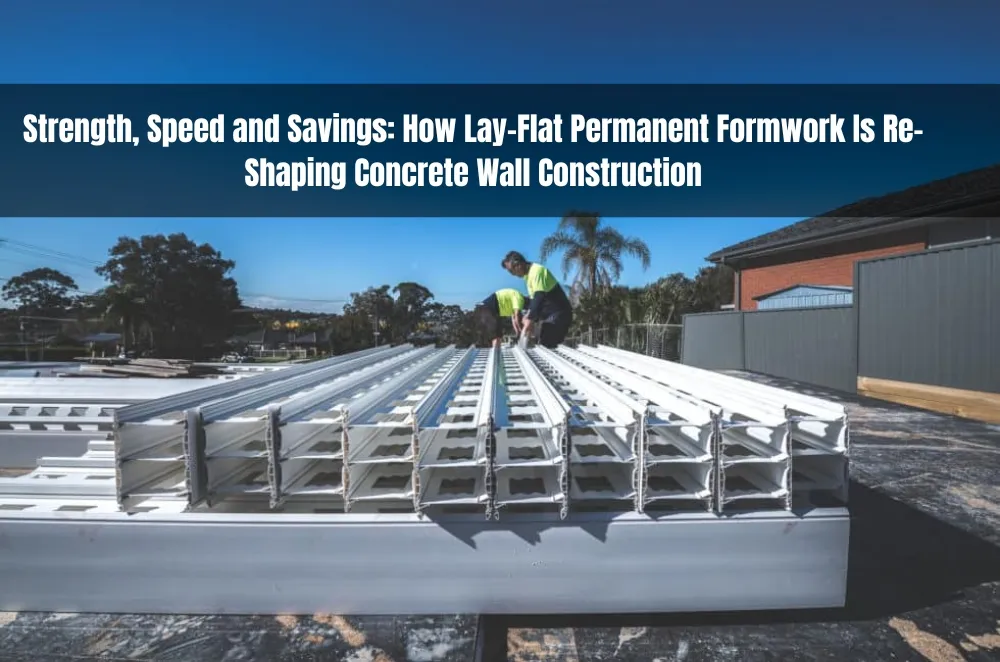
There’s a middle path. Permanent or stay-in-place systems can accelerate cycles, tidy reinforcement placement, and improve safety by reducing traditional strip steps. They don’t erase the need for planning; they shift attention to procurement, coordination, and crew training.
- Cycle compression: Fewer strip operations shorten turnarounds between pours in tight schedules.
- Safety uplift: Reduced exposure at edges and less manual handling of heavy panels.
- Service coordination: Pre-formed webs and spacers guide conduits and sleeves consistently.
- Defect control: Factory edges help tame honeycombing at corners and joints.
In some projects, permanent formwork systems become the pragmatic compromise: you keep the monolithic benefits of in-situ while borrowing the pace and repeatability of manufactured components. The tempo on site changes; crews spend more time staging and less time wrestling with strip gear.
Speed versus durability: making the decision explicit
Every team says they want both speed and durability, but trade-offs live in the details. The smartest path is to define which constraint actually rules a given package—access, programme risk, or performance in service—and size your method accordingly.
- Constraint mapping: Identify whether logistics, geometry, or occupancy date drives the critical path.
- Risk buffers: Build weather, crane, and inspection contingencies into the plan from day one.
- Finish priorities: Decide early if architectural expression or hidden structure sets the tolerance bar.
- Quality gates: Use hold points for reinforcement, form alignment, and cover checks before pour.
When those levers are explicit, stakeholders recognise that choosing precast for a uniform façade bay might free up time to pour complex cores in situ with more care. The outcome isn’t either–or; it’s a targeted blend that respects the real bottlenecks.
Quality control that keeps rework low
Defects steal time twice: once to identify, again to fix. A disciplined quality pathway keeps momentum without masking problems that will echo into fit-out. Good QC is visible, calm, and embedded in routine.
- Pre-pour checks: Confirm rebar chairs, cover, and tie spacing line up with drawings.
- Vibration discipline: Train wand angles and withdrawal rates to avoid segregation and voids.
- Edge management: Protect arrises with chamfers and consistent tie spacing to prevent spalls.
- Curing follow-through: Maintain moisture and temperature to hit strength without surface crazing.
When that rhythm holds, the site feels quieter. Issues appear earlier, paperwork is cleaner, and the finish reads intentional rather than improvised. It’s not glamorous—it’s what durable work looks like up close.
Cost, logistics, and environmental considerations
Budget lines don’t live in isolation. Transport emissions, crane hours, waste from formwork timber, and rework all swing the ledger. Matching method to material efficiency helps the numbers and the footprint simultaneously.
- Transport intensity: Weigh haulage for precast against on-site batching or deliveries.
- Formwork lifecycle: Reuse rates for frames and liners change the effective cost per pour.
- Waste discipline: Standardise cut lists and offcuts to reduce skips and site clutter.
- Energy impacts: Consider curing regimes and rework reduction as part of embodied effects.
Over a programme, marginal gains stack: fewer abortive lifts, tighter pour windows, smarter liner reuse. The payback is the momentum you can feel on a Tuesday afternoon when everything simply fits.
Conclusion: choosing the right mix for speed and long life
The best outcomes rarely come from absolutist choices. Precast’s predictability and finish quality can carry façades or repeated grids, while in-situ’s continuity shines in cores, curves, and heavy connection zones where monolithicity reduces joints and future maintenance. Hybrid options—stay-in-place and other permanent forms—bridge the two, compressing cycles without surrendering durability. Start by naming your real constraint, not the fashionable one: access, geometry, or programme risk. Then set up quality gates and hold points that protect the finish you care about, and keep an eye on logistics that can quietly unravel well-laid plans. In the end, success reads like calm progress: predictable pours, steady lifts, tidy edges, and walls that meet the spec without fanfare. That’s speed serving durability, not defeating it—and it’s how a project crosses the line with confidence.
























Sign in to leave a comment.